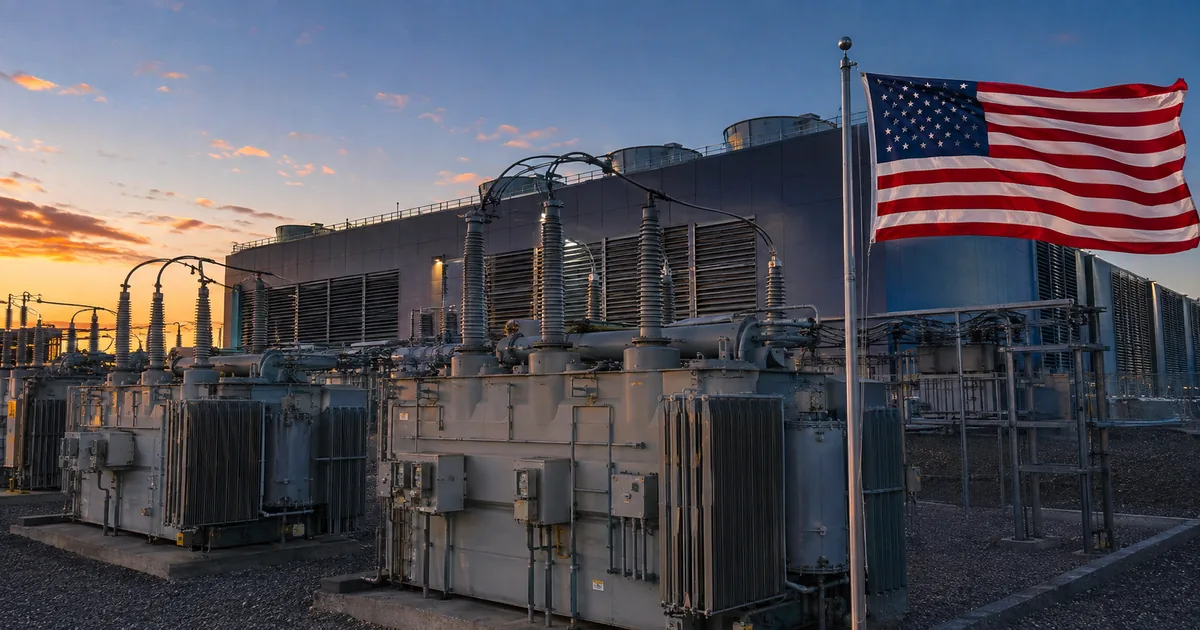
米下院法案が求める費用の全額負担
AIデータセンターに必要な発電所や送電線の費用を誰が負担するのか。そこで法案は、費用を家庭ではなくデータセンター側に負担させます。
| 対象 | 内容 |
|---|---|
| 議案番号 | H.R.9340(第119議会) |
| 提出日 | 2026年6月18日 |
| 提出者 | Gabe Evans(ゲイブ・エバンス)下院議員(共和・コロラド8区) |
| 共同提案者 | 42人 |
| 委員会採決 | 2026年7月21日・52対0 |
| 下院本会議 | 2026年9月16日・417対3で可決 |
| 現在の状態 | 下院通過(上院は審議入りの動議を撤回) |
PURPA改正で州に検討を義務づける
法案の中身は公益事業規制政策法(PURPA)第111条(d)の改正です。 州の規制当局に「大規模需要家基準」を設けるかどうかの検討を義務づけます。
基準が求めるのは次の2点とされています。1つは、大規模需要家向けの料金や契約で、その需要家のために生じた発電・送電・配電の増強費用を全額回収することです。もう1つは、費用をまかなう財務保証を用意させることです。
ここでいう大規模需要家(電気を買う側)は、1つの敷地でピーク時に100メガワット以上の電力を必要とする非住宅需要家と定義されます。業種ではなく需要規模で対象を定める設計です。
"This legislation would amend Section 111(d) of the Public Utility Regulatory Policies Act (PURPA) to require each state regulatory authority to consider establishing a large-load standard to provide that a rate charged, or related agreement entered into, by an electric utility for providing electric service to a large-load customer shall recover the full, incremental cost of any generation, transmission, or distribution upgrade necessary to serve the load of such customer and to provide for financial assurances to cover such upgrades."(BACKGROUND)/"The legislation would define large-load customers as non-residential electric consumers requesting electric energy for one or more facilities at a site or campus with peak demand of 100 megawatts or more."(同節)— 下院エネルギー・商業委員会 公式プレスリリースより公式情報を見る →
委員会は52対0で可決
委員会は7月21日に法案を修正したうえで52対0で可決し、下院本会議も9月16日に417対3で可決しました。一方の上院では9月30日、審議入りのための討論打ち切りの採決が57対43で成立せず、審議入りの動議も撤回されています。
ラッタ・エネルギー小委員長は、複数の州がすでに大規模需要家向けの料金制度を設けているとして、早期上程を求めていました。米議会ではAIキルスイッチ法案も下院に提出されています。
"Sponsor: Rep. Evans, Gabe [R-CO-8] (Introduced 06/18/2026)"/"Cosponsors (42)"/"07/21/2026 House Ordered to be Reported in the Nature of a Substitute by the Yeas and Nays: 52 - 0."/"09/16/2026-6:53pm House On motion to suspend the rules and pass the bill, as amended Agreed to by the Yeas and Nays: (2/3 required): 417 - 3 (Roll no. 312)."/"09/30/2026 Senate Cloture on the motion to proceed to the measure not invoked in Senate by Yea-Nay Vote. 57 - 43."/"09/30/2026 Senate Motion to proceed to consideration of measure withdrawn in Senate."(いずれも Bill Overview / All Actions・2026年10月14日時点)— Congress.gov より公式情報を見る →
"Numerous states already have large load tariffs in place for data centers, including Ohio. I urge the House to bring the Ratepayer Protection Act to the floor as soon as possible so we can get this commonsense legislation across the finish line."(Chairman Latta のコメント)— 下院エネルギー・商業委員会 公式プレスリリースより公式情報を見る →
ホワイトハウスの誓約と5つの約束
ホワイトハウスは法案と並行して自主的な誓約への署名を集めています。 法案が州への義務づけであるのに対し、誓約は企業が自ら費用負担を約束する仕組みです。
使わなくても払うという条項
ホワイトハウスの「Ratepayer Protection Pledge」では、署名者がデータセンターの使う電力を自前で調達し、送配電設備の費用も全額負担すると約束します。約束するのはハイパースケーラー(大規模クラウド事業者)とAI企業のほか、電力会社と開発事業者です。
約束は5条。三つ目は確保した容量が使われなかったときの負担を需要家側に負わせる条項です。
| # | 約束 |
|---|---|
| I | 新規電源を建設・調達して費用を全額払う |
| II | 新たな送配電設備の増強費用を負担する |
| III | 電気を使うかどうかにかかわらず料金を払う |
| IV | 地元の雇用と人材育成に投資する |
| V | 系統と地域のレジリエンスに貢献する |
"A public commitment that hyperscalers, AI companies, and the utilities and data-center developers behind them will build, bring, or buy every kilowatt their facilities need — and cover every dollar of the infrastructure that delivers it. American households and businesses should not be footing the bill."(冒頭)/"Build, bring, or buy new power supply."/"Signatories procure the generation resources needed for their new energy demand — building or buying from new or otherwise additive power plants — and pay the full cost."(I)/"Pay for new power delivery infrastructure."/"Companies cover all new delivery upgrades required to service their data centers, including network upgrade costs, ensuring those expenses are not passed on to ordinary households."(II)/"Pay whether they use the power or not."/"Companies voluntarily negotiate new, separate rate structures with their utilities and state governments. They pay those rates for the power and infrastructure brought online for them — whether or not they actually use the electricity."(III)/"Invest in local jobs and workforce development."/"Signatories invest in the local communities where they build — hiring locally and establishing programs to develop relevant skills."(IV)/"Contribute to grid and community resilience."/"Companies coordinate with grid operators to strengthen reliability and, wherever possible, make their backup generation available during scarcity events to help prevent blackouts and shortages in their communities."(V)— いずれも THE PLEDGE 節・ホワイトハウス公式ページより公式情報を見る →
300超の署名で米国電力の8割をカバー
署名した組織は300を超えています。 名簿には次の4社が含まれます。
| 署名者の種類 | 数 |
|---|---|
| 知事 | 23人 |
| ハイパースケーラー・AI企業 | 7社 |
| 電力会社・電力組合 | 250超 |
| データセンター開発事業者 | 45社 |
署名者を合わせると米国の家庭・企業向け電力のおよそ80%を占め、対象は2億6,300万人に及びます。自主的な取り決めという位置づけですが、電気を買う側・売る側・規制する側が揃ったことを、ホワイトハウスは実効性の根拠としています。
"300+ Organizations committed across every stakeholder in the U.S. power system."/"STATE REGULATORS 23 Governors signed on, representing the states where data-center growth is heaviest."/"ELECTRICITY BUYERS 7 The largest U.S. hyperscalers and AI companies, committed since the March round of the pledge."/"ELECTRICITY SELLERS 250+ Utilities and cooperatives — from generation-and-transmission co-ops to municipal utilities and state associations."/"DATA CENTER DEVELOPERS 45 Firms that build and operate the physical facilities driving new load."/"Skeptics — including The Wall Street Journal — questioned whether the pledge could be enforced, given that power prices are set by state regulators, electricity buyers, and electricity sellers. The Ratepayer Protection Pledge now has commitments from every one of them — and from the developers who actually build the facilities."(いずれも COVERAGE & ENFORCEMENT・2026年10月14日時点)/"Together they cover roughly 80% of the power delivered to American homes and businesses, protecting 263 million Americans — three-quarters of the country — when a data center is built nearby."(OVERVIEW)— ホワイトハウス公式ページより公式情報を見る →
日本のデータセンター規制は省エネが軸
日本の規制は費用の負担先を定めず、データセンターの電力効率を求めています。 米国の法案・誓約との違いは次のとおりです。
| 論点 | 米国(H.R.9340・誓約) | 日本(省エネ・非化石転換法) |
|---|---|---|
| 制度の軸 | 増強費用を誰が払うか | どれだけ効率よく使うか |
| 主な手段 | 州への基準検討の義務づけ・自主誓約 | 定期報告・ベンチマーク・効率基準 |
| 対象の線引き | ピーク需要100MW以上 | データセンター業の特定事業者 |
| 数値目標 | 増強費用の全額回収 | PUE1.4以下(2030年度まで) |
| 未達時 | 州の判断に委ねる | 合理化計画の提出・行政措置 |
2026年4月から報告義務が開始
資源エネルギー庁は、省エネ・非化石転換法に基づく新たな措置を2026年4月から施行しました。2026年度提出分から定期報告書にデータセンターの報告事項が加わります。
報告対象は、電気使用量・PUE(電力使用効率で、低いほど良い)・エネルギー消費原単位の実績と目標です。年度末までに自社サイトで公表することも求められます。
ベンチマーク制度では2030年度までにPUE1.4以下が目標とされ、2029年度以降に新設するデータセンターには稼働開始から2年たった翌年度以降にPUE1.3以下が課されます。満たせなければ合理化計画の提出が必要で、従わなければ行政措置が取られる可能性もあります。
日本の規制は需要そのものを抑える設計で、料金の転嫁を防ぐ米国の法案とは狙う地点が異なります。 投資規模と需要の関係については中国のAI投資計画もあわせてご覧ください。
"そこで、「省エネ・非化石転換法」に基づき、従来の規制に加えた新たな措置を2026年4月から施行しました。"(導入)/"今回の追加措置のひとつとして、2026年度提出分よりデータセンターに関する項目を追加しました。具体的には、電気使用量やPUE(※データセンター施設全体の消費エネルギーをIT機器の消費エネルギーで割った値。低いほどエネルギー効率が高い)、エネルギー消費原単位などの実績値や、今後の目標などが加わります。"/"さらに、事業者に対し、提出対象となったデータセンターに関する情報を、提出年度の年度末(3/31)までに、自らのホームページなどで公表することを求めます。"(いずれも 新たな措置①)/"ベンチマーク制度の一環で、データセンター業の特定事業者に対しては「2030年度までにPUEを1.4以下にすること」という目標を設定し、PUEの算出報告を求めています。さらに今回、2029年度以降に新設するデータセンターについては、満たすべきエネルギー効率基準(PUE)を1.3以下にすることを求めます(稼働開始から2年が経過した時点の翌年度以降)。この基準を満たせなかった事業者には、省エネ・非化石転換法に基づく合理化計画の作成・提出が求められ、これに従わない場合は、更なる行政措置が取られる可能性もあります。"(新たな措置②)— 資源エネルギー庁 スペシャルコンテンツ(2026年5月20日)より公式情報を見る →
需要増の費用を誰が負担するか
AIで電力需要が増えることは、米国も日本も前提にしています。米国は増えた分の費用をデータセンターに負担させ、日本は電力効率の基準を課しています。
そのため、家庭に電力コストを回さない一点で下院エネルギー・商業委員会の賛成が党派を超えて揃ったことが、52対0という数字から読み取れます。追うべきはH.R.9340の上院での審議と、日本の2029年度PUE基準の2点です。
FAQ
- Ratepayer Protection Actはもう成立したのですか?
- していません。下院では2026年7月21日に委員会を52対0で通過し、9月16日に本会議で417対3で可決されました。上院では9月30日に審議入りのための討論打ち切りの採決が57対43で成立せず、審議入りの動議も撤回されています。
- どのくらいの規模のデータセンターが対象になりますか?
- 1つの敷地またはキャンパスで、ピーク需要100メガワット以上の電気を求める非住宅需要家が対象です。法案はこれを「大規模需要家(large-load customer)」と定義しています。事業の種類ではなく需要規模で線を引く設計です。
- 日本にも同じような制度はありますか?
- 費用負担を定める制度はありませんが、資源エネルギー庁が省エネ規制を進めています。2029年度以降に新設するデータセンターには、省エネ・非化石転換法でPUE1.3以下という効率基準が課されます。米国は「誰が払うか」を論点にし、日本は「どれだけ効率よく使うか」を論点にする構図です。
関連する記事
 国防総省がClaude停止、アンソロピック指定は地裁が取消し控訴裁が支持連邦地裁は2026年8月27日、国防総省によるアンソロピック(Anthropic)のサプライチェーンリスク指定を違法として取り消しました。ただし別の法律に基づく指定は9月25日にワシントンの控訴裁が支持しました。国防総省は10月5日にBBCに対して、Claudeなどアンソロピック製品の利用をやめたと認めました。
 AIキルスイッチ法案は米下院に提出済みで、対象企業に緊急停止を義務づけるAIキルスイッチ法案が2026年7月23日に米下院へ提出されました。背景にはAIの暴走があります。対象は学習費1億ドル(約156億7,000万円)超のAIを提供して関連収入が5億ドル(約783億4,000万円)以上の事業者です。緊急停止の手段を持つ義務と国土安全保障長官の停止命令、日額最大2,000万ドル(約31億3,400万円)の制裁金を条文から解説します。まだ成立していません。
 arXivがAI生成論文の急増を受け、新規投稿を1人月2本までに制限査読前の論文を公開するプレプリントサーバーarXivは、2026年10月1日から新規投稿を1人あたり月2本までに制限しました。却下された投稿も上限に含み、同時に処理中の投稿は3本までです。9月の投稿は4万363本と2年前の約2倍に増え、AIで書いた薄い論文をモデレーターが調べきれなくなったためです。
 東芝がAIデータセンター向けHDDの生産能力を2027年度に約2倍へ東芝は2026年10月2日にAIデータセンター向けニアラインHDDの年間生産能力を、2027年度に2025年度比で約2倍へ増やすと発表しました。目標の基準は台数でなく記憶容量です。ウエスタンデジタルとシーゲイトの株価は発表当日の終値で約10%下げました。65TB級・100TB級へ進む計画は報道によるもので、東芝は発表していません。