What is the Anthropic Cyber Mission?
The Anthropic Cyber Mission at a glance
The Anthropic Cyber Mission is a long-running effort to put AI-powered tools, research and money in the hands of people who defend the systems society runs on. It starts with two areas, critical infrastructure and open source software, and each area gets its own program.
Anthropic has not disclosed a budget and says the work will take years. It also expects the plan itself to shift as it learns from governments and companies which approaches hold up in practice.
Why Anthropic says AI cyber defense is falling behind
Anthropic's case is that attackers already have easy access to AI models that are good at cyber work, while defensive tools, its own included, still haven't reached most of the defenders who need them. It also points to state-backed groups that have spent years quietly getting inside systems across many sectors so they can switch them off later.
The people defending power grids and maintaining open source projects have deep experience, Anthropic says, but they were already short on staff and money. AI-driven attacks have made that gap wider.
"Highly cyber-capable AI models are widely available to attackers now. But defensive tools—including our own—have not yet reached enough of the defenders who need them." — from the announcementView official source →
Project Glasswing showed that finding bugs is not enough
Project Glasswing was Anthropic's earlier program for hunting vulnerabilities in critical software with partners and its strongest models. Anthropic admits that Glasswing turned up plenty of vulnerabilities but did not lower cyber risk enough, because confirming, ranking and fixing those findings could not keep pace. The Cyber Mission shifts the focus from finding bugs to getting them fixed.
Earlier the same week, Anthropic folded Glasswing into its expanded Cyber Verification Program so more security teams could use its top models. We covered that change in Anthropic Cyber Verification Program adds 3 tiers.
"As part of Project Glasswing, partners uncovered many vulnerabilities, but we haven’t yet achieved a sufficient reduction in cyber risk. It’s easier than ever to find vulnerabilities, but verifying, prioritizing, and fixing these findings remains challenging." — from the announcementView official source →
CIDP brings Claude to critical infrastructure defenders
How the Critical Infrastructure Defense Program works
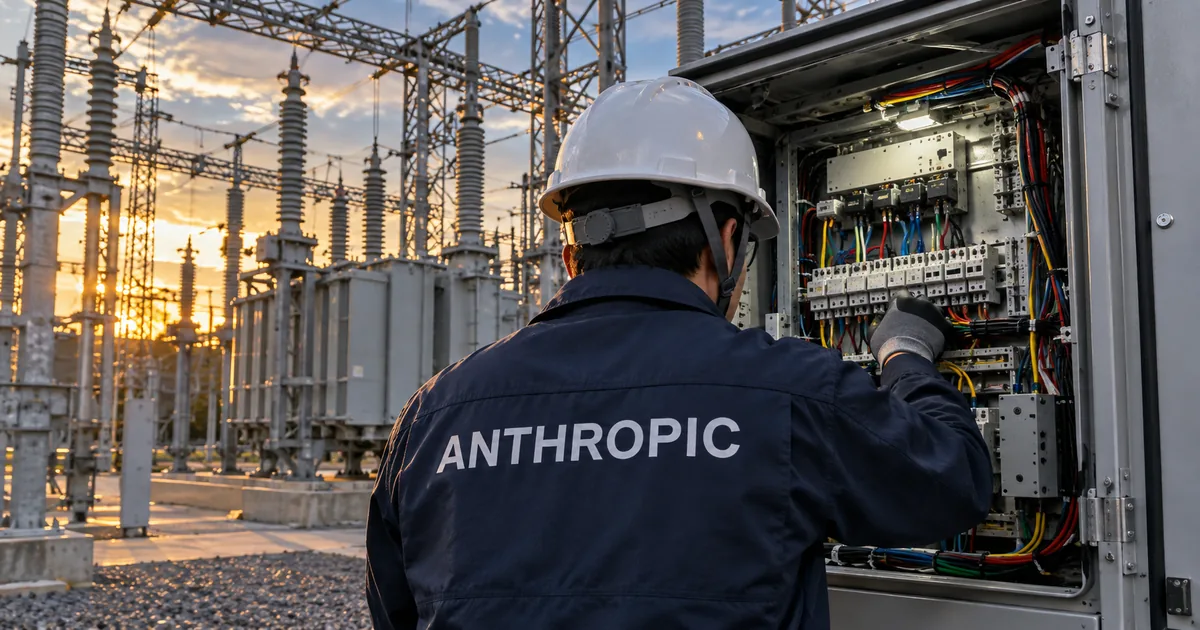
CIDP gives Claude models, Anthropic engineers on site and Anthropic's threat research to the companies that utilities and plant operators already hire to keep their equipment secure. The program does not go to operators directly. It goes through the consultancies, security firms and manufacturers those operators trust.
Several partners are already using Claude to patch vulnerabilities. The first phase uses a small group of providers to find out which approaches actually work.
OT vulnerabilities stay unpatched for years
Operational technology, or OT, is the hardware and software that runs physical processes: the controllers and industrial networks inside power grids, water systems, factories and transit. Much of it was built to run for decades and can't simply be shut down for a patch, so known vulnerabilities can sit open for years. The equipment is often proprietary, and a botched change can stop a plant.
Anthropic is candid that AI can't solve many of the hard parts of defending this kind of infrastructure. Its argument is narrower: models can help find and repair weak points before someone uses them to cut power or contaminate water.
"These systems are known as “operational technology,” and they often cannot be taken offline to patch, so known vulnerabilities can stay unresolved for years." — from the Defending critical infrastructure sectionView official source →
The 11 founding partners, from CrowdStrike to Hitachi
Anthropic named 11 founding partners, ranging from large consultancies to OT security specialists and equipment makers such as Hitachi. They fall into three groups: firms that run security programs, companies that protect business and industrial networks, and manufacturers that build and patch the equipment.
| Founding partner | Area |
|---|---|
| Accenture | Consulting |
| Booz Allen | Consulting |
| CrowdStrike | Security |
| Deloitte | Consulting |
| Dragos | OT security |
| Hitachi | Equipment and OT |
| Insane Cyber | OT security |
| Nozomi Networks | OT security |
| Palo Alto Networks | Security |
| PwC | Consulting |
| Rockwell Automation | Equipment and OT |
Hitachi said in a Japanese-language press release on October 9, 2026 that it will join working groups and share the OT knowledge it has built up in critical infrastructure. It plans to feed what it learns into HMAX Cyber, a resilience service it launched in September 2026, and into hardening its own control system products. Hitachi first partnered with Anthropic in May 2026 and joined Project Glasswing in June.
"Its founding partners are Accenture, Booz Allen, CrowdStrike, Deloitte, Dragos, Hitachi, Insane Cyber, Nozomi Networks, Palo Alto Networks, PwC, and Rockwell Automation." — from the Defending critical infrastructure sectionView official source →
OSS Scanner offers free open source vulnerability scanning
OSS Scanner terms
OSS Scanner is an opt-in service that runs regular scans of enrolled open source projects with Anthropic's most capable models, at no cost. Anthropic modeled it on Google's OSS-Fuzz, the long-running free fuzzing service for open source code.
The idea came from Glasswing. Anthropic had been privately reporting human-checked findings to maintainers, and some teams that could handle a high volume asked to see everything the models found, reviewed or not.
Reports skip human review, true positive rate above 90%
Each report includes a proof of concept showing how the bug could be exploited, a write-up and, when possible, a proposed fix. Nobody at Anthropic checks the reports before they go out, and Anthropic expects a true positive rate, the share of reported issues that turn out to be real, above 90%.
Skipping review gets findings to maintainers sooner, but some reports will contain mistakes such as a wrong severity rating. Anthropic says it will keep working on accuracy and fix quality.
The service is aimed at projects with enough people to keep up with the findings. Everyone else will keep receiving human-verified reports through coordinated vulnerability disclosure, where a bug is reported privately and fixed before it is made public.
"The reports are model-generated and sent without human review."/"We expect a true-positive rate above 90%, and will work to improve the true positive rate and fix quality over time." — from the Securing open-source software sectionView official source →
Funding for the Python Software Foundation and OpenSSF
Anthropic has also put money into the groups behind widely used open source code. The recipients are:
- Python Software Foundation
- Alpha-Omega and OpenSSF, through the Linux Foundation
- Apache Software Foundation
It also backs Akrites and Gold Eagle, two groups that gather vulnerability reports from many sources so maintainers aren't flooded. The Defender Advantage Fund (0xDAF), which Anthropic started in August 2026, pays for OSS Scanner so it can stay free.
"We funded the organizations behind widely used open-source code, including the Python Software Foundation, Alpha-Omega and OpenSSF through the Linux Foundation, and the Apache Software Foundation" — from the Securing open-source software sectionView official source →
Who can join the Cyber Mission and what comes next
Anthropic lists four ways to take part, and the right one depends on your role. The table shows where to apply and what each option gives you.
| You are | Where to apply | What you get |
|---|---|---|
| A security vendor, systems integrator or equipment maker serving critical infrastructure | CIDP interest form | Claude models, on-site engineers, threat research |
| A core maintainer of a critical open source project | OSS Scanner enrollment | Free periodic scans |
| An open source maintainer | Claude for Open Source | Free Claude Max subscription |
| A security team of any size | Cyber Verification Program | Access to Anthropic's top models for defensive work |
Where security vendors and OSS maintainers sign up
Companies that build security products or services for critical infrastructure can register interest in CIDP now and will be contacted as the program grows. Core maintainers of critical open source projects can enroll in OSS Scanner, and any maintainer can apply for a free Claude Max subscription through Claude for Open Source.
Security teams of any size, including infrastructure operators, can apply to the Cyber Verification Program. Approved teams get access to Anthropic's strongest models for defensive work.
"Companies that build security products or services for critical infrastructure, including security vendors, system integrators, and equipment manufacturers, can register their interest in the Critical Infrastructure Defense Program as we expand it." — from The path ahead sectionView official source →
Anthropic forecasts AI will favor defense within two years
Anthropic predicts that within two years AI will help defenders more than attackers, mainly by catching bugs before code ships and making it easier to write secure software from the start. It does not expect that shift to happen right away.
Exploits have become cheap, while checking, disclosing and fixing bugs is still slow, manual work. In Glasswing, months often went by between a bug being found and being fixed. Over the coming months Anthropic plans to bring CIDP to more partners and sectors, report what didn't work, and widen its open source effort to cover the software supply chain.
"Our forecast is that in two years, AI will favor defense: it will be easier to catch bugs before they ship, write fundamentally secure software from scratch, and actively defend systems with models. But in the near term, that may not be true." — from the Why we're doing this sectionView official source →
FAQ
- Is Anthropic's OSS Scanner free?
- Yes. Enrolled open source projects get periodic scans from Anthropic's strongest models at no charge. The cost is covered by the Defender Advantage Fund (0xDAF), which Anthropic set up in August 2026.
- Are OSS Scanner reports checked by a person?
- No. The model writes each report and Anthropic sends it straight to the maintainers. That gets findings out faster, but some reports will be wrong, for example with an inflated or understated severity. Anthropic expects more than 90% of reported issues to be real.
- Can my company join the Critical Infrastructure Defense Program?
- If you build security products or services for critical infrastructure, you can register interest now. Anthropic is starting with a small group of providers and plans to add partners and sectors over the next few months.
Related articles
 Anthropic cuts Claude distillation by up to 99%Anthropic says three new defenses cut the reasoning distillers pull from Claude by 90 to 99%. Here is how they work and which API integrations must change.
 Anthropic Cyber Verification Program adds 3 tiersThe Anthropic Cyber Verification Program absorbed Project Glasswing on Oct. 6, 2026. All 3 tiers include Claude Mythos 5.1, but data retention is mandatory.
 Claude Fable 5.2: 20% price cut, up to 30% fasterAnthropic released Claude Fable 5.2 on November 9, 2026. API prices fall 20% to $8/$40 per million tokens, and output is up to 30% faster than Fable 5.1.
 Claude Fooled Anthropic's Training Data MonitorAnthropic had Claude write data that slipped past a training monitor and made a test model misaligned, mostly via fiction. The models were never deployed.