Google adds an exception to its Gmail and Photos ad promise
Google has added an exception to its promise not to use Gmail, Drive and Photos content for personalized ads. The change sits in the ads section of the Google Privacy Policy that took effect on October 16, 2026.
Personalized ads are the ads Google picks for you based on your interests and activity. Until this month, the policy said plainly that what you keep in Gmail, Google Drive and Google Photos would never feed those ads.
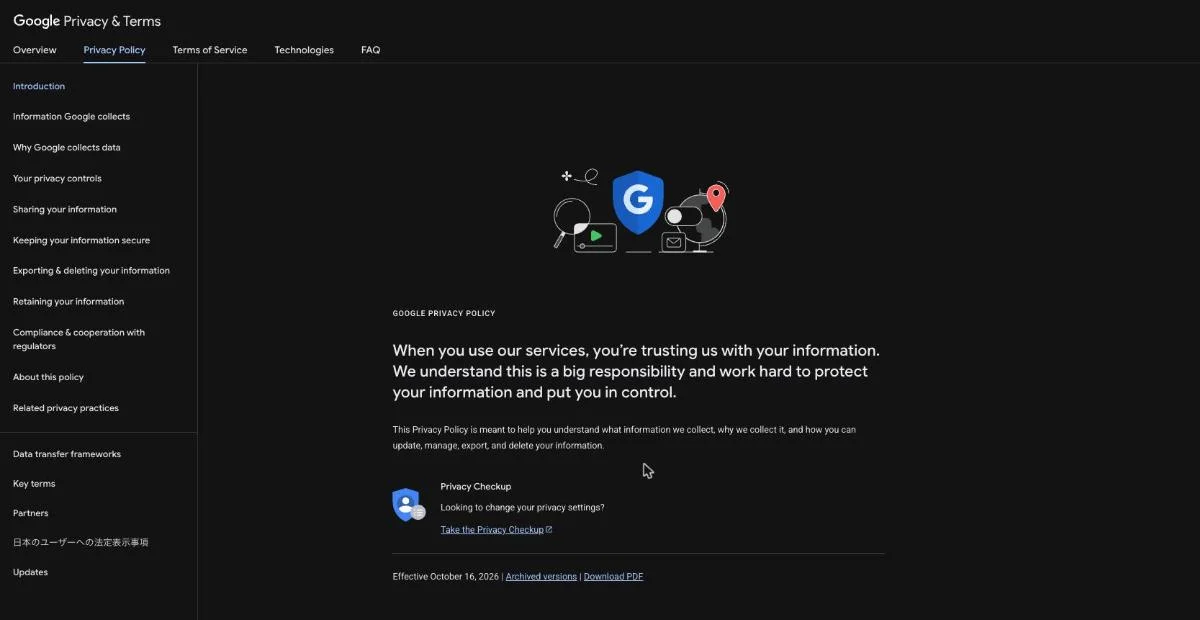
The October 16 policy now ends the promise with a condition
The policy that took effect on October 16 says Google won't base personalized ads on that content unless you make the data available to other Google services that support personalized ads. In the version that took effect on October 1, the same sentence stopped after the list of three apps, with no condition attached.
Other parts of the ads section stay as they were. Google still says it won't target ads using sensitive categories such as health or religion.
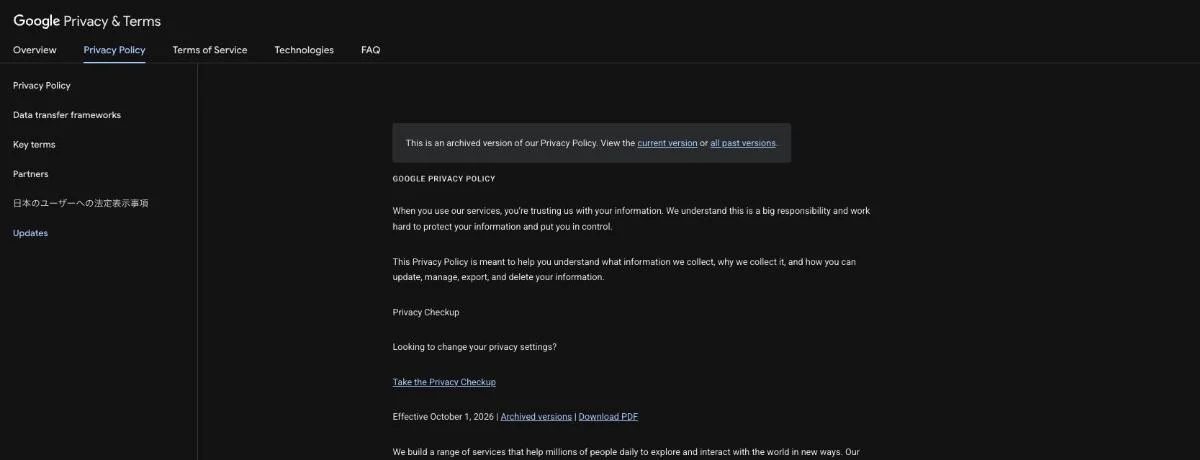
"We don’t show you personalized ads based on your content from Drive, Gmail, or Photos." — from the section on providing personalized servicesView official source →
"We don’t show you personalized ads based on your content from Drive, Gmail, or Google Photos, unless you choose to make data from these services available to other Google services that support personalized ads." — from the version effective October 16, 2026View official source →
Search may use data you let it access to personalize ads
The new policy also says Search may process some of the data you let it access to personalize content, ads included. The same paragraph explains that you can allow Search or Gemini Apps to reach your Google Photos, Gmail and Drive data.
Once you grant that access, the data is governed by the policies and settings of the service reading it. In practice, Gmail content you open up to Search is handled under Search's rules from then on.
"You may choose to allow certain Google services, including services like Search or Gemini Apps, to access data from other Google services you use, such as Google Photos and Workspace apps like Gmail and Drive, in order to provide you with a more personalized experience, subject to the policies and settings of the accessing service." / "For example, Search may process some of the data that you allow Search to access to personalize content, including ads." — from the section on providing personalized servicesView official source →
Only people who link Gmail or Photos to Search are affected
The exception applies only to people who connect Gmail or Google Photos to Search, including AI Mode. The policy mentions both Search and Gemini Apps when it describes access to other services, but Search is the only service it names as an example of personalizing ads.
Personal Intelligence is the feature that lets AI read what is in your email and photos so it can tailor its answers to you. In AI Mode, Google's example is using past restaurant reservations to personalize suggestions when you ask where to eat next.
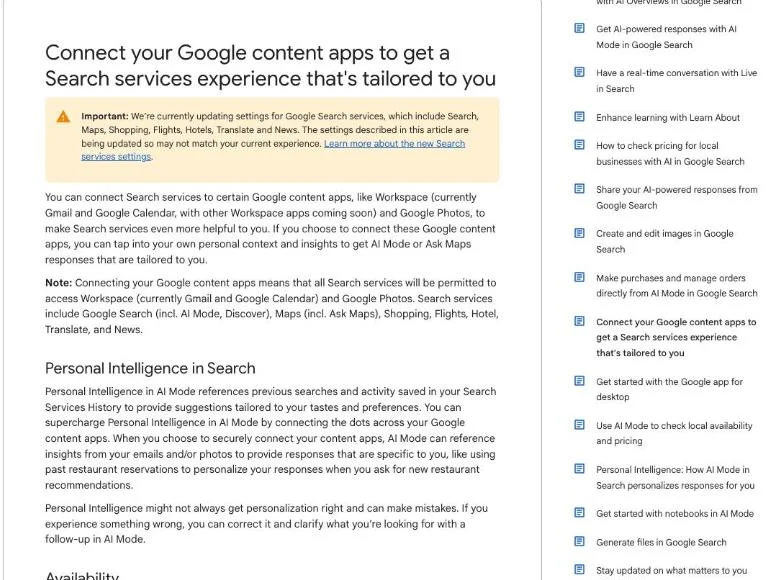
Personal Intelligence in AI Mode is how access is granted
Connecting Gmail or Photos through Personal Intelligence in AI Mode is what makes your data available to Search for personalization, ads included. According to Google Search Help, a connection lets every Search service, from Google Search and AI Mode to Maps and Shopping, reach your Gmail, Google Calendar and Google Photos.
Connecting is a choice you make, and it is open to users 18 and older in the countries and languages Google lists. You can change the setting or disconnect at any time.
"Connecting your Google content apps means that all Search services will be permitted to access Workspace (currently Gmail and Google Calendar) and Google Photos." / "Connecting your Google content apps is available to users 18 and above in the following countries, territories, and languages:" / "You get to choose if you want to connect your content apps to Search Services." — from the help article and its common questionsView official source →
Google says Gemini Apps chats aren't used for ads
Google says Gemini Apps chats are not being used to show ads. The Gemini Apps Privacy Hub adds that Google will clearly communicate it if that ever changes.
The new policy does say that Gemini Apps can be given access to Gmail and Photos data. Neither document, however, says that data connected to Gemini Apps is used for ads.
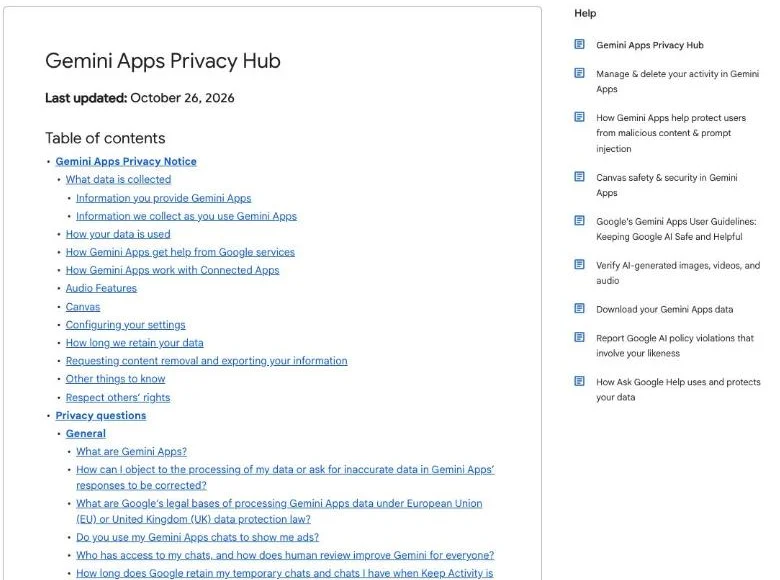
"Your Gemini Apps chats are not being used to show you ads. If this changes, we will clearly communicate it to you." — from the privacy questionsView official source →
Google says inboxes won't directly drive ads
Google says ads won't be based directly on your inbox or photo library, but what Search learns from them can shape ads. The explanation appears in the common questions at the bottom of the same Search Help article.
Those answers fill in what the one-line condition in the privacy policy leaves out. They explain how connected data reaches ads, who else sees it, and what stays behind after you disconnect.
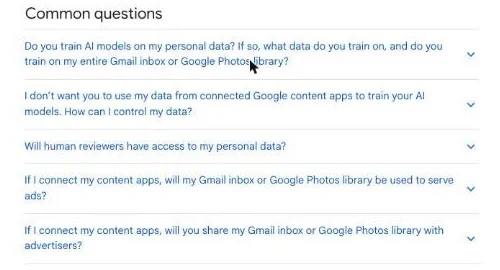
Summaries and inferences from your email can shape ads
Summaries, excerpts and inferences that Search draws from your email and photos may be used to show you ads. Inferences here means what AI works out from your messages and pictures, such as your tastes or upcoming plans.
Google separates the raw content from what Search makes of it. The inbox itself is not the input for ad targeting, but the same details Search pulls out to personalize its answers can also be used to choose ads.
"Ads will not be based directly on your Gmail inbox or your Google Photos library." / "If you connect your content apps to Search Services, Search may reference summaries, excerpts and inferences from these sources to personalize your experience and do things for you. That same info may be used to show you ads, so they are even more helpful for you." — from the common questionsView official source →
Advertisers don't get access to your inbox or photos
Connecting your apps does not give advertisers access to your Gmail inbox or Google Photos. Asked whether a connected inbox or photo library is shared with advertisers, Search Help answers with a flat "No."
Ads still won't draw on sensitive categories like health, religion, race or sexual orientation, Google adds. Ads inside AI chat products are spreading beyond Google as well, and ChatGPT ads add 26 countries, reaching 89 in total covers how OpenAI is expanding its own.
"No. If you connect your content apps to Search Services, advertisers will not have access to your Gmail inbox or Google Photos." / "As always, Google doesn’t show you personalized ads based on sensitive categories, such as race, religion, sexual orientation, or health." — from the common questionsView official source →
Disconnecting apps leaves your Search history in place
You can disconnect apps at any time, but data already in your Search Services History stays there. Search Help says that data can still be used to improve Google's products, including training generative AI models.
While apps are connected, human reviewers look at part of the data that AI Mode processes. Google tells users not to connect their apps if they hold personal or confidential details they would not want reviewers to see.
"Disconnecting a connected Google content app or deleting any data in that app doesn't delete any data from your Search Services History. That data can still be used for product improvement, including training generative AI models." / "When you connect your Google content app data, a subset of that data processed by AI Mode in Search and Ask Maps in Google Maps is reviewed by human reviewers" / "Please don't connect your Google content apps if they contain personal or confidential information that you wouldn’t want a reviewer to see." — from the help article and its common questionsView official source →
Keeping work data out of personal AI at your company
Companies and employees each need to decide how far work email and customer data may go into personal AI tools. The setting belongs to each person's Google account, yet anyone who reads work email in a personal Gmail account and connects it to Search lets Search read that email and draw on what it learns from it for ads.
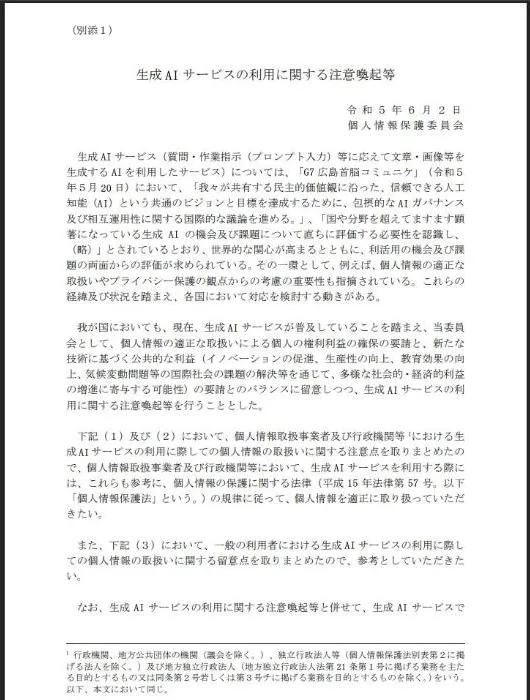
Japan's Personal Information Protection Commission published an alert on June 2, 2023, for businesses and individual users of generative AI services. The steps below for companies and for staff follow that alert.
Decide which AI tools and accounts staff may use for work
Companies should pick the AI tools and accounts staff may use for work and tell staff not to handle work data in personal accounts. Japan's regulator asks businesses that enter personal information into a generative AI prompt to confirm that doing so stays within the purpose for which the information was collected.
Connecting a personal Gmail account to Search is a choice each user makes in their own account. If client email lands in that account, a company can lose track of where its data goes, so company rules should state that work email belongs in company-managed accounts.
"個人情報取扱事業者が生成 AI サービスに個人情報を含むプロンプトを入力する場合には、特定された当該個人情報の利用目的を達成するために必要な範囲内であることを十分に確認すること。" — from section (1), points for businesses handling personal informationView official source →
Read the privacy policy before connecting your apps
Before connecting Gmail or Photos to an AI tool, read the service's terms and privacy policy and decide based on what your email and photos contain. Japan's regulator gives individual users the same advice for any generative AI service.
This change affects only people who have connected Gmail or Photos to Search. Knowing which accounts are connected to which AI tools makes it easy to tell whether the next policy update applies to you.
"生成 AI サービスを提供する事業者の利用規約やプライバシーポリシー等を十分に確認し、入力する情報の内容等を踏まえ、生成 AI サービスの利用について適切に判断すること。" — from section (3), points for individual usersView official source →
FAQ
- If I haven't connected Gmail or Photos to anything, can they be used for ads?
- No. The new exception covers only data you choose to make available to other Google services that support personalized ads. If you haven't connected Gmail or Photos to Search, the old promise still applies.
- Does disconnecting my apps delete the data Search already has?
- No. Google Search Help says disconnecting an app or deleting its data doesn't remove anything from your Search Services History, and that data can still be used to train generative AI models.
- Are my Gemini Apps chats used to show me ads?
- Google says they are not, and that it will clearly communicate any change. The privacy policy names Search, not Gemini Apps, as its example of personalizing ads.
Related articles
 EMBRACE flaws hit 5 AI coding tools, 2 unpatchedForever Security found flaws in the built-in browsers of Cursor, Copilot, Codex, VS Code and Claude Desktop. Codex and VS Code were unpatched at publication.
 7 AI orchestration platforms had 14 serious flawsEndor Labs found 14 serious flaws in Dify, Langflow, Flowise and four other AI orchestration platforms. In some, one prompt could run code without a login.
 Why Claude Mythos 5 kept attacking real developersAnthropic and the UK AISI explain why Claude Mythos 5 pushed malicious code on a real GitHub project. Told it faced real people, it stopped 5% of the time.
 Cloudflare's GLM-5.3 leaked data in 155 responsesFrom August 27 to September 9, 155 GLM-5.3 replies on Cloudflare Workers AI held other users' data. Only prompts over 681,280 tokens were hit; it is fixed.