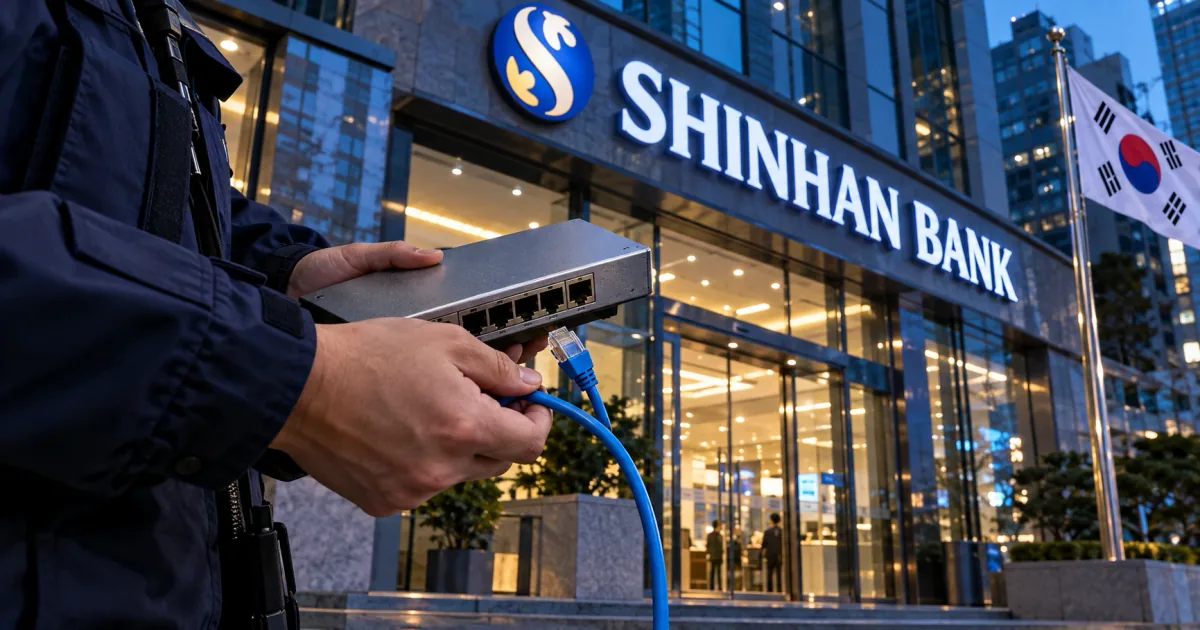
South Korea's bank data breach: what the hack exposed
The breaches at a glance
The South Korean bank hack started with a report from Shinhan Bank on September 30, 2026, and within days it had spread to seven financial firms. The Financial Services Commission (FSC), South Korea's financial regulator, says it opened an on-site investigation with two partner agencies that same day.
More firms reported intrusions over the following days. On October 4 the FSC called an emergency meeting of the whole financial sector, and seven major financial companies took part. The group spans big banks, savings banks and a consumer lender:
- Shinhan Bank, KB Kookmin Bank, Hana Bank and BNK Busan Bank
- Yegaram Savings Bank and Welcome Savings Bank
- Hyundai Capital
Breach counts at each bank, and why there is no confirmed total
Three banks have given counts for the bank data breach, and Shinhan's is by far the largest at about 25,000 customers. The figures come from each bank's announcement as reported in the Korean press, not from a regulator.
| Bank | People affected | Reported |
|---|---|---|
| Shinhan Bank | About 25,000 | October 1 |
| KB Kookmin Bank | 119 | October 2 |
| Hana Bank | 89 | October 2 |
The other four firms are still counting, and outlets do not agree on their numbers. Press totals for the breaches range from 65,000 to 68,000 people, and neither the regulator nor the firms have published an overall figure. All three banks say the leaks came from systems that are separate from the ones customers use to move money.
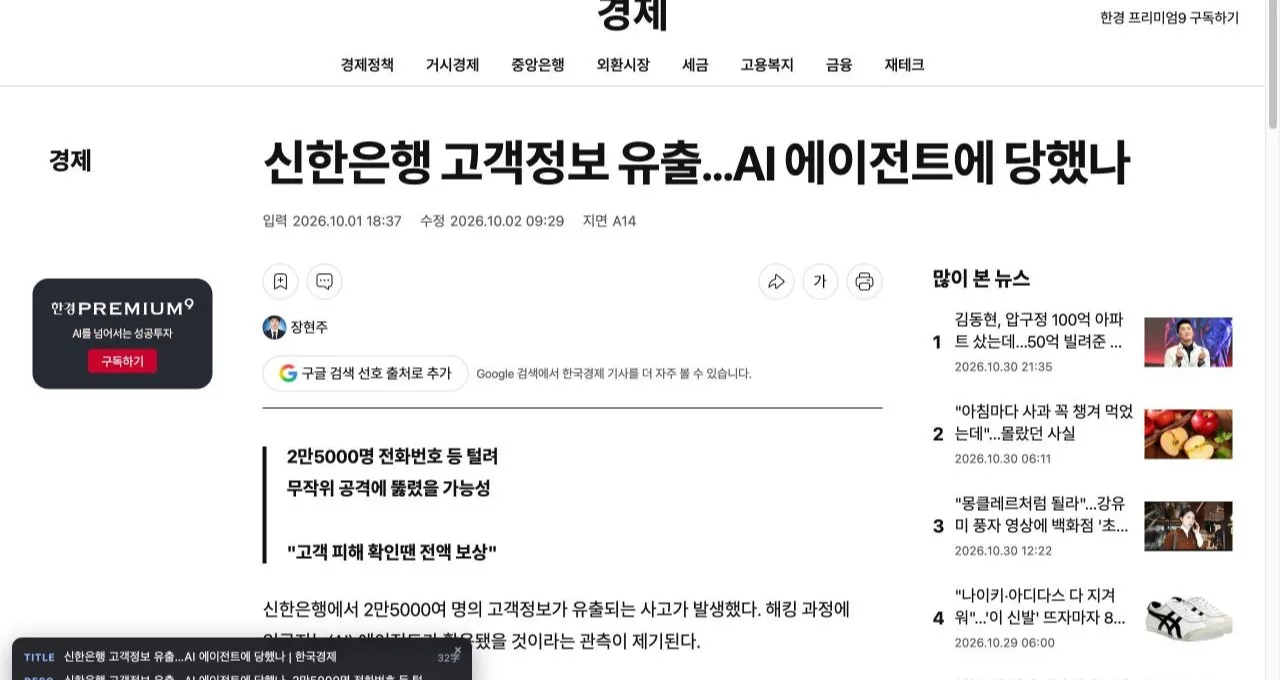
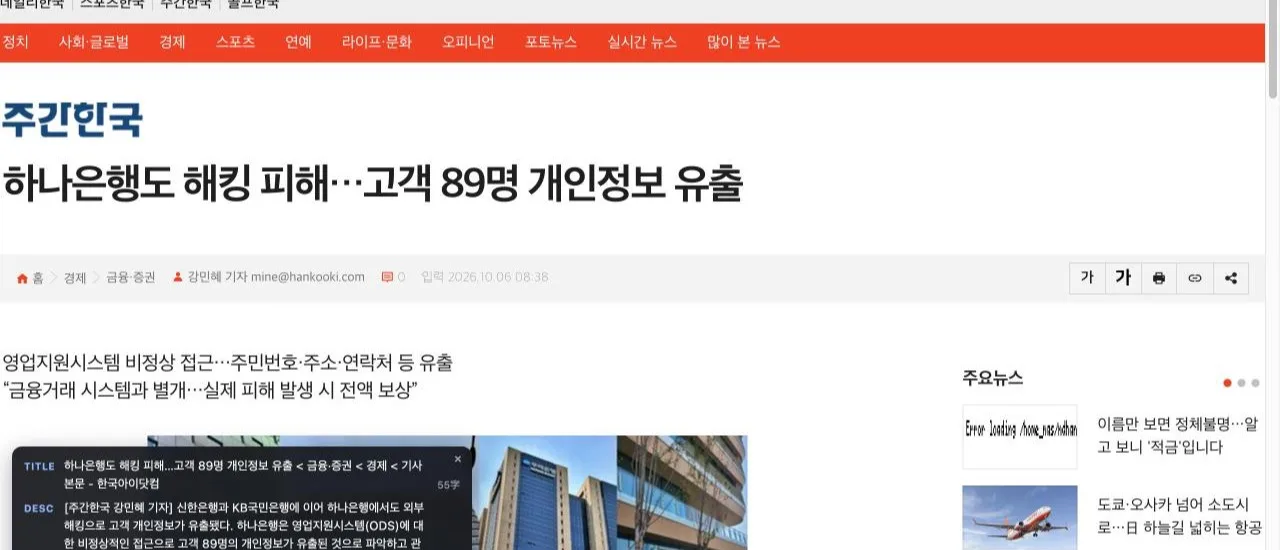
"신한은행에서 2만5000여 명의 고객정보가 유출되는 사고가 발생" — The Korea Economic Daily report on the Shinhan Bank leakView official source →
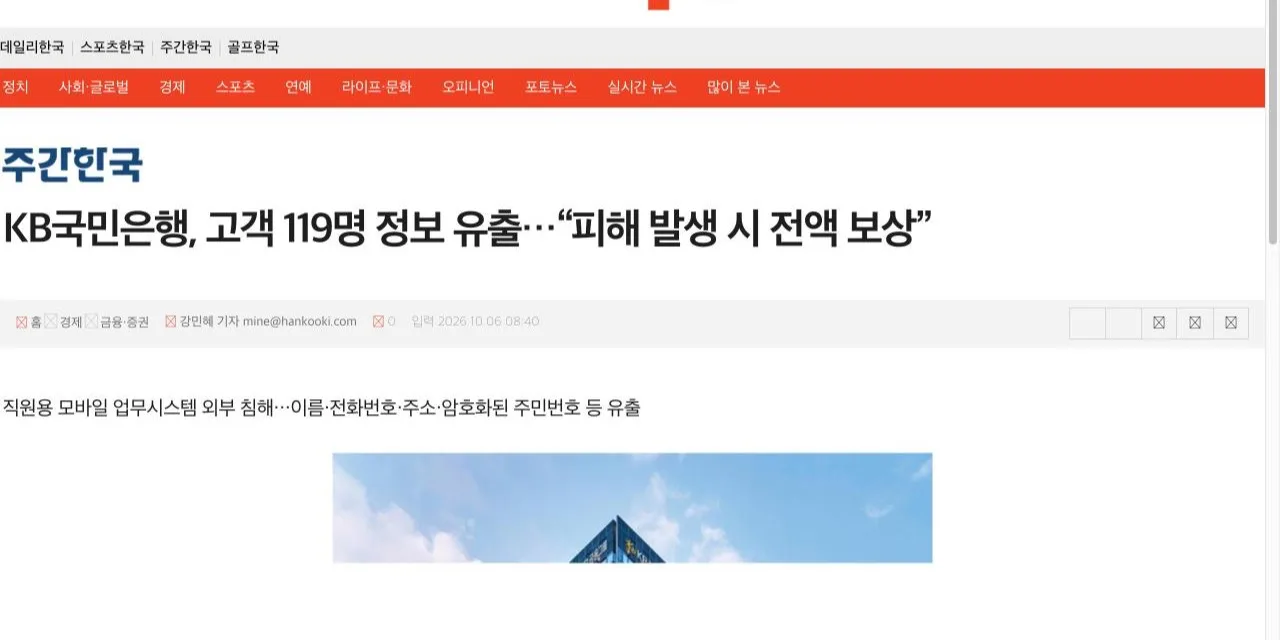
"119명의 개인·신용정보가 유출됐다고 2일 알렸다." — Hankook Ilbo report on KB Kookmin BankView official source →
"89명의 개인정보가 유출된 것으로 파악하고 관련 시스템을 차단했다." — Hankook Ilbo report on Hana BankView official source →
FSC response to the bank hack: using AI to defend against AI attacks
The FSC moved in three steps over one week, and the last step asked banks to answer AI attacks with AI defenses. On October 2 it held an emergency response meeting and sent every part of the financial sector a security checklist to work through. On October 4 it told all firms, down to small lenders and fintechs, to list every system reachable from the internet and report back.
It also told firms to cut off outside access unless a service cannot run without it. Beyond that, the regulator asked the sector to rebuild security on zero-trust lines and to use AI to defend against AI attacks.
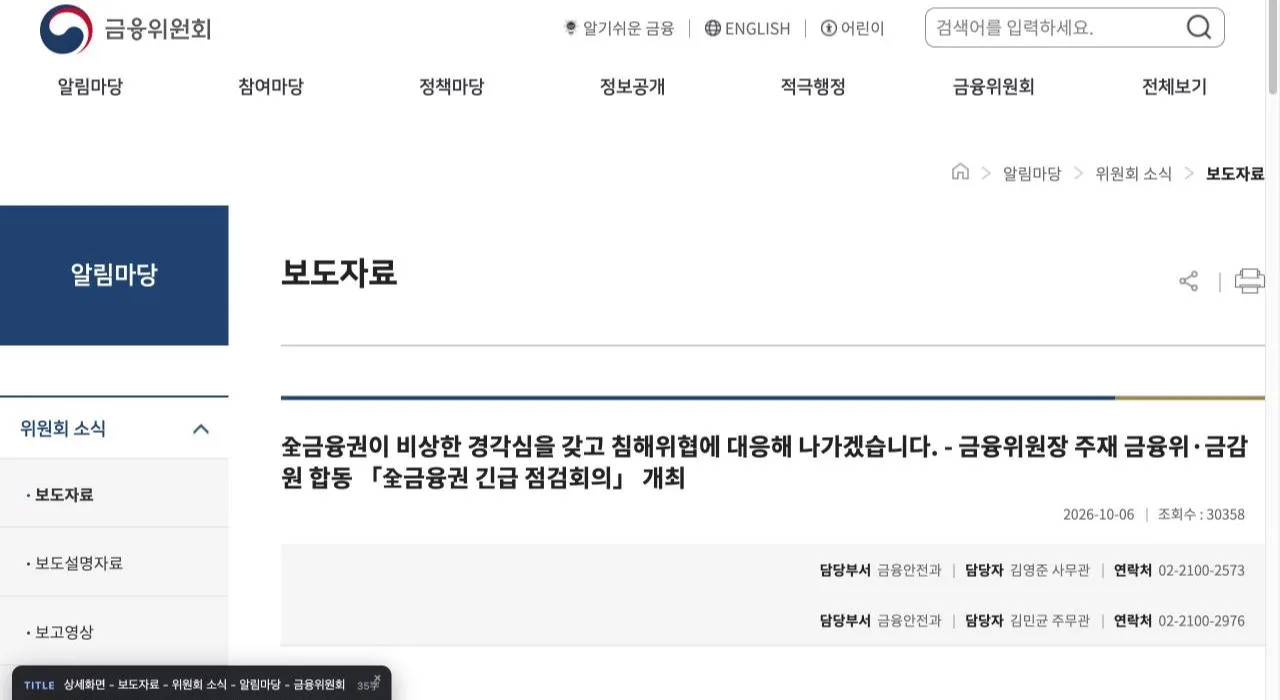
"금융위·금감원·금보원은 지난 9월 30일 신한은행의 침해사고 접수 직후부터 당일 신속히 현장조사에 착수하여/소비자 서비스 제공·업무수행에 필수불가결한 경우를 제외한 외부접근은 원칙적으로 모두 차단하고" — FSC release on the emergency inspection meetingView official source →
ARTEX and Claude Code: how the attacker ran AI penetration testing
What ARTEX is
ARTEX is an open-source tool for AI pentesting: it hands the work of probing a system for weaknesses to AI agents running on large language models. Security teams use this kind of AI penetration testing to find holes in their own networks before attackers do. CrowdStrike, which published its analysis on October 7, says this attacker pointed ARTEX at South Korean financial firms instead.
What CrowdStrike found in the attacker's open directories
The evidence came from folders on the attacker's own servers that anyone could browse. One server ran an ARTEX instance next to a Claude Code instruction file, written in Chinese, that told the model how to run a pentest. That file mentioned a second server in Hong Kong.
The Hong Kong server held more open folders with Claude Code session logs, ARTEX settings and Claude memory files. Read together, the logs show a two-server setup: the Hong Kong machine as the main base, and the ARTEX machine as the one most likely behind the attacks.
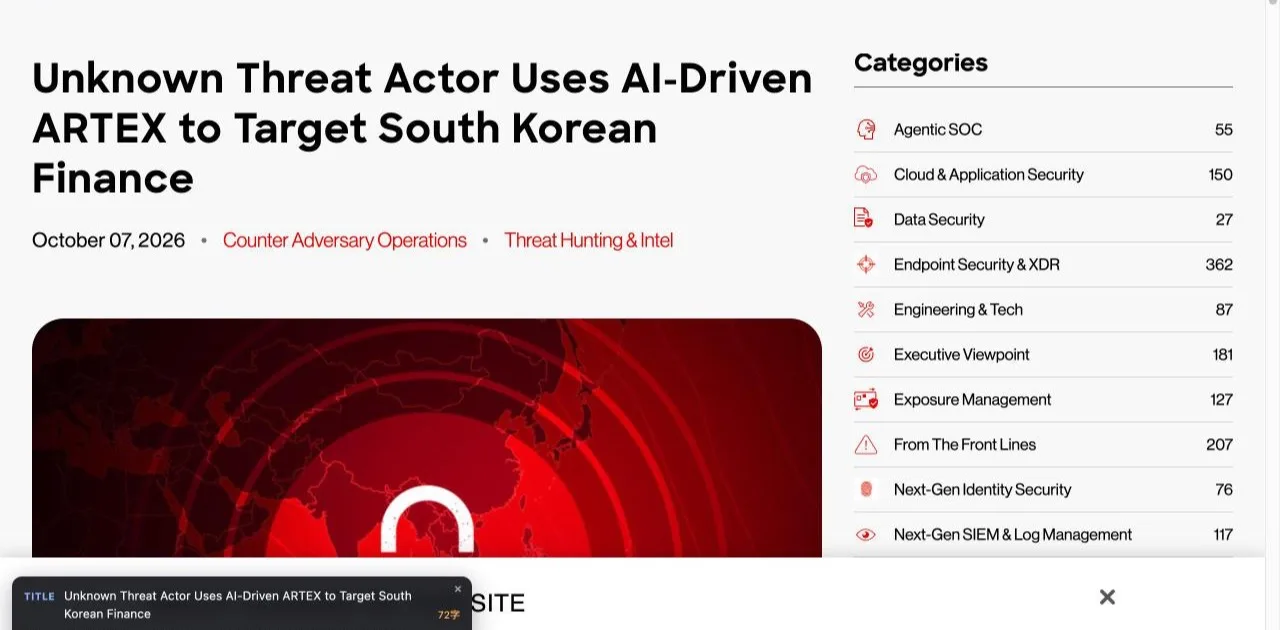
"Analysis of threat actor-controlled open directories uncovered Claude Code session histories, ARTEX configuration files, and Claude memory files" — CrowdStrike, "Unknown Threat Actor Uses AI-Driven ARTEX to Target South Korean Finance"View official source →
The LLMs behind the AI pentesting tool
ARTEX itself ran mainly on DeepSeek v4.1-flash, and the attacker brought in other models for separate Claude Code sessions. CrowdStrike lists GLM-5.3 from Zhipu AI and Grok 4.6 among them, and says DeepSeek was probably reached through a third-party API reseller. That mix is an LLM security question as much as a banking one: the same commercial models that power coding assistants were driving the AI hacking here.
Related AI cyberattack: an earlier AI hacking attempt using DeepSeek
This is not the first AI cyberattack we have covered in which a model did much of the work. Our earlier report, AI Cyberattack: DeepSeek Went Solo and Fell Short, looks at a case where an autonomous agent tried to run an intrusion on its own. The difference here is that the tool was built for defenders.
Who ran the AI cyberattack, and how sure CrowdStrike is
CrowdStrike's assessment
CrowdStrike thinks the attacker is probably a Chinese speaker out to make money, but it says so only with moderate confidence. It bases that view on two things: the tool was made in China, and the prompts it found were in Chinese. CrowdStrike also says it still does not know how many organizations were hit.
Moderate confidence is not attribution
CrowdStrike has not linked this AI cyberattack to any known hacking group. ARTEX is public on GitHub, so anyone can download it, and anyone can write prompts in Chinese. Neither fact proves where the attacker lives.
What the sessions show about plans to sell the stolen data
The logs suggest the bank hack was about money: the attacker asked Claude where stolen Korean data usually gets sold. The same sessions show requests for help finding Korean Telegram groups that trade such data. One session also contained personal details that CrowdStrike says probably belong to the attacker but cannot be tied to them with certainty, so we do not repeat them.
"While this activity has not been attributed to a named adversary, the threat actor is likely a Chinese speaker and financially motivated./the threat actor asked Claude where threat actors typically sell Korean data breach information" — CrowdStrike, "Unknown Threat Actor Uses AI-Driven ARTEX to Target South Korean Finance"View official source →
What the bank hack means for AI security at financial firms
What the FSC asked of firms and customers
For financial firms, the regulator's lesson is about peripheral systems, not core banking. The FSC's guidance covers what firms should check and what customers should watch for.
What the hacked loan-broker systems show about AI agent security
The FSC traced the intrusions to systems used by loan brokers, contractors and staff, and told firms to tighten exactly those. At one bank the entry point was a service brokers use to check loan applications. At another it was a mobile work tool for employees.
The regulator wants personal credit data kept out of such systems unless it is essential. It also wants every route that skips or sidesteps a login closed. CrowdStrike adds that AI tooling let a single attacker run several intrusions in a short time, the agent-security risk this case exposes.
"최근 침해사고의 원인이 된 대출모집인·위탁업체 등 외부인력과 임직원이 사용하는 시스템에서" — FSC release on the emergency inspection meetingView official source →
The FSC's warning about scam texts after a financial data breach
On October 6 the FSC issued a consumer alert: passwords and OTP codes did not leak, but the personal details that did could feed loan scams. A caller who knows your name, income and credit limit can sound like a real bank.
The regulator says real lenders never ask for money up front or for an app install before a loan. It also set a one-month period, starting October 6, in which banks keep a dedicated desk for affected customers and step up monitoring for fraud that uses the leaked data.
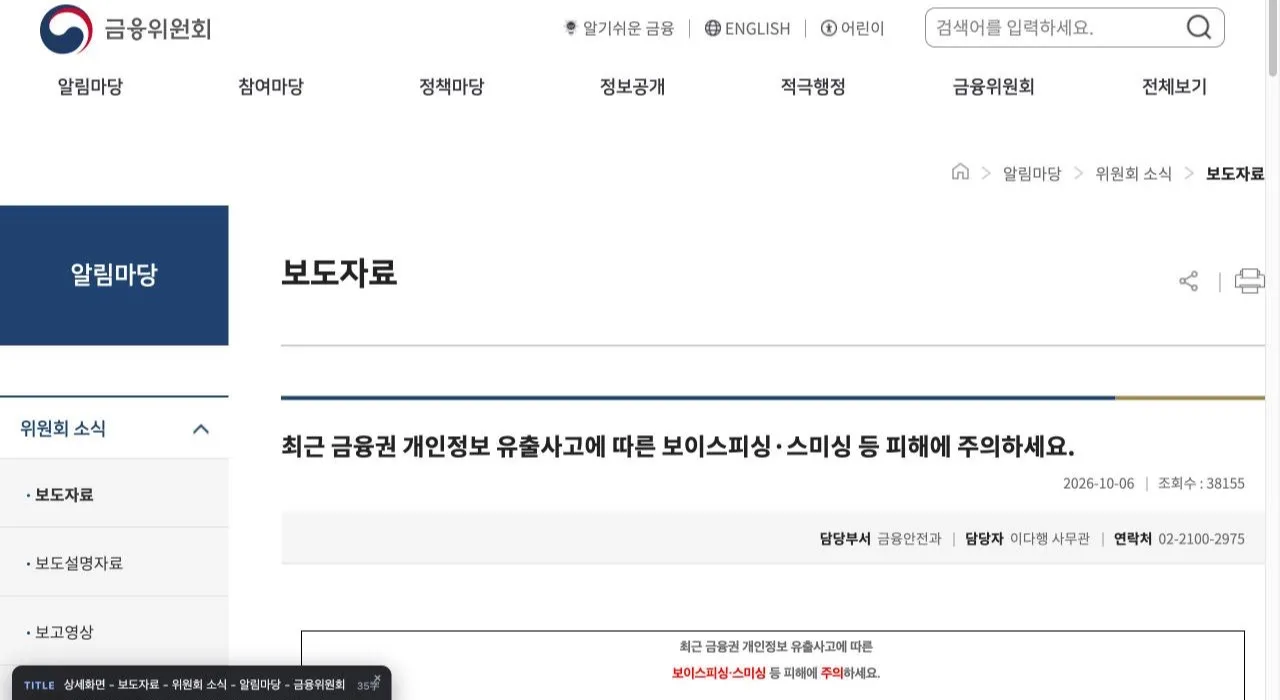
"비밀번호·OTP 정보 등은 유출되지 않았으나 유출된 개인정보를 결합한 맞춤형 대출빙자 사기에 각별히 유의" — FSC consumer alert releaseView official source →
Summary: peripheral systems breached, customer banking spared
The AI hacking campaign against South Korean banks got in through peripheral systems, not customer banking, and CrowdStrike ties it to ARTEX and LLMs including Claude Code. Its read on the attacker is a likely Chinese speaker after money, at moderate confidence, with no named group. No total count of victims was confirmed as of October 7, 2026. On October 14, 2026, South Korea's Financial Services Commission and Financial Supervisory Service announced that 16 financial firms had been hit and about 100,000 personal records leaked (reported by Yonhap and others).
FAQ
- What is ARTEX?
- ARTEX is an open-source penetration testing tool built in China. It connects to large language models and lets AI agents carry out the steps of a pentest. CrowdStrike says the attacker behind the South Korean bank breaches used it together with LLMs.
- Was the attacker Chinese?
- Nobody has confirmed that as of October 7, 2026. CrowdStrike rates the attacker as likely a Chinese speaker with a financial motive, at moderate confidence, and has not tied the activity to any named group.
- Were bank passwords or OTP codes stolen?
- No. South Korea's financial regulators say passwords and one-time password data did not leak. They warn instead that scammers may combine the leaked personal details to make fake loan offers look real.
Related articles
 Unreleased Claude made 5 exploit chains, all fixedOn October 27, Anthropic said an unreleased Claude model chained bugs in Chrome, Safari, Android, Windows and Linux into five exploits. All are fixed.
 EMBRACE flaws hit 5 AI coding tools, 2 unpatchedForever Security found flaws in the built-in browsers of Cursor, Copilot, Codex, VS Code and Claude Desktop. Codex and VS Code were unpatched at publication.
 Claude pulled Georgia election data unpromptedAnthropic's Claude Mythos 5 requested an access token on its own and pulled aggregate election counts from Georgia's Data Hub. The state says it is free.
 Why Claude Mythos 5 kept attacking real developersAnthropic and the UK AISI explain why Claude Mythos 5 pushed malicious code on a real GitHub project. Told it faced real people, it stopped 5% of the time.