AIのBig SleepとGeminiによる脆弱性発見
LLM(大規模言語モデル)を使った発見の工程は、数年かけて段階的に拡大してきました。2026年初頭に作った探索の仕組みは、13年以上残っていたバグを見つけています。
Chromeの自動探索AIが13年潜んだサンドボックス脱出を発見
手法は年を追って高度化し、2026年初頭にGeminiを使うエージェントへ発展しました。各年の内容は次のとおりです。
- 2023年:LLMでファジング(無作為な入力を大量に与えて異常を探す手法)の網羅率と性能を高める方法を開発
- 2024年:Project Zeroと共同でNaptime(ナップタイム)を開発し、脆弱性研究用の専用ツールをLLMに与えた
- 2025年:DeepMindおよびProject Zeroと、脆弱性を探すAIエージェント(手順を自律的に進めるAI)Big Sleep(ビッグスリープ)を共同開発し、V8 JavaScriptエンジンとグラフィックス周りでバグを発見
- 2026年初頭:Geminiを使うエージェントハーネス(モデルにツールと手順を与えて実行させる仕組み)を構築
Geminiを使うエージェントは、より高い効率と低い誤検知で、Chromeのコードベース全体から脆弱性を探しました。13年以上コードベースに残っていたサンドボックス脱出が、見つかったバグのひとつです。
サンドボックスは、ブラウザ内で悪意ある動きが発生してもPC全体へ及ばないよう隔離する仕組みです。このサンドボックス脱出は乗っ取られたレンダラー(ウェブページを描画する部分)がブラウザをだまして、ローカルファイルを読み出させる欠陥でした。Chromeセキュリティチームの多くはこの発見で、AIを使った脆弱性検出の可能性を確信したと公式ブログは書いています。
探索の仕組みはその後も改良されました。改善は次の5つです。
- モデル相互運用:重みを公開しているモデルと非公開のモデルの、それぞれの強みを使い分けられるようにした
- 知識ベース:過去に特定された全CVE(脆弱性の識別番号)とChromeのGit履歴全体を入れて、LLMの推論を学習データの外へ広げた
- SECURITY.md:開発者にこのファイルの追加を促し、モデルが信頼境界(どこまでを信用してよいかの線引き)と脅威モデルを正しく把握できるようにした
- 批評エージェント:修正担当とは別のコンテキストを持ち、SECURITY.mdを読む
- 複数回の実行:モデルの出力が毎回同じにならない性質と、モデルが時間とともに良くなることに備えて、探索モデルをコードベースに複数回走らせる
安全面の設計も公式ブログに明記されています。解析は実行していない状態のソースコードにだけ行い、一般的なインターネット接続の無い隔離マシンで実行する方針です。内部スキャン専用の環境がすべての通信要求を捕捉し、起点のアプリケーションと宛先に基づく厳格な許可リストで制御して、モデルの疑わしい動作を遮断します。
Googleがモデルを制限なしのモードで実行することはありません。サブエージェントがローカルシステムを変更することや、指定したソースコードディレクトリ外のファイルへアクセスすることも厳しく制限しています。
公式ブログは、AIによる検出を既存のテスト基盤を補うものと位置づけています。ファジングは、離れた場所にあるコード同士が影響し合って発生するバグを見つけるのに、今も効果的です。
The Chrome Security team has been using LLMs for years. In 2023 we developed ways to use LLMs to increase security fuzzing coverage and performance. In 2024, we worked with Project Zero on Naptime, giving LLMs specialized tools for vulnerability research. And in 2025, we collaborated with DeepMind and Project Zero on Big Sleep, an AI vulnerability discovery agent that successfully found bugs in the V8 JavaScript engine and graphics stack. / In early 2026, we built an agent harness that used Gemini to find vulnerabilities across the broader Chrome codebase with higher efficiency and lower false positives. One of the bugs we found was a sandbox escape that would allow a compromised renderer to trick the browser into reading local files — a bug that quietly survived in our codebase for more than 13 years! For many of us, this moment cemented the potential of AI-powered vulnerability detection. / Adding support for model interoperability to leverage the unique strengths of both open-weights and proprietary models. / Building a knowledge base of Chrome, including all previously identified CVEs and Chrome’s entire Git history, to extend the LLMs reasoning capacity past its training data. / Encouraging developers to add SECURITY.md files, which help models better understand trust boundaries and develop an accurate view of the threat model. / Adding a “critic” agent with a separate context to consume these SECURITY.md files. / Introducing the ability to run vulnerability finding models over the codebase multiple times to account for model non-determinism and model improvements over time. / Our AI analyzes source code strictly at rest, operating on locked-down machines that lack general internet access. We also utilize a dedicated setup for these internal scans that intercepts all network requests, employing strict allowlists based on the initiating application and destination, blocking any suspicious model activity. Furthermore, we never run models in an unrestricted mode, and we strictly limit our subagents from modifying the local system or accessing files outside of designated source code directories. / AI-powered vulnerability detection complements our existing security testing infrastructure. For example, fuzzing continues to be especially effective at finding bugs that arise from long-range interactions between disparate parts of our codebase, or those requiring a combination of seemingly unrelated operations. — LLM活用の経緯と13年もののバグ、探索ハーネスの5つの改善、安全策、ファジングとの関係に関する記述より公式情報を見る →
CodeMenderとBig SleepをCIに統合、20件超を阻止
CI(継続的インテグレーション)は、コードを変更するたびに自動でビルドと検査を回す仕組みです。このCIにはBig SleepとCodeMender(コードメンダー)が組み込まれ、24時間ごとに全てのコード変更(CL)に対して実行されています。両ツールは、Google DeepMindやProject Zeroとの数年にわたる共同作業から生まれたものです。
5月だけで20件を超える脆弱性が本番に届く前に止まりました。止まった中には重大な「S1+」の問題も含まれています。
We have partnered closely with Google DeepMind and Project Zero for years, including on BigSleep and CodeMender. These tools are natively integrated into our continuous integration (CI) system, running every 24 hours across all CLs to proactively detect security bugs. This integration has yielded significant results: in May alone, we blocked over 20 vulnerabilities from reaching production, including a critical S1+ issue. — BigSleepとCodeMenderのCI統合と5月の実績に関する記述より公式情報を見る →
トリアージから修正案までの脆弱性対応の自動化
発見したバグは報告の仕分けと修正の工程へ進みます。そこでGoogleは、見つかるバグが増えるなら修正も同じ速さで進める仕組みが必要だとして、仕分けと修正にもAIを導入しています。
脆弱性トリアージをAIセキュリティで4段階に自動化
トリアージとは、届いた報告の真偽と深刻度を判断し担当者を割り当てる仕分けの作業で、従来は1件あたり5分から30分以上かかり、主に人の専門性に頼っていました。そこでGoogleはこの仕分けを、ルールベースの仕組みとAIを組み合わせた4段階の自動処理へ移しています。段階ごとの内容は次の図のとおりです。
自動トリアージの4段階(公式解説による)
開発者が深刻度の評価を誤りと考えれば修正できることと、SECURITY.mdに補足情報を書き加えられることは、そのまま残されています。Googleは、自動化で開発者の時間を月あたり数百時間節約できていると見積もっています。ただし正確に計測するのは難しいとのこと。
Historically, triaging a single security report took anywhere from 5 to 30 or more minutes, and relied primarily on human expertise. We have been increasingly shifting our triage process towards an automated approach that blends rule-based systems with AI to increase throughput and accuracy. / The automated triage process is broken down into four key phases: / Filtering out the noise. The system checks if an incoming bug is spam, ensures it meets intake criteria (e.g. is not a duplicate), and verifies that it clearly describes a Chrome security vulnerability. / Reproducing bugs. Next, the system checks for a proof of concept. Reproducible bugs are tested on the specific operating system and browser versions they affect. Based on this, the system attaches further details such as stack traces to the bug to help inform the fix. / Enriching the report with metadata. The system adds essential metadata to the report, such as when the bug was first introduced and its severity rating. To help this process scale, we’ve made our severity guidelines clearer and easier to apply automatically. We continue to allow developers to modify the severity rating if they believe it is incorrect, and to add context to help models reason about security boundaries using SECURITY.md files. / Automatic assigning. The system automatically routes the issue to the correct component and human owner. / While it's hard to measure precisely, we estimate that this new process is saving hundreds of hours of developer time per month, allowing our team to focus on other security priorities. — 従来の所要時間、自動トリアージの4段階、節約規模の見積もりに関する記述より公式情報を見る →
マルチエージェントのAIコードレビューで修正案を批評
修正と批評で担当を分けた複数のエージェントが、Chromeの脆弱性修正を進めます。まずバグ報告から必要な文脈を集め、修正を担当するエージェントが複数の修正案を出します。批評を担当するエージェントはどの案が最も適しているかを見極め、開発者が判断に使う資料も添える流れです。
この2種類のエージェントは、通常のコードレビューと同じ流れでやり取りを繰り返します。機能として正しいかに加え、ChromiumとGoogleのスタイルガイドや周辺のコードの書き方に沿っているかまで確認する設計です。AIの役割は修正案を出すまでで、レビューと評価は開発者の仕事です。
テスト作成を担当するエージェントは修正のテストを書き、開発者がレビューする前に全プラットフォームと構成での動作を確認します。その結果、開発者の時間を最大で数週間分節約できるとのこと。
After initial build steps that bring in context from a specific issue, we run a fixing agent that returns multiple candidate fixes. / A critic agent then evaluates which would be the best fit, producing other relevant artifacts for developers to evaluate the fix. / The fixing and critic agents work in a loop that mimics a typical code review process to ensure that code is functional and compliant with Chromium and Google style guidelines, as well as other local code conventions. / Test-writing agents help write tests for fixes. These agents can ensure that tests work across the full array of Chrome supported platforms and configurations before a developer reviews the fix, saving up to weeks of developer time. — 修正役・批評役・テスト作成役の多エージェント構成に関する記述より公式情報を見る →
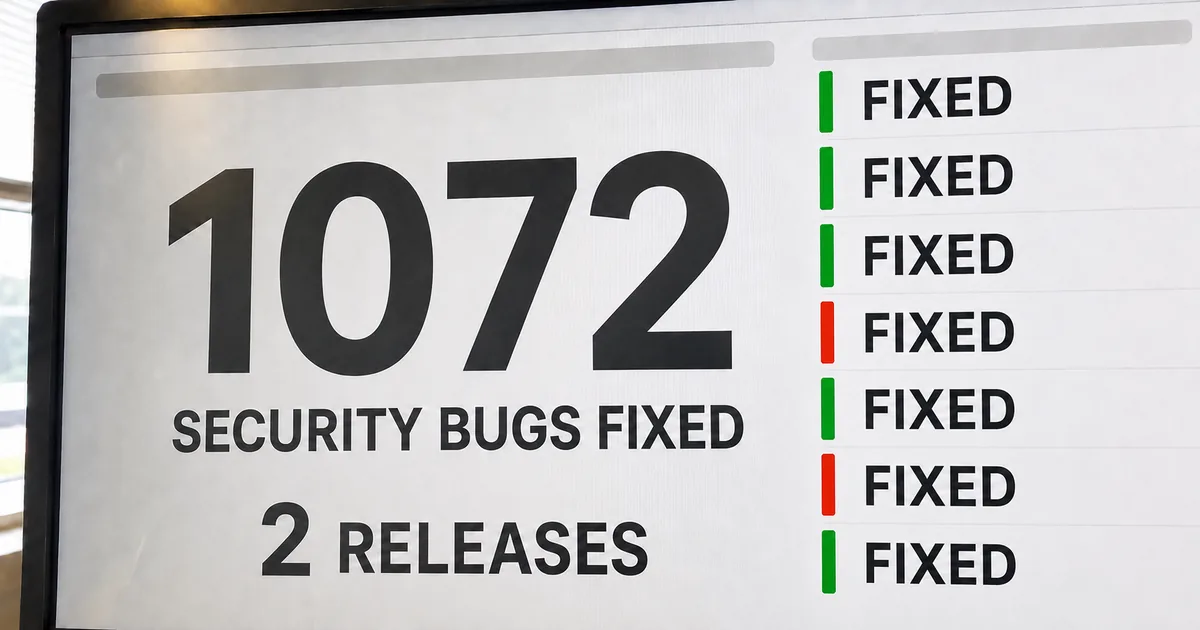
Chrome 149と150のアップデートでAIが1072件を修正
Chrome 149と150の2マイルストーンで修正したセキュリティバグは、1072件でした。その前の23マイルストーンで修正した合計を超える数です。また、公式ブログによれば大半の脆弱性でLLMが修正案を生成しており、直近のChromeリリースで修正の速度が劇的に上がりました。
外部の研究者からの報告は2026年初頭にあらゆる分類で徐々に増え、3月には2025年の1年間より多く届きました。そこでGoogleはChrome脆弱性報奨金制度(VRP)を見直しました。社内ですでに見つけているものと重ならない報告や、自動処理へ取り込みやすい報告を研究者に出してもらうことを目指した見直しだとしています。
At this point, we have LLMs generating candidate fixes for most vulnerabilities, dramatically increasing the rate of security fixes in recent Chrome releases: / In the last two milestones, Chrome 149 and 150, we have fixed 1072 security bugs, surpassing the total number of security bugs fixed across the prior 23 milestones combined. / In early 2026, we saw a gradual increase in all categories of bug reports, but by March, the shift was apparent: we received more bug reports than we had in the entirety of 2025. This led us to change our VRP to focus researchers on bug submissions that are additive to what we are finding internally, and easily ingestible by our newly automated processing pipelines. — 修正件数、外部報告の増加とVRPの見直しに関する記述より公式情報を見る →
セキュリティアップデートはChromeの自動更新で届く
修正を作ったあともユーザーのChromeへ届ける工程が続きます。公式ブログは、修正がユーザーのPCやスマートフォンに届くまでの時間を縮めることを、戦略上の重点課題に置いています。
週2回のセキュリティアップデートでパッチ適用の遅れを縮める
修正がオープンソースのコードベースに取り込まれて誰でも見られるようになると、悪意ある第三者はその変更をもとにバグの場所と中身を割り出せます。修正がユーザーのPCやスマートフォンに届く前に悪用コードを作って攻撃することはN-day攻撃と呼ばれ、修正の公開からユーザーの機器に届くまでの時間差はパッチギャップ(パッチ適用の遅れ)と呼ばれます。
開発本流(メインツリー)の修正が、大多数のユーザーが使う安定版(Stable)へ配信されるまでには、通常数週間かかります。そこでセキュリティ修正は深刻度に応じて開発本流から稼働中の安定版ブランチへ直接取り込まれ、新たなクラッシュや退行がないかを継続的に監視されています。
配信の頻度も上げています。主要マイルストーンを2週間ごとに出す体制へ移行中で、セキュリティ更新は週次です。それでもAIを使った攻撃の速さには足りないとして、週2回のセキュリティリリースへの移行を試験的に進めています。
Once a fix has landed and is visible in the public open source codebase, attackers can start to reverse engineer and exploit the bug before the fix reaches users’ machines — so called "N-day" attacks. This is commonly referred to as the “patch gap.” Since fixes committed to the main “tree” typically take weeks to reach the Chrome Stable channel (what the vast majority of our users run), minimizing this patch gap is a critical part of our strategy. / Based on their severity, security fixes are merged directly from the main “tree” into the active Chrome stable release branch, which is continuously monitored to prevent new crashes or regressions. / We are in the process of transitioning to a two-week cadence for major Chrome milestones, with weekly security updates. However, in the face of fast-moving, AI-powered attacks, our delivery cadence must accelerate even further. To meet this moment, we are piloting a shift to two security releases per week. — パッチギャップの説明と、配信頻度の引き上げに関する記述より公式情報を見る →
Chrome 150のmacOS自動再起動と動的パッチ
Chromeは2008年に、通知を出さずバックグラウンドで進む自動更新を他に先駆けて導入しました。新しいバイナリ(実行ファイル)は、ユーザーがほとんど何もしなくても自動でダウンロードされ、ディスクに保存されます。次にブラウザを再起動したときに更新が適用される仕組みです。
残る問題は再起動までの待ち時間です。Googleの公式ブログによると、トリアージからリリースまでが1〜2日で終わるのに対し、ユーザーが再起動するまでの待ち時間はN-day攻撃の危険を大きく左右する可能性があるとのこと。
ユーザーが再起動を遅らせるのは無理もないと公式ブログは書いています。作業が中断され時間の確保も必要で、最優先事項になりにくいからです。ユーザーの負担を減らす取り組みは次のとおりです。
- 動的パッチ:ほとんどの場合にブラウザの完全な再起動を不要にする仕組み。Chromeの複数プロセス構造を使い、バックグラウンドで動作するレンダラーやGPUなどの子プロセスを更新後のバイナリへ順次差し替える。公式ブログはこの機能を研究開発中とし、詳細は今後の発表を待つよう呼びかけている
- セッション復元:状態をより多くローカルに保存して、複雑な場合でも滑らかに復元できる方法を探る
- 自動再起動:滑らかな復元を保証できる好機に自動で再起動する
macOSのアプリはウィンドウを全て閉じても、通常はバックグラウンドで動き続けます。Chrome 150ではこの性質を使った変更が展開されました。ウィンドウが無い状態で保留中の更新を検知すると、Chromeが自動で再起動します。
In 2008, Chrome pioneered the concept of silent, background software updates: new binaries are automatically downloaded and staged on disk with minimal user intervention. At the next restart of the browser, the update would be applied and the user would be protected. / However, compared to the 1–2 days it takes for triage, fix, test and release, the time spent waiting for the user to restart Chrome can be a significant contributor to N-day exploitation risk. / Investing in "dynamic patching" that will eliminate the need for a full browser restart in most cases. By leveraging Chrome’s multi-process architecture, dynamic patching sequentially replaces background child processes (like the Renderer and GPU) with updated binaries on the fly. / For example, in Chrome 150, we rolled out a change to take advantage of the unique application state on macOS where applications typically continue running in the background even after all windows are closed. Now, if Chrome detects a pending update while in this windowless state, it automatically restarts. — 静かな背景更新の導入、再起動待ちの危険性、動的パッチと自動再起動の取り組みに関する記述より公式情報を見る →
Chromeの更新は手動でも実行でき、企業は再起動通知で促す
動的パッチや自動再起動の整備が続くあいだは、ウィンドウ右上の更新メッセージをクリックするとChromeを最新にできます。企業のIT管理者には公式ブログが次の対応を勧めています。
- RelaunchNotificationポリシーを適用する。保留中の更新を適用するようユーザーに再起動を促し、一定期間をかけて穏やかな通知から強制的な再起動へ段階的に強める
- 変更の事前検証が必要な厳格な環境では、Chrome Extended Stableチャンネルを使う
- Chrome Enterprise CoreまたはPremiumの、OS非依存のダッシュボードで全機器のブラウザバージョンを把握し、更新をきめ細かく管理する
Our long-term vision is a browser that is always up-to-date – continuously and dynamically patched, and automatically restarted during opportune periods of minimal disruption. While we’re working on this, you can keep your Chrome up to date by clicking on the update message in the top right corner. / For enterprise customers looking to keep Chrome up to date, we recommend that IT admins: / Apply the RelaunchNotification policy which prompts users to restart Chrome to apply a pending update, escalating from a gentle reminder to a forced restart over a set timeframe. / Utilize the Chrome Extended Stable Channel for highly sensitive environments where software changes must be vetted. / Leverage the OS-agnostic dashboard provided by Chrome Enterprise Core or Premium to track fleet-wide browser versions and manage updates at a more granular level. — 利用者向けの更新方法と、企業の IT 管理者への推奨に関する記述より公式情報を見る →
発見から再起動までの全工程で見るChromeのAIセキュリティ
公式ブログは脆弱性の一生を、見つかってから再起動で更新が適用されるまでの5段階で整理しています。Googleは、各段階にかかる時間の短縮を目標に掲げています。各段階の取り組みは次のとおりです。
| 段階 | 取り組み |
|---|---|
| 見つかる | Geminiを使うエージェントとBig Sleep。CIでは24時間ごとに全てのCLを調査する |
| 仕分けられる | ルールベースの仕組みとAIを組み合わせた4段階の自動トリアージ |
| 修正される | 修正・批評・テスト作成をそれぞれ担当するエージェント。Chrome 149と150で1072件を修正 |
| リリースされる | セキュリティ更新は週次。週2回への移行を試験中 |
| 再起動されて適用される | 動的パッチは研究開発中。Chrome 150のmacOSでは自動で再起動 |
短縮の対象は発見や修正だけではありません。修正を届けて再起動で適用するところまで含まれています。
公式ブログは、修正されるバグが増えるのは失敗の兆候ではないとしています。修正したバグの数だけ、悪意ある第三者が悪用できる欠陥が減るためです。ただし修正するだけでは十分ではなく、悪用されるより先に修正を配信し、ユーザーのPCやスマートフォンに更新を適用させる必要があるとのこと。
Chrome 149と150では1072件の脆弱性がAIも使って修正され、修正がユーザーに届くまでの時間を更新と再起動の両面から縮める取り組みも並行して進んでいます。AIエージェントの担当は修正案を出すところまでで、レビューと評価は開発者が行います。
Once a security bug enters the codebase, its life cycle proceeds as follows: / Our goal is for every one of these steps to happen as quickly as possible. / an increase in bugs found and fixed is not a sign of failure. Every bug found and fixed is one less foothold for an attacker. But discovering and fixing a bug is only half the battle — we must also ship the fix and apply the update for users faster than adversaries can exploit the bug — 脆弱性の一生と、発見・修正・適用の関係に関する記述より公式情報を見る →
FAQ
- AIが勝手にChromeのコードを書き換えているのですか?
- AIのエージェントが出すのは修正案です。修正を担当するエージェントが複数の案を作り、批評を担当するエージェントがどの案が最も適しているかを見極めて、開発者が判断に使う資料も添えます。レビューするのは開発者です。この2種類のエージェントは、コードレビューと同じ手順でやり取りを繰り返します。
- どれくらい修正のペースが上がったのですか?
- 直近2つのマイルストーンであるChrome 149と150で、1072件のセキュリティバグが修正されました。その前の23マイルストーンで修正された合計を超える数です。Googleは大半の脆弱性についてLLMが修正案を生成しているとしています。
- AIにコードを解析させるときの安全対策はどうなっていますか?
- 解析の対象は実行していない状態のソースコードだけで、作業は一般のインターネットに接続しない隔離マシンで行われます。内部スキャン専用の環境がすべての通信要求を捕捉し、起点のアプリケーションと宛先に基づく厳格な許可リストで制御しています。Googleは制限なしのモードでモデルを実行しません。
- 修正が早まったあとのChromeの更新はユーザーにどう届きますか?
- Googleは主要マイルストーンを2週間ごとに出す体制へ移行中です。セキュリティ更新は週次で提供しています。週2回のセキュリティリリースへの移行は試験的な段階です。動的パッチや自動再起動の整備が続くあいだは、ウィンドウ右上の更新メッセージをクリックするとChromeを最新にできます。
関連する記事
 Geminiでファイルを作成してチャット内で直接編集する方法Geminiのチャットで作成したドキュメントやPDF、スライドなどをダウンロードせずにチャット内で直接編集できるようになりました。編集方法は全画面での直接入力など3つあり、スマホアプリで編集できるのはPDFだけです。編集後はダウンロードかGoogleドライブへ保存できます。Canvasとは異なり、普段のチャットで形式を指定するだけで利用できます。
 画像生成AIの安全対策を破るRISE、新しいモデルほど成功率が上昇White Circleが、画像生成AIの安全対策を破る攻撃手法「RISE」を公表しました。DALL-E 3では攻撃の13.3%で性的な画像が生成され、新しいNano Banana 2.1では20.7%と旧モデルの2倍を超えています。OpenAIとGoogleは取材に回答していません。
 Gemini 4 Carbonの料金と提供範囲、11月10日から有料APIとAI Ultraへ拡大Gemini 4 Carbonは、Googleが10月28日に発表した上位モデルです。11月10日から有料APIの開発者・企業・Google AI Ultraの契約者へ提供が広がりました。API料金はArgonと同じ100万トークンあたり入力2ドル(約316円)・出力10ドル(約1,581円)で、Argonは12月1日に料金が倍になります。
 Gemini無料版は10月9日から軽量モデルのみに、Proは選択不可Gemini無料版は2026年10月9日からFlash-Liteのみになり、FlashとProは選ぶことができなくなります。FlashはGoogle AI Plus(月725円)、ProはGoogle AI Pro(月2,900円)以上で使え、Deep Thinkの対象は英語版と日本語版のヘルプで異なります。