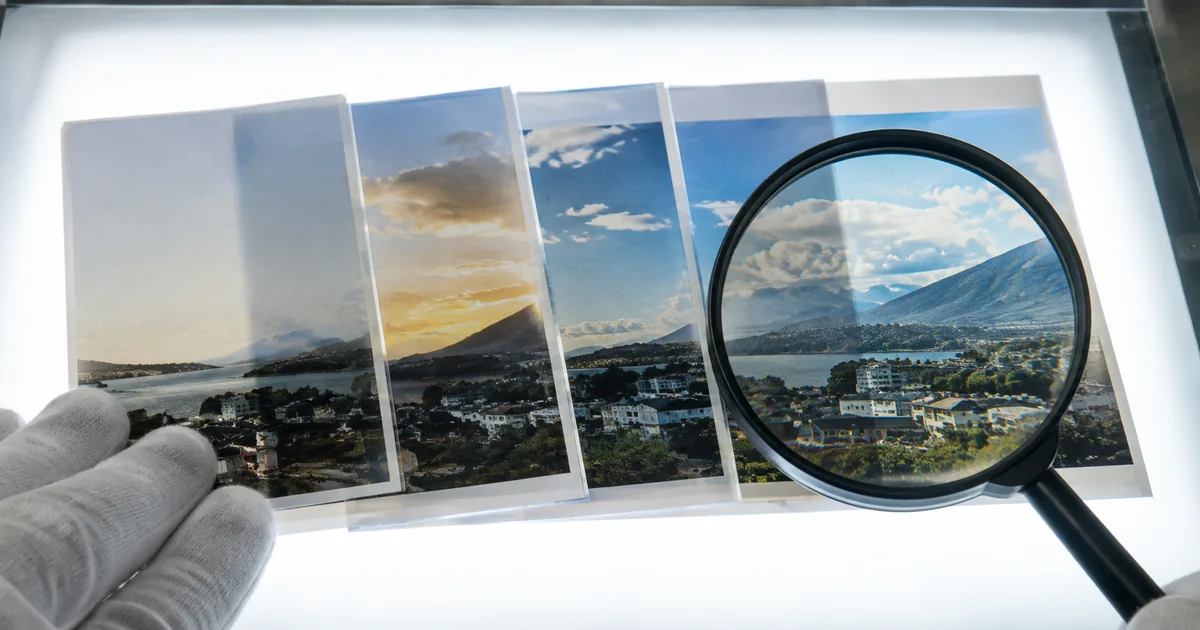
Google Backstory checks for AI generation, edits and context
Google Backstory is an AI tool that investigates a single image. A user uploads the picture and types a simple question about it. Backstory then runs three checks on its own: whether the image is AI-generated, whether it shows signs of manipulation, and where else the image has appeared online.
The tool is built on Google's Gemini family of large language models. AI agents inside it decide which authentication tools to use and in what order.
The output is a written report with citations, together with a log of each step the tool took. The table below lists those three checks and the content-credentials check it also runs.
What Backstory checks for one uploaded image
| Check | What it covers |
|---|---|
| AI generation | Whether the image is AI-generated |
| Manipulation | Whether the image shows signs of editing |
| Context | Where else the image has appeared online |
| Content credentials | Encrypted metadata added by companies that follow the C2PA standard |
Content credentials follow the standard of C2PA, the Coalition for Content Provenance and Authenticity. Google, Adobe and the BBC are among the companies that signed onto its standard.
"After uploading an image and entering a basic question, Backstory can automatically run checks to determine whether the image is AI-generated, whether it shows signs of manipulation, and where else the image has appeared throughout its lifetime on the internet."/"Built on top of Google's Gemini family of large language models (LLMs), Backstory also leans on AI agents to decide which authentication tools it will use and in what order it will use them."/"The final output is an AI-generated report summarizing what Backstory found out about the image, with citations, as well as a log of the steps it took along the way."/"Backstory also checks an image's content credentials, looking for encrypted metadata added by companies who have signed onto the Coalition for Content Provenance and Authenticity (C2PA) standard, including Google, Adobe, and the BBC."(article body)— Nieman Journalism LabView official source →
How India Today fact-checkers use Backstory for a first pass
India Today has a six-person fact-checking team. Its work might include an AI-generated archival photograph of a politician, a clip of deadly flooding taken out of its original context, and a deepfake of India's richest man. The team mainly uses Backstory to take the first pass on a piece of content, which speeds up the start of verification.
Before Backstory, a reporter might have run a picture through an AI detector, then a reverse image search, and finally built a timeline of its past appearances by hand. Backstory does all three at once.
Bal Krishna of India Today says the tool does the work of five different tools and five different logins in the same place. Mike Caulfield, who created the SIFT method, says Backstory shrinks an initial process of 50 minutes down to three.
"For the six-person team at India Today, that might include addressing an AI-generated archival photograph of a politician, a clip of deadly flooding ripped from its original context, or a full-on deepfake of India's richest man."/"At India Today, Backstory is primarily used to take the first pass on fact-checking a piece of content, speeding up the beginning of the verification workflow."/"In the past, reporters at India Today might have needed to separately run an image through an AI image detector, conduct a reverse image search, and then stitch together a timeline of its historical appearances. Backstory will do all those things at once and, for now, it is entirely free to use."/"It is doing all the work you might have done with five different tools, five different logins, in the same place. That's the beauty of it."/"Backstory takes an initial process that would take you 50 minutes, and it can shrink it down to three."(article body)— Nieman Journalism LabView official source →
Where Backstory falls short: look-alikes and unindexed posts
Backstory runs on large language models, and like most tools of that kind it cannot guarantee accuracy. A disclaimer appears at the bottom of the tool, similar to the one on Google's general AI assistants.
Caulfield names a common failure called conflation: the model mistakes one image for another that looks similar. Nieman Lab's reporter ran into it when asking for a report on the history of the reporter's own headshot. Backstory mistook it for the headshot of another journalist, Carlos Maza.
Coverage sets another limit. Its context tracing can reference only images that search engines have indexed. Caulfield points to TikTok, which is not indexed, and to closed groups such as WhatsApp or Signal: an image that started in either place may leave no trace.
Because of these shortcomings, India Today does not cite Backstory's reports directly in its published fact-checks. Reporters are expected to confirm by hand anything they pull from the tool, so Backstory speeds up the first pass while a person confirms what it produces.
"Like most tools powered by LLMs, Backstory can't guarantee accuracy. A disclaimer appears at the bottom of the tool, similar to the one that appears on Google's general AI assistants:"/"A common problem with using LLMs to authenticate images is conflation, when the models mistake one image with another that is visually similar, according to Caulfield."/"After prompting Backstory to generate a report on the history of my own headshot, it ended up mistaking my image with the headshot of another journalist, Carlos Maza."/"In its context tracing reports, Backstory can also only reference images that have been indexed on search engines."/"It's possible that something might have originated on TikTok, which is not indexed. It might have originated on WhatsApp or Signal or any other closed group"/"Due to these current shortcomings, Bal Krishna says India Today does not cite Backstory's AI-generated reports directly in its published fact-checks, and reporters are expected to manually confirm any information they pull from the tool."(article body)— Nieman Journalism LabView official source →
Backstory is free but limited to Trusted Testers for now
As of the Nieman Lab report on 19 August 2026, Backstory is available only through Google's Trusted Testers Program. India Today's fact-checkers are among thousands of journalists, OSINT experts (investigators who work from public information), librarians and information literacy researchers whom Google has invited to try it.
The tool is free to use for now. Both facts come from that report, so access may have changed since. To keep a report like this as text in a verification log, the URL to Markdown tool converts a web page into markdown.
"Backstory is still only available through Google's Trusted Testers Program, but India Today's fact-checkers are among the thousands of journalists, OSINT experts, librarians, and information literacy researchers Google has brought on to trial the tool."/"for now, it is entirely free to use."(article body)— Nieman Journalism LabView official source →
FAQ
- What does the Google Backstory tool do?
- You upload one image and ask a question. It checks whether the image is AI-generated, whether it shows signs of manipulation, and where else that image has surfaced online. It returns a cited report plus a log of the steps it ran.
- Can anyone sign up for Backstory?
- Not as of the Nieman Lab report of 19 August 2026. Access ran through Google's Trusted Testers Program, which had brought in thousands of journalists, OSINT experts, librarians and information literacy researchers. The tool was free to use at that time.
- Can Backstory's report be quoted as a finding?
- Not at India Today, one of the newsrooms using it. It does not cite Backstory's reports in its published fact-checks, and reporters are expected to confirm by hand anything they pull from the tool.
Related articles
 Reddit to require logins as search referrals fallReddit will test a logged-in-only site outside the US in Q4. Search referrals fell over 1M a week in October; its CEO says Google's AI Mode drives no traffic.
 Gemini create files: edit PDFs and docs in chatGemini create files: docs, PDFs, slides and sheets now open in the chat as previews you can edit. Phones edit only PDFs; the web handles the rest.
 What is Genie 4? Google's world model with audioGenie 4 is Google DeepMind's world model that adds ambient sound and live dialogue to explorable worlds. Only testers have it; Ultra subscribers are next.
 Google Deep Review: what the AI paper checker doesGoogle Deep Review checks papers for logic gaps, math errors and weak evidence. Two reviews a week are free, and its predecessor caught 89.7% of known errors.