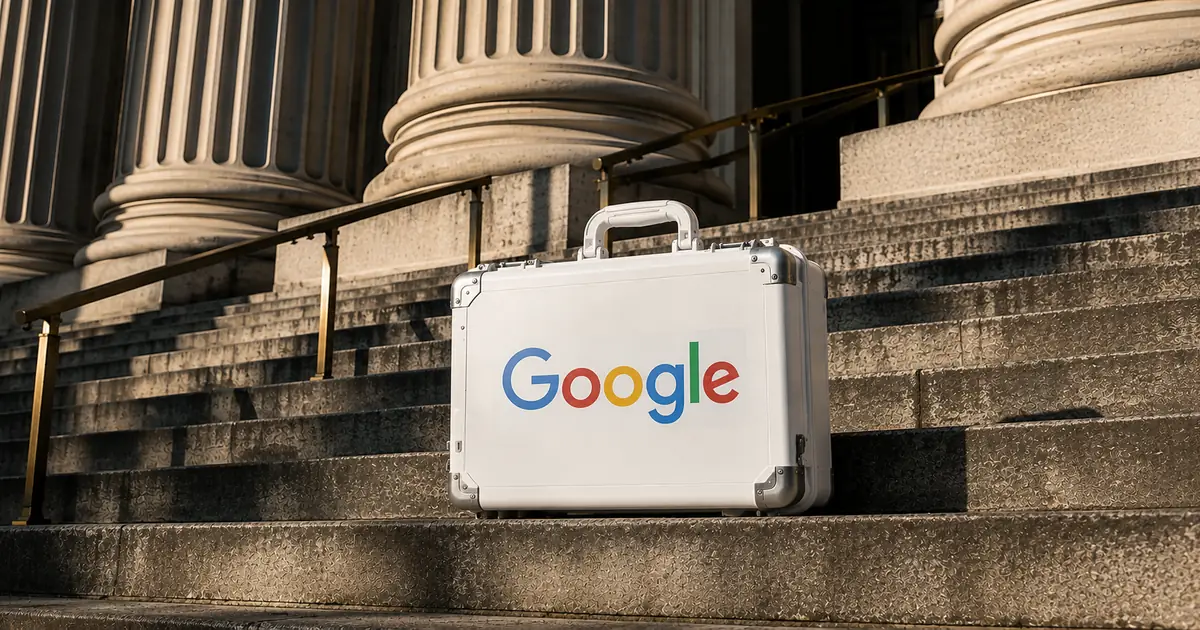
Google engineer convicted at trial, espionage counts vacated
On Thursday, August 20, 2026, Judge Vince Chhabria vacated the seven economic espionage convictions against Linwei Ding and left the seven trade secret theft convictions standing. The jury in San Francisco had convicted Ding, who is also known as Leon Ding, on both sets of counts after an 11-day trial, and the Justice Department announced the verdict on January 30, 2026. Three weeks after the trial, his lawyers filed papers asking the court to acquit him, arguing the government had not proved the charges beyond a reasonable doubt.
The judge ruled that the evidence did not show Ding meant, or knew, that his actions would help China's government. Reuters reports that proof of this is required for conviction on the espionage counts. The judge also said the evidence supported the guilty verdict on the theft counts, so only one of the two sets of seven counts fell.
How each set of counts fared
| Charge | Counts | Status after August 20, 2026 | Maximum per count |
|---|---|---|---|
| Economic espionage (18 U.S.C. §1831) | 7 | Vacated | 15 years, $5 million |
| Theft of trade secrets (18 U.S.C. §1832) | 7 | Convictions stand | 10 years, $250,000 |
An attorney for Ding said he was gratified with the ruling. Reuters says the Justice Department and Google did not immediately respond to requests for comment. Google itself was not charged; it has said it cooperated with law enforcement.
"US District Court Judge Vince Chhabria in San Francisco ruled there was insufficient evidence Mr. Ding intended or knew his conduct would benefit the government of China, a requirement to convict him on seven counts of economic espionage. Mr. Chhabria said evidence supported the guilty verdict on the theft of trade secrets."/"Three weeks after the trial, Mr. Ding’s lawyers filed papers seeking his acquittal, arguing the Justice Department failed to prove the charges beyond a reasonable doubt."/"An attorney for Mr. Ding, also known as Leon Ding, said he was gratified with the ruling. The Justice Department did not immediately respond to a request for comment."(Reuters wire report・body)View official source →
Espionage counts failed on one element: intent to help China
The two charges differ in one element: economic espionage under section 1831 requires a benefit to a foreign government, and trade secret theft under section 1832 does not. Both statutes cover taking a trade secret, and section 1831 adds the state connection, with a longer prison term and a much larger fine. In this case the state connection was the part the judge found unproven.
What separates the two charges
| Theft of trade secrets (§1832) | Economic espionage (§1831) | |
|---|---|---|
| Foreign government must benefit | No | Yes |
| Maximum prison term | 10 years per count | 15 years per count |
| Maximum fine | $250,000 per count | $5 million per count |
The Justice Department had put intent in front of the jury. It said Ding secretly affiliated himself with two technology companies based in China while he worked at Google. Around June 2022 he was in talks to become chief technology officer of an early-stage company there, and by early 2023 he was founding his own AI company in China and acting as its CEO.
Prosecutors said he told potential investors he could build an AI supercomputer by copying and modifying Google's technology. In late 2023 he applied to a government-sponsored "talent plan" in Shanghai, writing that he planned to "help China to have computing power infrastructure capabilities that are on par with the international level." The Justice Department said the trial evidence showed he intended to benefit two entities controlled by the government of China.
The judge nevertheless found the evidence insufficient on that point, and Reuters reports only that finding, not the judge's wider reasoning. After the January verdict, FBI Assistant Director Roman Rozhavsky called it the first-ever conviction on AI-related economic espionage charges. The counts vacated in August are the espionage counts that statement referred to.
"Ding faces a maximum sentence of 10 years in prison for each count of theft of trade secrets in violation of 18 U.S.C. § 1832 and 15 years in prison for each count of economic espionage in violation of 18 U.S.C § 1831."/"Not only does this case mark the first-ever conviction on AI-related economic espionage charges, but it also demonstrates the FBI’s unwavering dedication to protecting American businesses from the increasingly severe threat China poses to our economic and national security."/"Ding’s application for this talent plan stated that he planned to “help China to have computing power infrastructure capabilities that are on par with the international level.” The evidence at trial also showed that Ding intended to benefit two entities controlled by the government of China by assisting with the development of an AI supercomputer and collaborating on the research and development of custom machine learning chips."(US Department of Justice official press release・body and Roman Rozhavsky statement)View official source →
Jury found Linwei Ding took Google TPU and SmartNIC designs
The jury found that Ding stole the designs behind Google's AI supercomputing: its custom chips, the software that links them, and a custom network card. Between about May 2022 and April 2023, the trial evidence showed, he copied more than two thousand pages of confidential files off the company's network into a personal cloud account, and in December 2023, less than two weeks before he resigned, he downloaded the material onto his own computer. The ruling left this part standing: the judge said the evidence supported the theft verdict.
Trade secret categories named by the Justice Department
| Asset | Description |
|---|---|
| TPU | Architecture and functionality of Google's custom Tensor Processing Unit chips and systems |
| GPU systems | Architecture and functionality of Google's Graphics Processing Unit systems |
| Interconnect software | Software that lets the chips communicate and execute tasks |
| Orchestration software | Software that orchestrates thousands of chips into a supercomputer |
| SmartNIC | Custom network interface card for high-speed communication inside Google's AI supercomputers and cloud networking products |
Prosecutors said Ding, also known as Leon Ding, joined Google in May 2019 and began taking files three years later, when a Chinese startup was courting him. Reuters adds that part of the chip material was allegedly meant to help Google compete with Amazon and Microsoft in cloud computing, since both design their own chips, and to cut its dependence on Nvidia chips.
"According to the evidence presented at trial, between approximately May 2022 and April 2023, while a Google employee, Ding stole more than two thousand pages of confidential information containing Google’s AI trade secrets from Google’s network and uploaded them to his personal Google Cloud account."/"The trade secrets also pertained to Google’s custom-designed SmartNIC, a type of network interface card used to facilitate high speed communication within Google’s AI supercomputers and cloud networking products."/"In December 2023, less than two weeks before he resigned from Google, Ding downloaded the stolen Google trade secrets to his own personal computer."(US Department of Justice official press release・body)View official source →
Linwei Ding sentencing date and the sentence on theft counts
Sentencing on the seven surviving theft counts was scheduled for September 1, 2026, and each count carries a maximum of 10 years in prison and a $250,000 fine. Reuters took the date from the court docket, and the maximums are the most the law allows, not a forecast. The Justice Department says any sentence comes only after the court considers the U.S. Sentencing Guidelines and the federal sentencing statute, 18 U.S.C. §3553.
Case timeline
| Date | Event |
|---|---|
| March 2024 | Ding indicted |
| February 2025 | Superseding indictment: seven categories of trade secrets, seven espionage counts and seven theft counts |
| January 2026 | Jury convicts on all 14 counts after an 11-day trial |
| August 20, 2026 | Seven espionage counts vacated; seven theft counts stand |
| September 1, 2026 | Sentencing scheduled |
The ruling lowered the maximum possible sentence, and Reuters' report of the ruling gave September 1 as the sentencing date. Had the espionage counts survived, each would have carried up to 15 years and a $5 million fine, against 10 years and $250,000 for each theft count.
Neither the Reuters report nor the Justice Department's release says whether prosecutors will appeal, and neither reports the sentence itself. Both were published before the September 1 sentencing date.
"Each economic espionage charge carries a maximum 15-year prison term and $5 million fine, while each trade secrets charge carries a maximum 10-year term and $250,000 fine."/"Mr. Ding is scheduled to be sentenced on September 1, according to the court docket."/"Mr. Ding was originally indicted in March 2024 and a superseding indictment in February 2025 expanded the charges."(Reuters wire report・body)View official source →
Insider-risk lessons from the Ding trial and sentencing
The ruling separated the act of taking secrets from the question of who benefited, and only the act was upheld. The theft counts rest on the taking itself, the uploads and the later download, whereas intent to benefit a foreign government comes from outside affiliations, statements to investors and applications. The judge found that evidence insufficient, even though it included talks to join a Chinese startup, a company Ding was founding and a talent-plan application.
For a security team, the practical reading is narrow: the surviving theft counts rest on the taking, which the judge found the evidence supported. A related trade-secret dispute is covered in Apple OpenAI Lawsuit: Trial Set for July 19, 2027. After the ruling, the seven theft counts are what remain for sentencing.
FAQ
- Was Linwei Ding acquitted?
- Only on the espionage counts. The judge found insufficient evidence that Ding intended or knew his conduct would benefit the Chinese government, which the economic espionage charge requires. The seven trade secret theft convictions were left standing.
- When is Linwei Ding's sentencing?
- Sentencing was scheduled for September 1, 2026, per the court docket, on the trade secret counts that survived. Each carries up to ten years and a $250,000 fine. The espionage counts would have carried up to fifteen years and $5 million each, so the ruling removed the heavier half of the exposure.
- What did the espionage charge require that the theft charge did not?
- A foreign government. Trade secret theft under 18 U.S.C. §1832 needs no state connection; economic espionage under §1831 does, and that is the element the court found unproven. The statutory maximums differ accordingly — ten years versus fifteen.
- What did he take from Google?
- The design of Google's AI supercomputing stack. According to the DOJ, that covered its custom TPU chips and systems, its GPU systems, the software letting chips communicate and execute tasks, the software that orchestrates thousands of chips into one supercomputer, and a custom SmartNIC.
Related articles
 Reddit to require logins as search referrals fallReddit will test a logged-in-only site outside the US in Q4. Search referrals fell over 1M a week in October; its CEO says Google's AI Mode drives no traffic.
 Gemini create files: edit PDFs and docs in chatGemini create files: docs, PDFs, slides and sheets now open in the chat as previews you can edit. Phones edit only PDFs; the web handles the rest.
 What is Genie 4? Google's world model with audioGenie 4 is Google DeepMind's world model that adds ambient sound and live dialogue to explorable worlds. Only testers have it; Ultra subscribers are next.
 Google Deep Review: what the AI paper checker doesGoogle Deep Review checks papers for logic gaps, math errors and weak evidence. Two reviews a week are free, and its predecessor caught 89.7% of known errors.