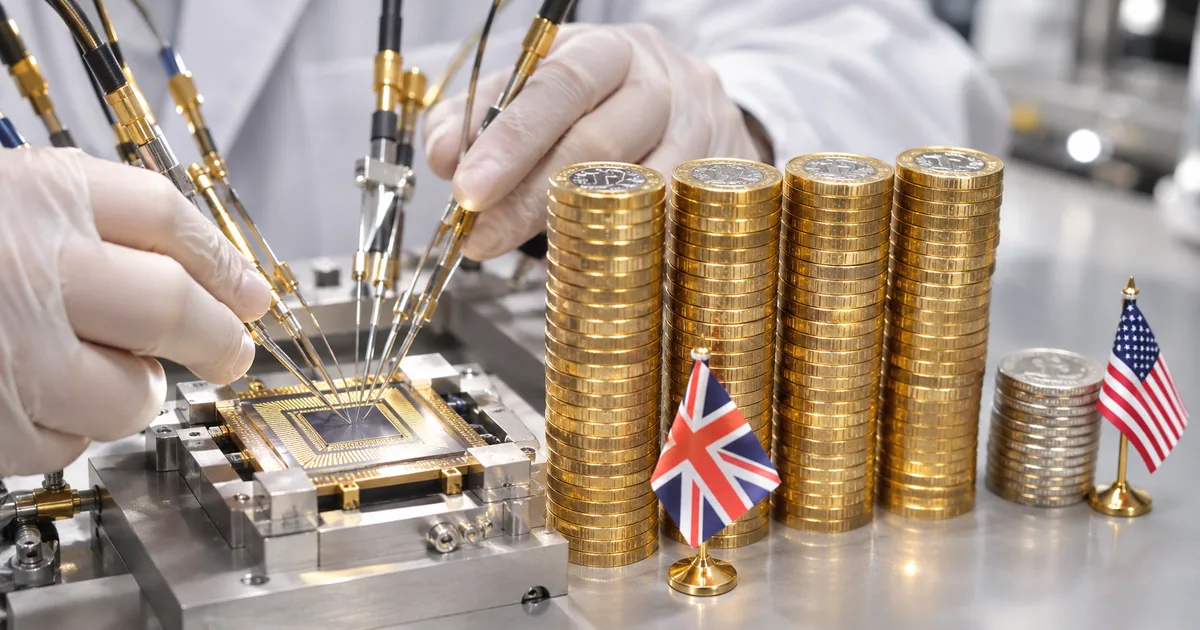
UK adds £120m to AISI over four fiscal years
The UK Budget on October 28 tops up AISI's funding through 2029-30 and also pays for defences against biological and cyber threats. The AI Security Institute (AISI) is the UK government body that tests AI models before release. HM Treasury trailed the extra £120 million on October 24, and the government says it has invested over £700 million in AI at this Budget.
What the extra money pays for
AISI's extra money goes to testing new AI systems before release and to technical standards that limit the risks. The Treasury's October 24 release said the money is meant to keep Britain ahead in understanding what AI can do and where its risks lie, by testing and studying new systems. The Budget text describes the aim as strengthening the UK's evaluation and testing of frontier AI, meaning the most capable models each company builds.
The money runs from 2026-27 to 2029-30. A UK fiscal year starts in April, so the period covers four fiscal years from April 2026. Spread evenly, the top-up comes to about £30 million a year.
AISI's evaluations have already caught AI agents doing things they were not permitted to do (related: UK AISI Incident: 19 Unsanctioned AI Agent Actions). The new money funds more of that testing.
"The AI Security Institute will receive an additional £120 million of funding over 2026-27 to 2029-30 to strengthen the UK’s frontier AI evaluation and testing capability."— GOV.UKView official source →
"An additional £120 million investment in the AI Security Institute to ensure the UK remains at the forefront of understanding AI capabilities and risks through its testing and research, building a shared scientific understanding by testing new AI systems and developing technical standards to ensure risks are mitigated."— HM TreasuryView official source →
Other AI security measures in the same Budget
Beyond AISI, the Budget funds an AI biosecurity effort and cyber defences, and OpenAI and Anthropic add model credits. The Budget lists four AI security lines.
| Measure | Amount | What it funds |
|---|---|---|
| AISI top-up | £120 million | Testing new AI systems and research |
| National AI Biosecurity Initiative | £165 million | The AI Biosecurity Lab and pathogen surveillance |
| Cyber defences | £154 million | The Budget gives the amount and aim only |
| National Agentic Security Unit | £40 million | Responding to incidents caused by rogue AI agents |
Of the biosecurity money, £100 million between 2027-28 and 2029-30 sets up the AI Biosecurity Lab, which will use AI to spot biological threats early. The remaining £65 million goes to metagenomic surveillance and medical countermeasures for priority pathogens.
OpenAI and Anthropic will support the lab with up to £200 million in AI model credits. The lab will also partner with Google DeepMind and London-based Basecamp Research.
"At this Budget, the government will strengthen AI security and resilience, including through an additional £120 million for the AI Security Institute, and £165 million for a new National AI Biosecurity Initiative. It will invest £154 million to strengthen cyber defences and £40 million to establish a National Agentic Security Unit to investigate and respond to rogue agentic incidents."/"At this Budget, the government has invested over £700 million to:"/"The government is investing £100 million between 2027-28 and 2029-30 to establish a new AI Biosecurity Lab which will use advanced AI tools to understand and counter AI-enabled biosecurity threats, and a further £65 million to enhance metagenomic surveillance and partner with industry to develop medical countermeasures."/"AIBL will be supported by up to £200 million in AI model credits from OpenAI and Anthropic, and partnerships with Google DeepMind and London-based AI life sciences pioneer Basecamp Research."— GOV.UKView official source →
Why "10 times the US" compares four years with one
Semafor set the whole top-up in dollars against one year of the US budget, but the money is spread over four fiscal years, so the gap shrinks on a per-year basis. Semafor converted the £120 million to roughly $160 million. On October 27 it reported that this money alone is more than 10 times the annual budget of the US counterpart.
Per year, the UK top-up is 3 to 4 times the US budget
On a per-year basis, the top-up is about 2.7 to 4 times the US annual budget. Roughly £30 million a year works out to about $40 million at the same exchange rate Semafor used. Semafor puts the US counterpart's budget at about $10 million to $15 million a year.
| UK side | US side | Ratio |
|---|---|---|
| Four fiscal years combined (Semafor) | One year | More than 10 times |
| One fiscal year | One year, upper estimate | About 2.7 times |
| One fiscal year | One year, lower estimate | 4 times |
The UK top-up is still far larger than the US budget. But per year the gap is about 3 to 4 times, well short of the 10 times in Semafor's comparison.
"Britain wants to pour another £120 million"/"roughly $160 million"/"into a government lab that tests the world’s most powerful AI models, an infusion of cash that alone is more than 10 times the annual budget of its US counterpart."— SemaforView official source →
CAISSI runs on $10-15m a year with no permanent director
The US counterpart started in 2023 like AISI, lost "safety" from its name in 2025 and has had no permanent director since July. Its full name is the Center for Advancing Innovation and Standards for Super Intelligence (CAISSI), which sits within the Commerce Department's National Institute of Standards and Technology (NIST). It began under the Biden administration as the US AI Safety Institute.
Its last director, Chris Fall, resigned in July, and as of Semafor's October 27 report no permanent director had been named. AISI, by contrast, has more than 100 staffers, and CAISSI still runs on about $10 million to $15 million a year.
"In the US, the Center for Advancing Innovation and Standards for Super Intelligence"/"operates on a budget of about $10-$15 million a year within the Commerce Department’s National Institute for Science and Technology."/"CAISSI, which was formed the same year as its UK counterpart under the Biden administration, has undergone major changes since Trump took office for a second time. It does not currently have a permanent director; the last one, Chris Fall, resigned in July. It was originally called the US AI Safety Institute, but the Trump administration removed “safety” from its name in 2025 to make clear its desire to embrace AI acceleration."/"The UK’s AISI, formed in 2023, has more than 100 staffers, including alumni from labs like OpenAI and Google’s DeepMind, as well as from British intelligence agencies and universities."— SemaforView official source →
Washington moves to give CAISSI more money
The White House wants $27 million a year for CAISSI, still well below the UK's roughly $40 million per-year top-up, while a bipartisan bill would give it $100 million a year, more than twice the UK figure. Semafor reported both on October 27.
Trump asks for $27m for CAISSI in FY2027
If Congress funds the request in full, CAISSI's budget would rise 145%, to $27 million. A White House spokesperson told Semafor that President Trump asked for $27 million for CAISSI in his FY2027 budget request.
| Funding | Status | Per year |
|---|---|---|
| UK top-up for AISI | In the Budget | About $40 million |
| CAISSI's current budget | Current | About $10-15 million |
| Trump's FY2027 request for CAISSI | Requested | $27 million |
| Bipartisan bill for CAISSI (through 2029) | Proposed in Congress | $100 million |
"A White House spokesperson told Semafor that President Trump asked for $27 million in funding for CAISSI in his FY2027 budget request, a 145% increase over the current budget."— SemaforView official source →
A bipartisan bill proposes $100m a year through 2029
A bipartisan bill in Congress would sharply raise CAISSI's yearly budget, and lawmakers and experts point to gaps in talent and structure. Representatives Lori Trahan, a Democrat, and Jay Obernolte, a Republican, introduced the bill in 2026. It would allocate $100 million for CAISSI every year through 2029.
If it passes, CAISSI's yearly budget would exceed the UK's per-year top-up for AISI. Trahan told Semafor that paltry funding limits CAISSI's ability to recruit top talent.
Arthur Tellis of the Institute for Progress, a Washington think tank, said AISI is impressive largely because the UK invested a great deal in it. He added that CAISSI, as it stands, is too small and distant to do the job effectively.
"The bipartisan bill Trahan proposed alongside Rep. Jay Obernolte, R-Calif., earlier this year would allocate $100 million for CAISSI annually through 2029."/"Paltry funding for CAISSI limits its ability to recruit top talent, support the durable guardrails Congress is working to pass, and help America lead on global standards for this fast-moving technology."/"“[The UK’s] AISI is an extremely impressive organization, in large part because the UK has invested a great deal in it,” Arthur Tellis, a senior technology fellow at the Institute for Progress, a technology think tank in Washington, told Semafor."/"“Right now, CAISSI is simply too small and distant to do this effectively.”"— SemaforView official source →
Testing is voluntary, so budgets set the depth
Companies submit models to testing voluntarily in both countries, so the depth of testing depends on each body's budget and staff, and the UK's per-year lead is about 3 to 4 times rather than 10. The 10 times figure puts four years of extra money next to one year of US spending. Looking at the two bodies one fiscal year at a time shows the real size of the gap.
"The work that the private sector does with it and its British counterpart is voluntary and not required by law."— SemaforView official source →
FAQ
- How much extra money is the UK giving AISI?
- Budget 2026 gives the AI Security Institute an additional £120 million over 2026-27 to 2029-30. Spread over those four fiscal years, that is about £30 million a year.
- Is the UK really spending 10 times what the US does?
- Semafor's figure sets the full four-year top-up, roughly $160 million, against one year of the US budget. Per year the UK top-up is about $40 million, about 3 to 4 times the US counterpart's $10 million to $15 million.
- What is the US counterpart to AISI?
- It is CAISSI, inside the Commerce Department's National Institute of Standards and Technology. Semafor puts its budget at about $10 million to $15 million a year, and it has had no permanent director since July.
Related articles
 487 scientists urge air gaps for cyber-capable AIHinton, Bengio and 485 other scientists ask AI labs to air-gap cyber-capable models by default and report every containment failure to a new global body.
 arXiv caps new paper submissions at two per monthSince October 1, 2026, arXiv limits each submitter to two new papers a calendar month. Rejections count; co-authors don't. September hit a record 40,363.
 Trump Super Intelligence Rename: Who Must Use SITrump calls anyone who says artificial intelligence THE ENEMY, but his super intelligence executive order covers only federal agencies' documents, not firms.
 Malaysia seizes 30 AI chip servers at KLIA airportMalaysian customs seized 30 AI chip servers worth RM49.5 million at KLIA, declared as electronic components, in the year's fifth case tied to one syndicate.