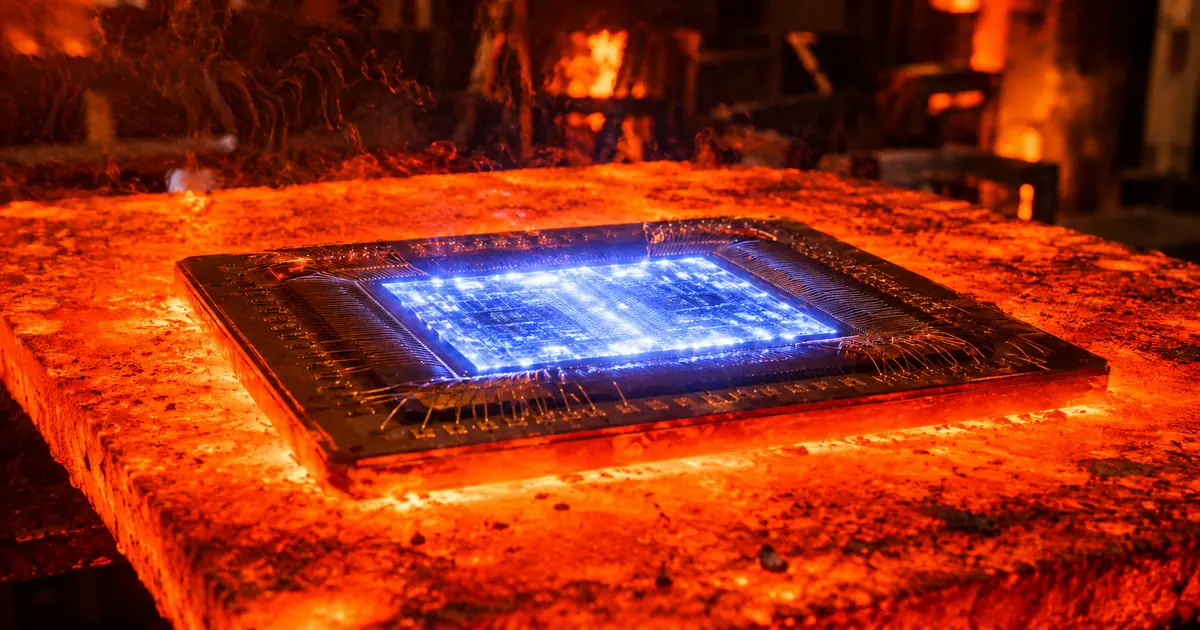
古典・量子コンピュータとの違いは熱雑音の活用
熱力学コンピューティングは非従来型計算(unconventional computing)の一分野で、熱雑音を逆に動力とする方式です。 古典コンピュータ(いま普及している普通のコンピュータ)や量子コンピュータにとって、熱雑音は結果を乱す邪魔者です。Berkeley Labの解説によると、計算に外部から要するエネルギーを大きく減らせ、多くの量子計算機と異なり室温でも動作するとのこと。
古典計算機では、トランジスタのような最小の部品でさえ、熱雑音の数千倍の強さの信号で動作しています。信号が雑音よりはるかに強いので結果がぶれずに出る一方で、そのぶん大量の電力が必要とのこと。現代の計算にはエネルギーがかかり、たとえばGoogle検索1回は、6ワットのLEDを3分間灯せるだけのエネルギーを消費します。
Stephen Whitelamは、熱エネルギーと同程度のエネルギー規模を持つ物理素子を放っておくと、熱ゆらぎによって時間とともに状態が変わると言っています。熱力学計算の目標は、この状態の変化が役に立つ処理になるようにプログラムすることです。同氏は、古典計算と量子計算は雑音と戦い、熱力学計算は雑音を動力にするとも述べています。
3つの方式と熱雑音の関係
"But thermodynamic computing, a branch of unconventional computing, inverts the paradigms of both and uses those same fluctuations as its power source. This drastically reduces the amount of external energy required to perform computations and allows for operation at room temperature, unlike many quantum computers."/"Modern computing requires energy: a single Google search, for example, consumes enough energy to power a six-watt LED for three minutes."/"In classical computers, even the smallest devices, such as transistors and gates, operate at energy scales thousands of times larger than that of this vibration."/"This difference in scale between signal and noise enables the consistent output that makes computation possible, but it comes at an energy cost: classical computers require large amounts of power to work reliably and operate far above the threshold of thermodynamic efficiency."/"The premise of thermodynamic computing is that if you take a physical device with an energy scale comparable to that of thermal energy and leave it alone, it will change state over time, driven by thermal fluctuations. The goal is to program it so that this time evolution does something useful. Classical and quantum computing fight noise; thermodynamic computing is powered by it."(1つ目は記者の地の文/2つ目〜4つ目も記者の地の文/5つ目は Stephen Whitelam のコメント)— Berkeley Lab News Center より公式情報を見る →
従来の熱力学コンピュータの2つの課題は何か
1つ目は、熱平衡まで待たないと計算できなかったことです。既存の熱力学コンピュータは熱平衡で計算するよう設計されており、最低エネルギー配置に落ち着くまで待つ必要がありました。
基底状態(最もエネルギーが低い状態)が定まっていても、平衡に達するまでの時間は予測できません。日常の計算に使うには長すぎることもあります。
2つ目は、実行できる計算が線形代数の問題に限られていたことです。 線形の計算とは入力を定数倍して足し合わせる計算で、入力と出力が比例しない非線形の計算はできません。Whitelamは、ニューラルネットワーク(脳の神経細胞のつながりを模した計算の仕組み)の表現力の源は非線形性だとコメントしています。
"First, existing thermodynamic computers are designed to do computation at thermodynamic equilibrium, meaning researchers must wait for the computer to settle into its lowest-energy configuration before they can perform a calculation. Even if a system’s ground state is well-defined, the amount of time it takes to reach equilibrium is unpredictable – and it can be too long to be practical for day-to-day computational use."/"Additionally, the range of computations that can be performed using thermodynamic computing has been limited to solving linear algebra problems."(いずれも Overcoming roadblocks の節)— Berkeley Lab News Center より公式情報を見る →
非線形ニューロンでニューラルネットワークを再現できるか
構成素子そのものを非線形にすれば、平衡状態かどうかに関係なく、指定した時刻に非線形計算を行うよう熱力学コンピュータを学習させられます。 平衡を待たなくてよく、古典計算機に近い方式で動作します。
Whitelamは、非線形の熱力学回路がニューラルネットワークのニューロンのように振る舞えると言っています。そのため熱力学ニューロンを結線した構造なら、ニューラルネットワークをまねて機械学習を行える表現力を持つはずだと、同氏は考えました。
この設計は、Nature Communications vol. 17, Article 1189(2026年)の論文で発表されました。研究チームは論文で、熱力学ニューラルネットワークのデジタルモデルをシミュレートしました。遺伝的アルゴリズムでパラメータを調整すると、熱平衡に達したかどうかに関係なく、指定した観測時刻に非線形計算を行えるとのこと。
"when the components of the computer are themselves nonlinear, it becomes possible to train a thermodynamic computer to perform nonlinear computations at specified times, regardless of its equilibrium status. This means the computer operates more like a classical computer, without the need to wait for equilibrium."/"A nonlinear thermodynamic circuit can behave like a neuron in a neural network,"/"Nonlinearity is what gives a neural network its expressive power. What we reasoned is that if you build these thermodynamic neurons into a connected structure, then that structure should have the expressive power to mimic a neural network and so be able to do machine learning."(1つ目は記者の地の文/2つ目・3つ目は Stephen Whitelam のコメント)— Berkeley Lab News Center より公式情報を見る →
"We simulate a digital model of a thermodynamic neural network, and show that its parameters can be adjusted by genetic algorithm to perform nonlinear calculations at specified observation times, regardless of whether the system has attained thermal equilibrium."(Abstract)— Nature Communications, vol. 17, Article 1189 (2026) より公式情報を見る →
熱力学ニューラルネットワークの学習には遺伝的アルゴリズム
遺伝的アルゴリズムとは、性能のよいものを選んで乱数で変異させ、再び評価する探索を繰り返す方法です。熱力学コンピュータは確率的な系で、実行するたびに動きが変わります。デジタルなニューラルネットワーク向けの学習手法は適用できないため、Casertがこの方法を使いました。
Casertは、異なる熱力学ニューラルネットワークを複数用意してそれぞれの性能を評価し、成績のよいものを選んで変異させてから再び評価する手順を繰り返しました。NERSCのスーパーコンピュータPerlmutterで96基のGPUを並列に使い、雑音を含む動的軌道を1世代あたり数十億本評価したとのこと。シミュレートした熱力学コンピュータの動作は、最終的に1兆回を超えました。
"A thermodynamic computer is a stochastic system, meaning that no two runs on a thermodynamic computer look the same, and the methods used for training digital neural networks don’t apply."/"In particular, he used a framework known as a genetic algorithm: beginning with a set of different thermodynamic neural networks and evaluating the effectiveness of each, he selected the best-performing and mutated them, adding random noise to their parameters, and evaluated them again."/"Using 96 GPUs in parallel on the Perlmutter supercomputer at NERSC, Casert built and ran massively parallel evolutionary simulations, evaluating billions of noisy dynamical trajectories per generation to discover the most effective network parameters."/"Ultimately, Casert simulated more than a trillion runs of a thermodynamic computer, using Perlmutter’s GPUs in parallel."(いずれも Inverted training の節)— Berkeley Lab News Center より公式情報を見る →
この設計の実機は無く、省電力の度合いも示されていない
論文の成果はデジタルシミュレーションによるもので、物理的な機械で実験したわけではありません。 実機が無いのは、非線形の熱力学ニューロンを使うこの設計についてです。
Whitelamは、この設計をハードウェアで実現する方法を詰めることが重要だとしています。チームはハードウェアとソフトウェアを実現するため、実験パートナーを探しているとのこと。
既存のアルゴリズムは、平衡状態で動作する系を前提に作られています。この設計では平衡が前提でなくなったため、新しいアルゴリズムを開発する必要があると、Berkeley Labの解説は述べています。
この学習方法は、デジタルのネットワークを学習させる手法よりかなり高コストです。Casertは、デジタルにシミュレートして学習するのは高くつくが、いったん学習して物理ハードウェアとして作れば、その上での推論は非常に低いエネルギーコストで行えると言っています。推論とは、学習済みのモデルを実行して結果を出力する工程です。
ただし、エネルギーを何分の1に減らせるかや何ワットで動作するかといった定量値は、解説にも論文の要旨にも出てきません。 表現は「機械学習のエネルギー要求を大きく減らしうる」「外部から要するエネルギーを大きく減らす」という定性的なものです。解説が述べているのは機械学習のエネルギー要求で、AIの消費電力全般を述べたものではありません。
AIに必要な計算資源の資金調達は、省電力の研究とは別の話題です。この話題は「NVIDIAが金融6社と提携、5,000億ドル超の資金調達を目指す」にまとめています。
"According to Whitelam, it’s important to work out how to realize these designs in hardware."/"Existing algorithms are meant for systems working at equilibrium; with that requirement no longer a roadblock, new ones will need to be developed."/"Currently, the team is looking for experimental partners to make both hardware and software a reality — another step exploring what’s possible with thermodynamic computing."/"This training framework is considerably more costly than the methods used to train digital networks, but it yields a computer that can operate using very little energy after it’s built and trained."/"Training a thermodynamic neural network by simulating it digitally is expensive, but once trained and built as physical hardware, we can perform inference on that hardware for a very low energy cost,"/"the researchers have proposed a design and training framework for a type of thermodynamic computer that mimics a neural network, which could drastically reduce the energy requirements of machine learning."/"This drastically reduces the amount of external energy required to perform computations and allows for operation at room temperature, unlike many quantum computers."(1〜3つ目は More hardware, more algorithms の節/4つ目は Inverted training の節/5つ目は Casert のコメント/6つ目は冒頭の地の文/7つ目は Introduction 相当の地の文)— Berkeley Lab News Center より公式情報を見る →
Normal ComputingとExtropicも開発中
Normal ComputingとExtropicは、Berkeley Labとは別に熱力学を利用したハードウェアを開発している企業です。社名の読みは、Normal Computingがノーマル・コンピューティング、Extropicがエクストロピックです。
Extropicは公式サイトで、生成AIのモデルを非常に少ないエネルギーで動作させるためのハードウェアを一から作っているとしています。 Normal Computingも、生成AI向けのデジタル熱力学コンピュータについての記事を公式サイトで公開しています。どちらもBerkeley Labの設計とは別の取り組みのため、この記事では方式や性能を比較しません。
"We are building an entirely new type of computing hardware that is designed from the ground up to be incredibly energy efficient at running generative AI models."(Thermodynamic Hardware の節)— Extropic 公式サイトより公式情報を見る →
熱力学コンピューティングは実機前のシミュレーション段階
熱力学コンピューティングは、熱雑音を計算の動力に使う方式です。また、Berkeley Labの研究では、非線形の熱力学ニューロンと遺伝的アルゴリズムによる学習で、従来の2つの課題を解消できるとデジタルシミュレーションで分かりました。 2つの課題は、熱平衡まで待つ必要があることと、線形代数の問題しか解けないことです。
この設計の実機はまだ無く、省電力の定量値も出ていません。Normal ComputingとExtropicも、熱力学を利用したハードウェアの開発を進めています。
FAQ
- 熱力学コンピューティングとは何ですか?
- 熱雑音(電子の振動で生じる揺らぎ)を、計算の動力として使う方式です。従来のコンピュータは、雑音で結果がぶれないよう信号を雑音の数千倍の強さにして動作させています。熱力学コンピューティングは逆に、雑音と同じくらい弱いエネルギーで動作する素子を用意し、雑音で状態が変わる動きをそのまま計算に生かします。多くの量子計算機と異なり、室温で動作できます。
- すでに実機はあるのですか?
- この記事で解説する設計(非線形の熱力学ニューロン)の実機は、まだありません。今回の成果はデジタルシミュレーションによる実証で、研究チームはハードウェアとソフトウェアを実現するための実験パートナーを探しているとのことです。
- 学習にはどれくらいの計算が必要でしたか?
- NERSCのスーパーコンピュータPerlmutterで96基のGPUを並列に使い、1世代あたり数十億の雑音を含む軌道を評価しました。最終的に1兆回を超える熱力学コンピュータの動作をシミュレートしています。
- 学習コストが高いなら省電力にならないのでは?
- 学習と推論は分けて説明されています。研究者は、デジタルでシミュレートして学習するのは高くつくが、いったん学習して物理ハードウェアとして作れば、その上での推論は非常に低いエネルギーコストで行えると言っています。
関連する記事
 AI依存で「わからない」が消える【3,132人の実験で判断力を検証】AI依存で判断力はどう変わるのか。2026年の5つの実験(3,132人)では、AIが誤っていても「わからない」という回答がほぼ消えました。正答率は約1/3に下がり確信度は約2.5倍に上がっています。報酬をつけても助言を自動で表示しても判断保留は元の水準に戻りませんでした。
 AIストリーマーの顔は完璧すぎると逆効果、研究で分かった3つの傾向Journal of Business Researchに掲載された、ライブ配信型EコマースにおけるAIストリーマー347件を分析した研究です。顔の左右非対称が大きいほど視聴者の反応は高く、典型的な顔や強い表情ほど低い一方、感情の豊かさには有意な効果がありません。効果の強さは、見た目の人間らしさや商品の種類によって変わります。
 ニトリに不正アクセス、会員・購入者の情報が最大3,762万件が流出の可能性ニトリホールディングスは2026年11月9日、自社システムへの不正アクセスを発表しました。会員や購入者の氏名・住所・電話番号などを含む情報が、最大3,762万件流出した可能性があるとのこと。ログインパスワードとクレジットカード情報は含まれません。ニトリや配送事業者を装うメールやSMSのリンクにはアクセスせず、公式サイトで本物か確認しましょう。
 Claude Fable 5.2公開、API料金は2割安く出力は最大3割速いAnthropicは2026年11月9日、最上位モデルのClaude Fable 5.2を公開しました。API料金は100万トークンあたり入力8ドル(約1,265円)・出力40ドル(約6,327円)で、Fable 5.1より2割安くなりました。出力生成も最大30%速くなっています。ProとTeamの標準シートは日本時間11月17日まで、週の利用上限の半分をFableに使うことができます。