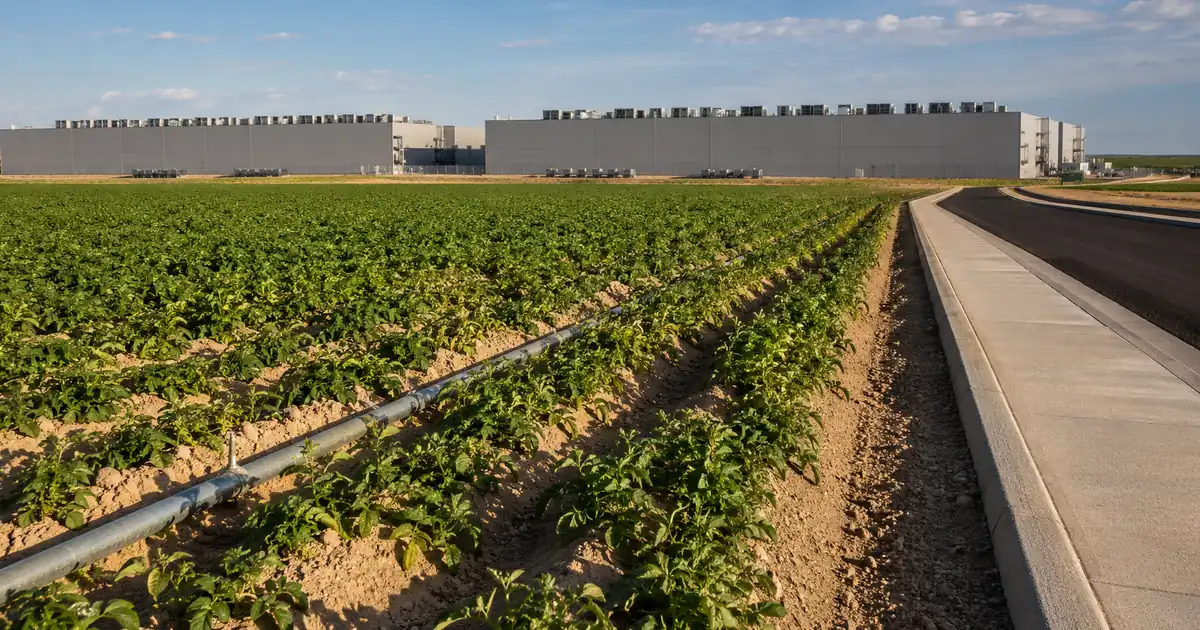
Quincy, Washington data centers: Microsoft’s 2006 land purchase
Quincy is a farming town of 8,500 in central Washington, miles from the Columbia River. In 2006, Microsoft bought 75 acres of bean fields in an industrial zone in Quincy. On that land it built a 500,000-square-foot data center that it owns, to run its Bing search engine and Hotmail email servers.
Quincy now has roughly 30 data centers. CNN says nearly all of the town's infrastructure and services are new or improved, and that data centers made this possible.
"In 2006, Microsoft bought 75 acres of bean fields in an industrial zone in Quincy to build a 500,000-square-foot company-owned data center for its Bing search engine and Hotmail email servers."/"Just about all the infrastructure and services are new and improved in this rural central Washington farming town of 8,500, miles from the Columbia River. There's a $120 million state-of-the-art high school. Hospital. Public library. Police and fire stations. Paved sidewalks, sewage systems and wastewater treatment plant. It's been made possible by data centers."(CNN Business・the town and the 2006 purchase)View official source →
Data center tax revenue: 57% of Quincy’s property taxes
CNN reports that the roughly 30 data centers pay an estimated 57% of Quincy's property taxes. It ties that data center tax revenue to the city's public building spree, and lists what the town now has:
- A $120 million state-of-the-art high school
- A hospital
- A public library
- Police and fire stations
- Paved sidewalks
- Sewage systems and a wastewater treatment plant
CNN's own line on the list is that data centers made it possible. A $15 million aquatic center with a six-lane pool and waterslides opened a few weeks before the report. The spending on parks ends next year with the Q-Plex, a 143,000-square-foot indoor sports complex.
"Roughly 30 data centers shoulder an estimated 57% of Quincy's property taxes, funding the city's public building spree."/"There's a $120 million state-of-the-art high school. Hospital. Public library. Police and fire stations. Paved sidewalks, sewage systems and wastewater treatment plant. It's been made possible by data centers."/"A $15 million aquatic center with a six-lane pool, waterslides and a lazy river opened in Quincy, Washington, a few weeks ago."/"It's part of the public parks splurge in the city, which will culminate next year with the opening of the Q-Plex, a 143,000-square-foot indoor sports complex."(CNN Business・the tax share, the buildings and the parks)View official source →
900 data center jobs and a 6.2% poverty rate in Quincy, Washington
Data centers created around 900 jobs in Quincy for engineers, pipefitters and electricians. According to Washington State analyses cited by CNN, each of those jobs also generates four to six other jobs in construction, retail and local services.
CNN adds that new businesses, nonprofits and neighborhoods have appeared to serve the people moving to town. The poverty rate fell from 29.4% in 2012 to 6.2% in 2024. Patrick Boss of the Port of Quincy, an economic development agency, described the growth as "controlled organically over 20 years."
"They created around 900 jobs for engineers, pipefitters and electricians in the town. Each of those also generates four to six other jobs in construction, retail and local services, according to Washington State analyses."/"New businesses, nonprofits and neighborhoods have popped up to cater to people moving to town, and the poverty rate has fallen from 29.4% in 2012 to 6.2% in 2024."/""It's been controlled organically over 20 years," said Patrick Boss from the Port of Quincy, an economic development agency."(CNN Business・jobs, poverty rate and growth)View official source →
Data center electricity bills and water use: Grant County’s numbers
CNN takes up the public belief that data centers drive up the cost of electricity. In Quincy, electricity bills have gone up, but large industrial customers such as data centers carry the larger increase.
Power rate increases last year, Grant County (CNN, August 2026)
Grant County is home to Quincy. Data centers and other large users pay for the infrastructure and generation that their large power loads need, and CNN says those costs are not spread to residential customers.
On data center water use, officials say data centers take around 8% of the city's water supply. More than 50% of the water in Quincy goes to food processors. Microsoft partnered with the city to build a $30 million water reuse facility that processes cooling water for data centers and other industries.
Ratepayer Protection Act Fails Senate Vote 57-43 covers a federal bill on who pays for large power loads. The five-year plan for AI data centers abroad is covered in "China AI data centers: $295B plan, 80% local chips."
"The public believes that data centers drive up the cost of electricity. Electricity bills have gone up in Quincy, but large industrial customers like data centers are shouldering the burden. Residential power rates went up 3.5% last year in Grant County, home to Quincy, while large industrial customers' rates went up 9.1%."/"Data centers and other large users pay for the infrastructure and generation needed to serve their large power loads — costs are not spread to residential customers."/"Data centers also only use around 8% of the city's water supply, officials say. Microsoft partnered with the city to build a $30 million water reuse facility to process cooling water for data centers and other industries. More than 50% of water in Quincy goes to food processors."(CNN Business・electricity and water)View official source →
Quincy, Washington housing and farmworkers in the data center economy
Home prices in Quincy have roughly doubled over the last decade, rising faster than incomes as more people move to town. New single-family neighborhoods have been going up, but the town lacks apartment buildings and rentals. Quincy recently approved a zoning code change that makes it easier to build rentals for low- and middle-income households.
Nina Martinez, executive director of the Latino Civic Alliance in Washington, told CNN that many agricultural workers have missed out on the data center economy. In her words, "A lot of the workforce is coming from other places." On housing she said, "Families have been pushed out."
CNN adds that Quincy's Hispanic population grew from 37% in 1990 to around 75%. It also reports that a large migrant farmworker population works in the town for part of the year.
In CNN's report on the data center economy in Quincy, data centers pay an estimated 57% of the property taxes, and the poverty rate fell. Electricity rates rose by a larger percentage for large industrial customers than for households, home prices rose faster than incomes, and Nina Martinez says many agricultural workers missed out.
"Home prices have roughly doubled over the last decade, rising faster than incomes, as more people move to Quincy. New single-family neighborhoods have been going up, but the town lacks apartment buildings and rentals. Quincy recently approved a zoning code change to making it easier to build rentals for low and middle-income households."/"Many of these agricultural workers have missed out on the data center economy, said Nina Martinez, the executive director of the Latino Civic Alliance in Washington. "A lot of the workforce is coming from other places," she said."/""Families have been pushed out," Martinez said. "No average farmworker or agricultural worker can afford it."/"Quincy's Hispanic population increased from 37% in 1990 to around 75%, and a large migrant farmworker population also works there part of the year."(CNN Business・housing and workforce)View official source →
FAQ
- How much of Quincy's property taxes do the data centers pay?
- Roughly 57% of Quincy's property taxes, from about 30 facilities. CNN says this money is funding the city's public building spree.
- Did residential electricity bills go up?
- Yes, but by less than industrial ones. Residential rates in Grant County rose 3.5% last year while large industrial customers went up 9.1%, and CNN reports that large users pay for the infrastructure and generation their loads require rather than spreading those costs to households.
- Who missed out on the data center economy in Quincy?
- Many agricultural workers, according to Nina Martinez, executive director of the Latino Civic Alliance in Washington. She told CNN that families have been pushed out and that no average farmworker or agricultural worker can afford housing there.
Related articles
 North Korean hackers embed AI in their operationsMicrosoft rated eight North Korean hacking groups on AI use on October 29, 2026. Three run AI across entire operations, from fake recruiters to malware.
 AI crawler training opt-out in one robots.txt ruleAI crawler training opt-out now takes one robots.txt rule. OpenAI, Google and Microsoft will honor it, Microsoft from Feb. 1, 2027. Until then, name each bot.
 EMBRACE flaws hit 5 AI coding tools, 2 unpatchedForever Security found flaws in the built-in browsers of Cursor, Copilot, Codex, VS Code and Claude Desktop. Codex and VS Code were unpatched at publication.
 Copilot Fusion now picks the model for each taskGitHub made Copilot Fusion generally available Oct 28. Pick Standard, High or Max and Copilot picks the models. High and Max need Pro+. 30% off until Nov 30.