
How the free ChatGPT for researchers program rolls out
OpenAI is releasing the program in stages, starting with 10,000 researchers in summer 2026 and growing to 100,000 through 2027. Access is already live at institutions such as the Institute for Advanced Study and École normale supérieure.
100,000 researchers through 2027, starting with 10,000
The first group is 10,000 researchers in summer 2026, and OpenAI plans to reach 100,000 through 2027. The announcement is dated 29 July 2026. Applications opened on that same day.
We're introducing ChatGPT for Academic Researchers, a program that will give 100,000 researchers at selected academic institutions free access to our frontier models. / We plan to expand to 100,000 researchers through 2027. — From the statements on the program's scale and expansion planView official source →
Early access at IAS and École normale supérieure
The Institute for Advanced Study (IAS) and École normale supérieure (ENS) already have access. OpenAI gives them as examples ("institutions such as"), so the announcement does not say these are the only two.
We're starting with 10,000 researchers this summer, with access already available at institutions such as the Institute for Advanced Study (IAS) and École normale supérieure (ENS). — From the statement on the first group of researchers and the institutions with early accessView official source →
What free ChatGPT access includes: models and deep research
Free access covers more than accounts: participants get OpenAI's frontier models in three products, plus larger limits, research skills and training. Three terms need a short explanation first.
- Deep research is a feature where the AI investigates many sources on its own and returns one consolidated report.
- Context window is the amount of text a model can read at one time. A larger window lets it handle longer papers and datasets in a single request.
- Higher usage limits means the cap on how much participants can use the models is raised.
GPT-5.6 Terra, Luna and Sol across ChatGPT and Codex
The GPT-5.6 family is included from launch in all three products: ChatGPT, ChatGPT Work and Codex. Participants also get expanded deep research, higher usage limits and larger context windows. OpenAI says these support scientific reasoning, agentic execution (the AI carrying out multi-step tasks itself) and research workflows across disciplines.
The three GPT-5.6 models have separate jobs: Terra balances capability and efficiency for everyday research, Luna gives faster responses on lighter tasks, and Sol takes on the hardest scientific and mathematical problems. Pricing and positioning of the three models are covered in GPT-5.6 Sol, Terra and Luna: Specs and Pricing.
Participants will receive free access to our frontier models across ChatGPT, ChatGPT Work, and Codex, including the GPT-5.6 family of models at launch. They will also have expanded deep research, higher usage limits, and larger context windows. Together, these capabilities support scientific reasoning, agentic execution, and research workflows across disciplines. / GPT-5.6 Terra balances capability and efficiency for everyday research, GPT-5.6 Luna provides faster responses for lighter-weight tasks, and GPT-5.6 Sol tackles the most difficult scientific and mathematical problems. — From the statements on what is included and on how the three models divide the workView official source →
Benchmark results for research-level math and biology
OpenAI cites two test results: one for research-level mathematical reasoning (FrontierMath Tier 4) and one for complex biological data analysis (GeneBench Pro). In math, GPT-5.6 Sol scores higher than GPT-5.5. The announcement gives no earlier-model score for GeneBench Pro, so that figure has no comparison.
Higher is better. GPT-5.6 Sol scores 83 against 72.5 for GPT-5.5.
 GPT-5.6 SolGPT-5.5
Share of tasks solved, higher is better. OpenAI gives no GPT-5.5 score for this test.
GPT-5.6 Sol ProOn FrontierMath Tier 4, which measures research-level mathematical reasoning, GPT-5.6 Sol scores 83%, compared with 72.5% for GPT-5.5. On GeneBench Pro, which evaluates complex biological data analysis and scientific reasoning, GPT-5.6 Sol Pro solves 31.5% of tasks. — From the statement on the two benchmark resultsView official source →
Life science skills, connectors and training for research
The package includes more than 75 life science skills. They span genetics, genomics, sequencing, single-cell analysis, protein modeling and drug discovery. Connectors link the models to reference managers, data platforms, computational notebooks, satellite imagery, and public genomic and clinical databases, as well as scientific literature.
Codex can help with writing and debugging code, analyzing datasets and building workflows that others can reproduce. ChatGPT Work can support longer projects, from literature reviews and manuscript drafts to grant applications, funding searches and materials for communicating results. The program will also offer training for different levels of experience, from getting started to advanced research applications.
Papers and grant documents often arrive as PDFs. Converting a PDF to Markdown first can make the text easier to paste into a model.
Researchers can use more than 75 life science skills spanning genetics, genomics, sequencing, single-cell analysis, protein modeling, and drug discovery. Connectors support research across disciplines, providing access to scientific literature, public genomic and clinical databases, satellite imagery, computational notebooks, data platforms, and reference managers. / Codex can help write and debug code, analyze datasets, and build reproducible workflows. ChatGPT Work can support longer projects such as finding funding opportunities, preparing grant applications, reviewing literature, drafting manuscripts, and creating materials to communicate results. / The program will offer training tailored to different levels of experience, from getting started and improving workflows to advanced research applications. — From the statements on available skills and connectors, on how ChatGPT Work and Codex divide the work, and on trainingView official source →
Who qualifies and how to apply, including ChatGPT Edu
Eligibility is decided at the institution level first and the individual second. A researcher whose institution is not among the selected ones cannot qualify on personal merit alone.
Degree-granting institutions with high research activity
An eligible institution has to be a recognized college or university that grants degrees and has a high level of research activity. The initial program is limited to qualifying researchers at selected institutions of that kind.
The program targets researchers in the sciences, mathematics and engineering, with uses that run from preparing grant applications to testing hypotheses. Beyond the two examples above, the announcement text does not name the selected institutions.
The initial program is open to qualifying researchers at selected academic institutions. Eligible institutions must be recognized, degree-granting colleges or universities with a high level of research activity. — From the statement on eligible institutionsView official source →
Application steps and the four-collaborator limit
An applicant has to verify their institutional affiliation and describe their active research and intended scientific use. After approval, the researcher may invite up to four collaborators from the same institution. Each collaborator must also verify their affiliation, and each one counts toward the program's total number of accounts.
The announcement does not say whether the approved researcher's own account is part of that count, so it is not added up here. Applications opened on the day of the announcement, 29 July 2026.
Applicants will need to verify their institutional affiliation and provide information about their active research and intended scientific use. Approved researchers may invite up to four collaborators from their institution. Each collaborator must also verify their affiliation and counts toward the program's total number of accounts. / Applications are open today. — From the statements on what applying requires and on the opening of applicationsView official source →
How institutions with ChatGPT Edu are handled
At an institution that already has ChatGPT Edu, free access under this program goes through the institution's workspace. A researcher at such a school should therefore ask the institution how access is handled there.
For institutions with ChatGPT Edu, free access granted through this program will be coordinated through the institution's workspace. — From the statement on institutions with ChatGPT EduView official source →
Data privacy and fine print for academic research use
OpenAI gives a short answer on data handling, and the program has a few other stated conditions. Researchers working with unpublished results may want to check the data terms first.
Training on your data is off by default
Workspaces carry business-grade privacy and security protections, and data in them is not used to train OpenAI's models by default. That is OpenAI's own statement in the announcement. It does not describe settings for any other product or plan.
The program also has three stated conditions. It is an initial program for selected institutions only, and collaborators count toward the program's total number of accounts. The 100,000 figure is a plan through 2027 that starts with 10,000 researchers in summer 2026.
Workspaces include business-grade privacy and security protections, and data is not used to train our models by default. — From the statement on data handlingView official source →
Why OpenAI backs ChatGPT for scientists and math
The announcement cites OpenAI's own usage data from research work and a larger funding commitment. All figures below are OpenAI's.
1.3 million weekly users of ChatGPT for advanced science
About 1.3 million people use ChatGPT for advanced science and mathematics every week, and they send roughly 8.4 million messages. OpenAI says the change is clearest in mathematics: in the six months before the announcement, AI has moved from occasional use on single problems to a more regular part of mathematical research. A growing number of papers now acknowledge ChatGPT's contribution.
Heavy users delegate four-hour tasks almost twice as often
Researchers in the top 20% of AI usage in their field are almost twice as likely as their peers to hand AI tasks estimated at four hours or more. For these heavy users such tasks are nearly 7% of requests, against 3.5% for other researchers in the same field.
AI is becoming a more capable research tool faster than many expected. Each week, roughly 1.3 million people use ChatGPT for advanced science and mathematics, generating about 8.4 million messages. / The shift is especially visible in mathematics. In the past six months, AI has moved from occasional use on isolated problems to a more regular part of mathematical research. A growing number of papers now acknowledge ChatGPT's contribution, reflecting how quickly researchers are adopting these tools in their work. / Researchers using these tools most intensively are also taking on more ambitious work. Those in the top 20% of AI usage within their field are almost twice as likely as their peers to ask AI to take on tasks estimated to require four hours or more: nearly 7% of their requests, compared with 3.5% among other researchers in the same field. — From the statements on usage scale in research, the shift in mathematics, and the link between intensity of use and the weight of delegated workView official source →
The $250 million commitment, NextGenAI and Genesis Mission
This program is part of a larger OpenAI commitment: more than $250 million through 2027 to support outside scientific research. NextGenAI, a $50 million initiative for research institutions, is included. So is work with the Department of Energy's Genesis Mission, so that researchers at national laboratories and universities can use frontier AI.
OpenAI describes its strategy this way: it will not choose which scientific problems deserve attention or try to solve them all itself. It will put capable tools in the hands of the research community and let researchers pursue the questions they know best.
ChatGPT for Academic Researchers is part of a commitment of more than $250 million through 2027 to support external scientific research and discovery. That includes NextGenAI, our $50 million initiative supporting research institutions, and our work with the Department of Energy's Genesis Mission to bring frontier AI to researchers at national laboratories and universities. / Our strategy is not to decide which scientific problems deserve attention or try to solve them all ourselves. It is to put capable tools in the hands of the research community and let researchers pursue the questions they know best. — From the statements on the scale and composition of the commitment, and on OpenAI's own strategyView official source →
Checklist before applying for free ChatGPT for research
Six points from the announcement are worth checking before applying. Each one restates a point covered above.
- Is my institution a recognized, degree-granting college or university with a high level of research activity, and one of the selected institutions?
- Can I verify my institutional affiliation?
- Can I describe my active research and my intended scientific use?
- Do I plan to invite collaborators? Up to four from my institution may join, each must verify their affiliation, and they count toward the program's total number of accounts.
- Does my institution have ChatGPT Edu? If so, access is coordinated through the institution's workspace.
- Do the data terms fit my work? Workspaces carry business-grade protections, and data is not used to train the models by default.
If you can answer yes to the first three, the next step is the application OpenAI opened on 29 July 2026. OpenAI describes ChatGPT for academic researchers as an initial program open to qualifying researchers at selected institutions.
FAQ
- Who is eligible?
- Qualifying researchers at selected academic institutions. Eligible institutions must be recognized, degree-granting colleges or universities with a high level of research activity. Applicants have to verify their institutional affiliation and provide information about their active research and intended scientific use.
- How many people can use it?
- OpenAI plans to reach 100,000 researchers through 2027, starting with 10,000 in summer 2026. An approved researcher may invite up to four collaborators from the same institution. Each collaborator has to verify their affiliation as well, and they count toward the program's total number of accounts.
- Which models are included?
- Free access to frontier models across ChatGPT, ChatGPT Work, and Codex, including the GPT-5.6 family at launch. Participants also get expanded deep research, higher usage limits, and larger context windows.
- Will my data be used for training?
- Not by default, according to OpenAI. Workspaces include business-grade privacy and security protections, and the announcement states that data is not used to train the models by default.
Related articles
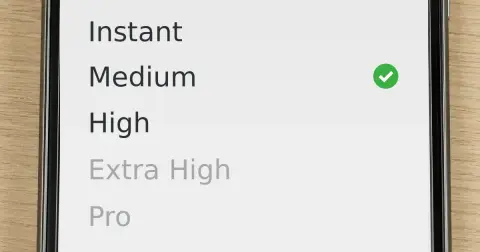 GPT-5.6 availability by plan: Sol, Terra and LunaGPT-5.6 availability: generally available since July 9, 2026, but Sol, Terra and Luna reach different plans and tools. Here's who gets what and what it costs.
 GPT-5.6 Sol Ultrafast: Up to 14x Faster OutputGPT-5.6 Sol Ultrafast outputs up to 750 tokens per second on Cerebras, up to 14x faster than Standard. A limited OpenAI API preview since August 13, 2026.
 ARC AGI 3: Two Settings Tripled OpenAI's ScoreARC AGI 3 scores for GPT-5.6 Sol rose from 13.3% to 38.3% when OpenAI kept the model's reasoning and enabled compaction instead of rolling truncation.
 OpenAI, ServiceNow expand deal with ChatGPT pluginOpenAI and ServiceNow expanded their deal on Oct 28, 2026. A ServiceNow MCP plugin for ChatGPT is live now; Codex, security and voice tools follow in 2027.