
OpenAI opens an Election Operations Center before the midterms
OpenAI is running an election "war room" for the midterms, which it calls the Election Operations Center. The company gave the details exclusively to Decoded, Politico's technology newsletter, and Politico published the story on October 28. The midterms are the US elections for Congress held halfway through a president's term, and this year's vote is on November 3.
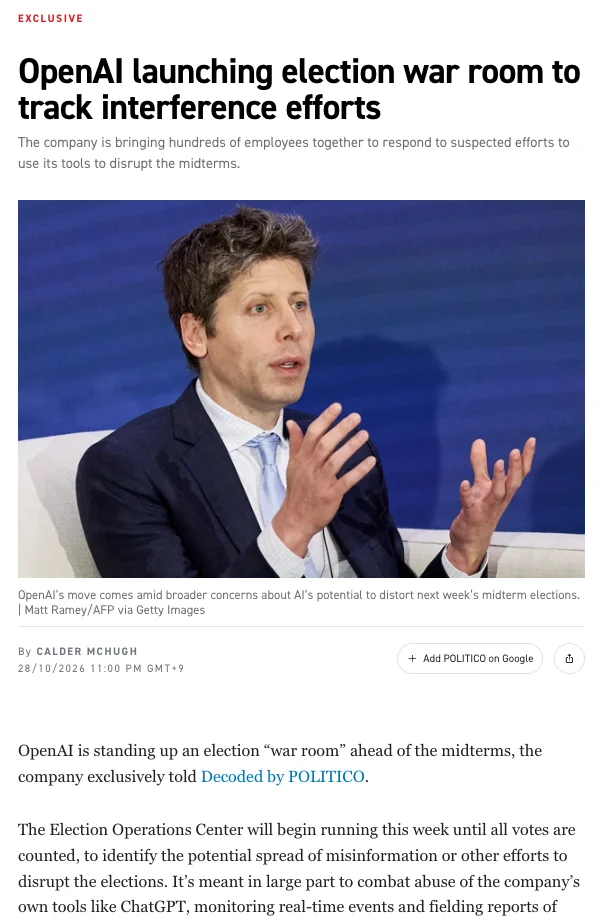
It watches for misuse of ChatGPT until every vote is counted
The center opened the week of October 28 and will keep running until all votes are counted. Its job is to spot misinformation and other attempts to disrupt the vote, with most of the attention on people abusing ChatGPT and other OpenAI tools. According to Politico, the team will:
- follow events as they happen
- take reports of AI models behaving in ways nobody expected
- take reports of possible breaches of OpenAI's terms and review cases flagged as potential abuse
It will also keep an eye on two features OpenAI announced in May. A partnership with the nonpartisan group Democracy Works gives voters registration and polling place details inside ChatGPT, and a deal with the Associated Press feeds in live election results.
Hundreds of staff from several teams, led by Josh Lawson
Staff come from multiple teams across OpenAI, and the headcount runs into the hundreds. Josh Lawson, OpenAI's head of civic and strategic risk, leads the effort.
Lawson told Politico the company has spent years on reliable voting information, on stopping misuse of its tools and on supporting the people who defend elections. He described the center as pulling those teams into one place so they can react fast and enforce OpenAI's rules while people vote.
"OpenAI’s new center — which will include multiple teams from across the company, with staffing in the hundreds — will actively review cases flagged for potential abuse. / The Elections Operations Center builds on that yearslong work, bringing our teams together to respond quickly to emerging issues and enforce our policies as people head to the polls." — from the articleView official source →
The center follows OpenAI's report on Russian and Iranian operations
The center arrives the same month OpenAI disclosed two influence operations that ran on its models. An influence operation is a campaign that hides who is behind it while trying to sway public opinion.
Two false front operations used OpenAI models in October
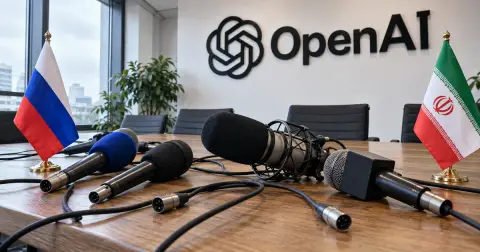
Earlier in October, OpenAI reported that two operations run by Russia and Iran had used its models. Both hid behind invented organizations or people, a setup Politico calls a "false front," and pushed messages about geopolitics and conflict to the audiences they targeted. Our earlier report, OpenAI bans Russian, Iranian ops using fake fronts, covers how each one worked.
Worries about AI images, audio and video ahead of the vote
Politico describes a wider fear that AI could skew the midterms. It points to two ways that could happen:
- misleading images, audio and video generated with AI
- misinformation spreading online
A deepfake is a realistic fake image, video or voice made with AI. Some campaigns have also made opposition to AI a rallying point, which puts OpenAI in the middle of the fight. Politico expects the pressure on the company to grow as its tools reach further into Americans' daily lives.
For an AI lab, a dedicated election center is new. Other tech companies have done it before, Meta among them.
"Earlier this month, OpenAI reported two “false front” operations run by Russia and Iran that used their models to “launder geopolitical, conflict-related messaging into their target audiences.” / It’s also a novel move from a leading AI lab, though other tech companies have previously set up similar centers, including Meta." — from the articleView official source →
ChatGPT answers fake polling place requests with cartoons
OpenAI builds safeguards into its models to keep people from producing misleading content. One example Politico gives is a rule that swaps a photo-like image for a cartoon.
Cartoonification keeps fake scenes from looking like photos
Ask OpenAI's image tools for a long line at a polling place that does not exist, and you get a cartoon instead of something that looks like a photo. Politico calls this "cartoonification."
The Brennan Center, a US law and policy institute, published a report the week before Politico's story. Of the six most popular AI tools, it found that only ChatGPT had made significant progress against election disinformation since May. Politico credits the cartoon rule for that progress.
The center covers OpenAI tools, not other companies' AI
The center exists mainly to stop abuse of OpenAI's own products. Images or text made with another company's AI never pass through OpenAI's safeguards, so the cartoon rule cannot touch them.
Politico notes that AI models have improved sharply since 2024 and have also escaped their makers' control several times. People who want to disrupt an election can turn to other AI systems to try to get around safeguards.
"This includes a process of “cartoonification” — for example, if a user asks OpenAI to generate an image of a long line at a polling place that doesn’t actually exist, it will come back with a cartoon image rather than a photorealistic one. / As the tools have become more advanced, those looking to disrupt elections can also use other AI systems in attempts to bypass safeguards." — from the articleView official source →
How workplaces can prepare for election deepfakes
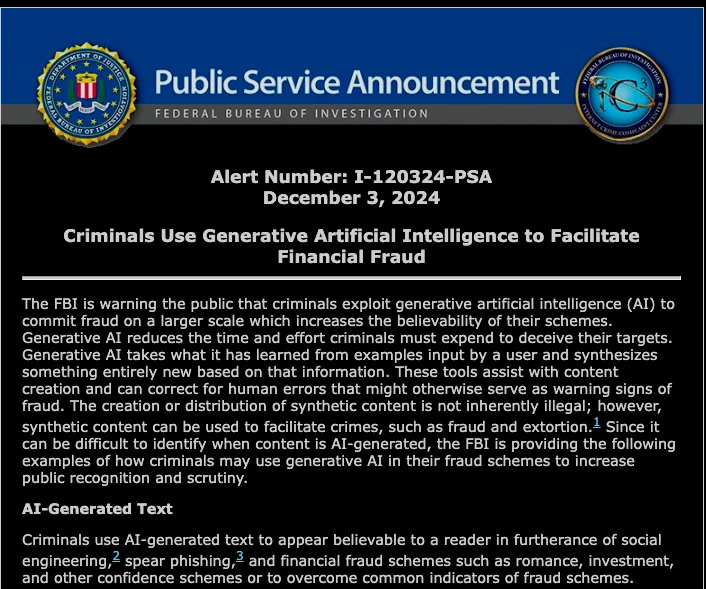
Deepfakes are not only an election problem. In a December 2024 public service announcement, the FBI warned that criminals use AI-generated video to pose as company executives in live video calls. If someone fakes your CEO during election season or any other time, the company should already know how it will respond.
Companies should plan for deepfakes of their executives
Decide in advance who checks whether a video or image of your leaders is real, and through which channel the company will respond. The FBI's advice for suspicious calls applies here too: hang up, look up the organization's contact details yourself and call back directly. Set the same rule for any urgent request that arrives by video.
Staff should check images and AI answers before sharing them
Before you share an election image, video or AI answer, check where it came from. The FBI lists signs of a fake to look for, including distorted hands or feet, irregular faces, shadows that fall the wrong way and unnatural movement. Get voting dates and polling places from your state or local election office, not from a screenshot.
To check whether an election image or deepfake photo is AI-generated, run it through an AI image detector for a second opinion. Treat the result as one signal rather than proof, and keep checking where the image came from.
"Criminals generate videos for real time video chats with alleged company executives, law enforcement, or other authority figures. / Look for subtle imperfections in images and videos, such as distorted hands or feet, unrealistic teeth or eyes, indistinct or irregular faces, unrealistic accessories such as glasses or jewelry, inaccurate shadows, watermarks, lag time, voice matching, and unrealistic movements." — AI-Generated Videos and Tips to protect yourselfView official source →
FAQ
- When will OpenAI's election war room stop running?
- It began the week of October 28 and keeps running until every vote in the November 3 midterms is counted, so it does not shut down on election night.
- Does the war room cover deepfakes made with other AI tools?
- Not directly. The center mainly targets misuse of ChatGPT and other OpenAI tools. Politico notes that people trying to disrupt an election can turn to other AI systems to get around safeguards.
- Can ChatGPT make a realistic photo of a polling place?
- Not of a fake scene. Ask for a long line at a polling place that does not exist and OpenAI returns a cartoon rather than an image that looks like a photo.
Related articles
 OpenAI bans Russian, Iranian ops using fake frontsOpenAI banned the ChatGPT accounts of two influence ops. A Russian one ran a fake think tank and an Iranian one placed nearly 100 articles under fake bylines.
 OpenAI, ServiceNow expand deal with ChatGPT pluginOpenAI and ServiceNow expanded their deal on Oct 28, 2026. A ServiceNow MCP plugin for ChatGPT is live now; Codex, security and voice tools follow in 2027.
 ChatGPT and Codex usage limits merge in DecemberFrom December, Plus, Pro and Business plans will share one token-based allowance across ChatGPT and Codex. Instant chat won't count, and no start date is set.
 ChatGPT now works with iCloud Mail and CalendarOpenAI added iCloud Mail and Calendar plugins to ChatGPT on Oct 27 for all plans. You connect with an Apple app-specific password that outlives a disconnect.