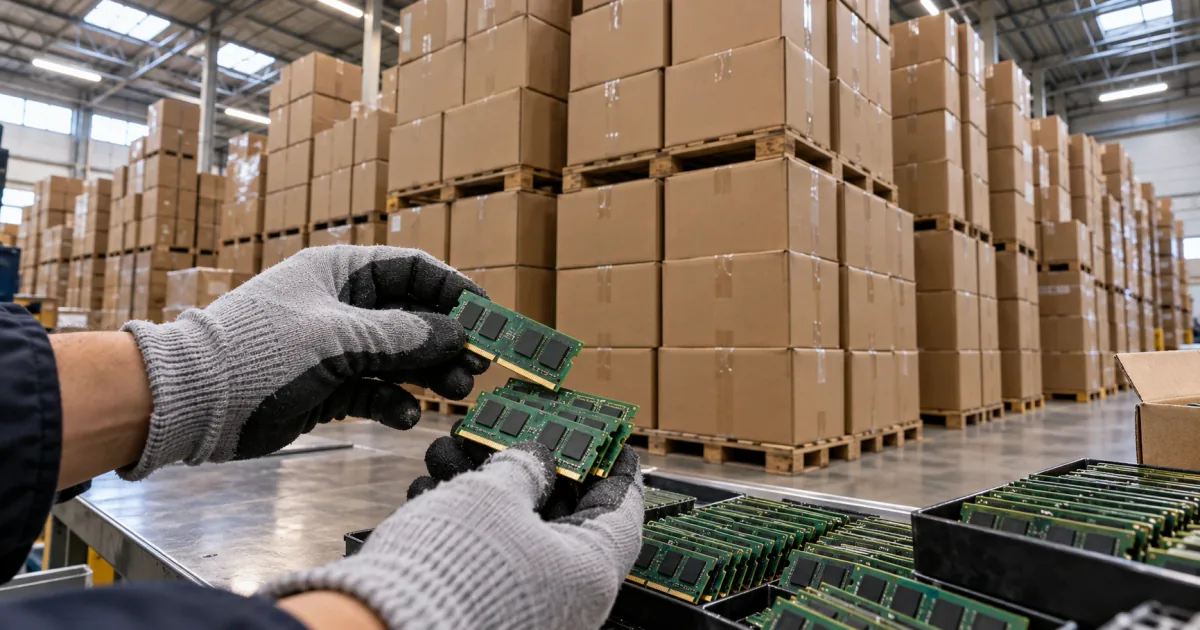
Global PC shipments fell 20.1% to 62.7 million units
Worldwide PC shipments dropped to 62.7 million units in Q3 2026, down 20.1% from 78.5 million a year earlier, according to preliminary data from IDC. It was the second quarterly decline in a row, and far steeper than the 3.8% slide IDC lists for Q2.
Worldwide PC shipments in Q3 2026 (IDC preliminary data)
Q3 came in below Q2, breaking the usual pattern
Q3 is normally a bigger quarter than Q2, but this year shipments slipped another 9.1% from the second quarter.※1 IDC says the channel spent the quarter working through the large volume of PCs it had taken in during Q2, so the typical third-quarter lift never arrived.※1 Keep in mind what the figure measures: IDC counts units shipped to distribution channels or end users, not units sold at retail.※1
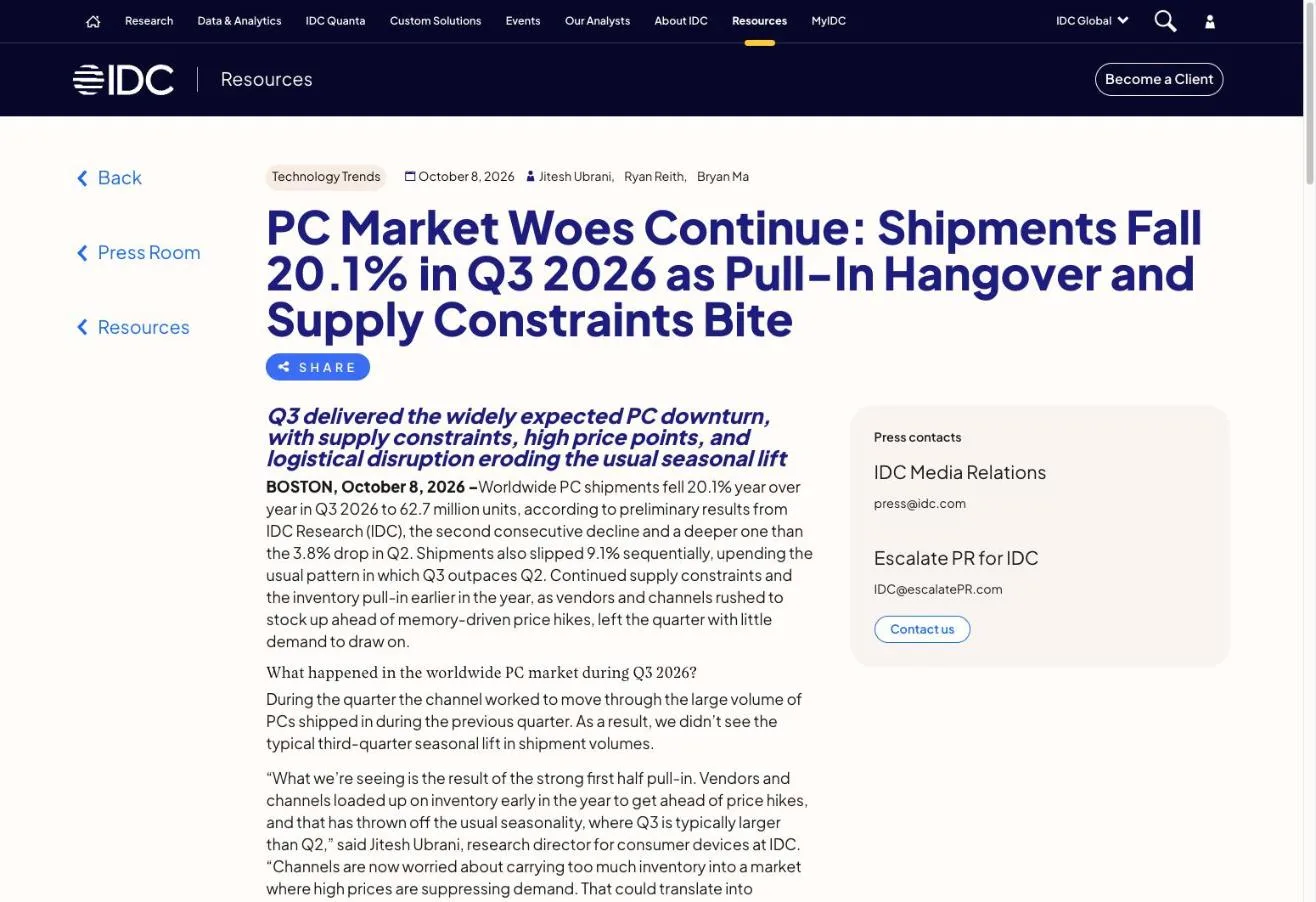
"Worldwide PC shipments fell 20.1% year over year in Q3 2026 to 62.7 million units, according to preliminary results from IDC Research (IDC), the second consecutive decline and a deeper one than the 3.8% drop in Q2."/"Shipments also slipped 9.1% sequentially, upending the usual pattern in which Q3 outpaces Q2."/"During the quarter the channel worked to move through the large volume of PCs shipped in during the previous quarter."/"Shipments include shipments to distribution channels or end users."(body and Notes section)— from the IDC press releaseView official source →
Omdia counted a 21.2% drop to 58.1 million units
Omdia, which tracks the market separately, put Q3 2026 shipments at 58.1 million units, down 21.2% year over year.※1 The two firms count differently, so their totals don't match, but both show a decline of about a fifth.
Desktops, including desktop workstations, fell 23.5% to 11.7 million units, while notebooks fell 20.6% to 46.4 million.※1 Omdia called it the sharpest decline since 1Q23.※1
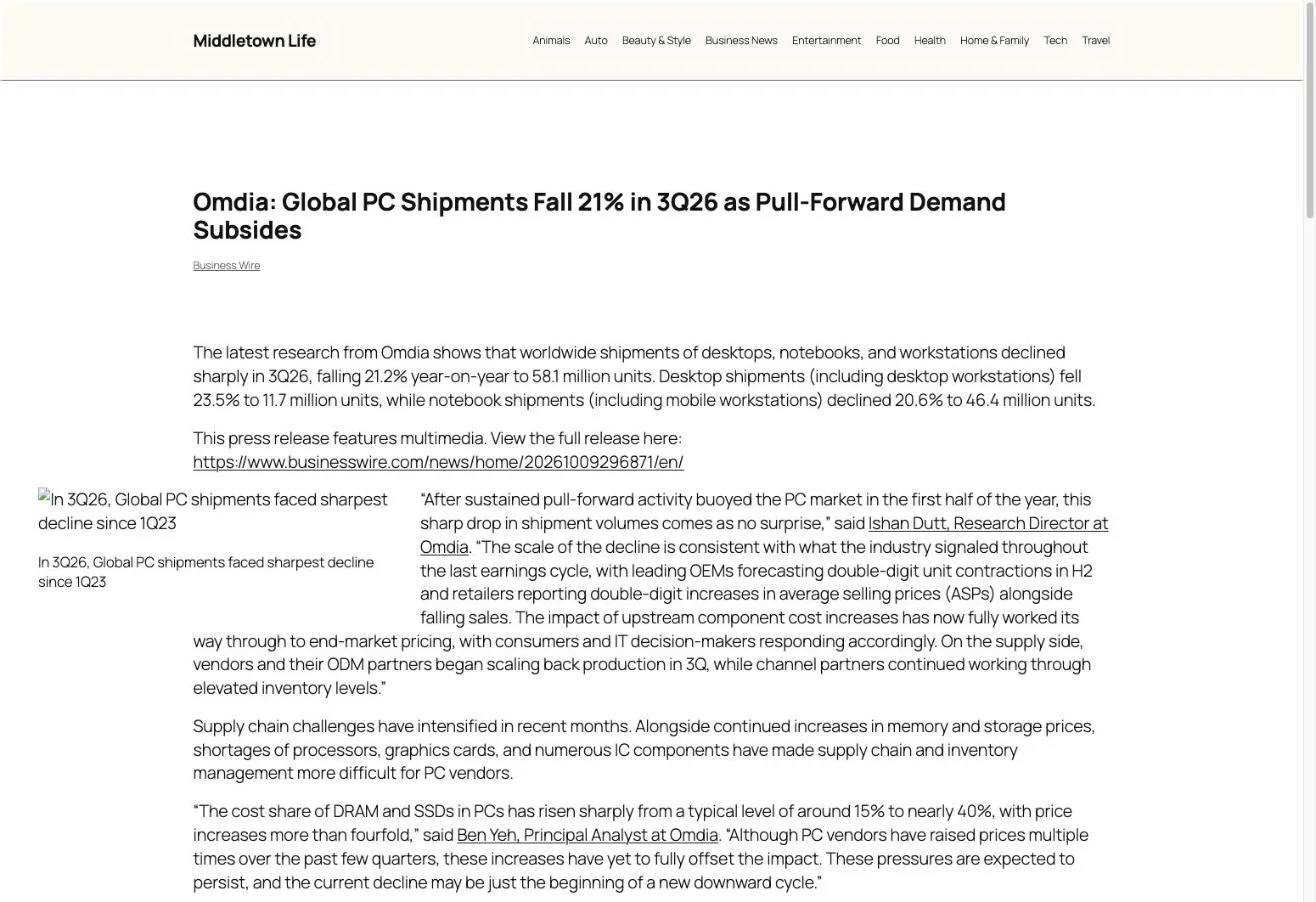
"The latest research from Omdia shows that worldwide shipments of desktops, notebooks, and workstations declined sharply in 3Q26, falling 21.2% year-on-year to 58.1 million units. Desktop shipments (including desktop workstations) fell 23.5% to 11.7 million units, while notebook shipments (including mobile workstations) declined 20.6% to 46.4 million units."/"In 3Q26, Global PC shipments faced sharpest decline since 1Q23"(body)— from the Omdia press releaseView official source →
Why did PC shipments fall so sharply?
PC makers and their channel partners bought heavily in the first half of 2026 to get ahead of memory-driven price hikes, which left little demand for Q3. IDC traces that pull-in to ongoing supply constraints and higher prices tied to the AI data center build-out, and high prices then held buyers back.
What drove the Q3 2026 decline
Vendors and channels stocked up before price hikes
Expecting memory costs to push PC prices up, vendors and channels loaded up on inventory early in the year.※1 That borrowed volume from the second half, so Q3 had little demand left to fill. IDC research director Jitesh Ubrani said channels are now worried about holding too much inventory at a time when high prices are suppressing demand.※1
"Continued supply constraints and the inventory pull-in earlier in the year, as vendors and channels rushed to stock up ahead of memory-driven price hikes, left the quarter with little demand to draw on."/"Channels are now worried about carrying too much inventory into a market where high prices are suppressing demand."(body)— from the IDC press releaseView official source →
The AI data center build-out pushed prices higher
IDC lists higher price points driven by the AI data center build-out, together with ongoing supply constraints, as the reasons behind the industry-wide pull-in.※1 AI hardware is getting pricier too: we covered reports that Nvidia AI server prices are rising more than 15% in Nvidia Price Increase: AI Servers Up More Than 15%.
Omdia principal analyst Ben Yeh said DRAM and SSDs have grown from about 15% of a PC's cost to nearly 40%, with their prices up more than fourfold.※2 He added that repeated price increases by PC makers still haven't fully offset the impact.※2
"Strategic inventory pull-in across the entire industry as a result of on-going supply constraints and higher price points driven by AI data center build out"(Worldwide PC Market at a Glance)— from the IDC press releaseView official source →
"The cost share of DRAM and SSDs in PCs has risen sharply from a typical level of around 15% to nearly 40%, with price increases more than fourfold"/"Although PC vendors have raised prices multiple times over the past few quarters, these increases have yet to fully offset the impact."(Ben Yeh)— from the Omdia press releaseView official source →
HP, Dell, and Lenovo lost the most ground
The three largest PC makers all shrank faster than the overall market's 20.1% decline. Here are IDC's preliminary vendor figures for Q3 2026.
Q3 2026 PC shipments by vendor (IDC preliminary data)
| Vendor | Shipments | Share | Change |
|---|---|---|---|
| Lenovo | 14.9M | 23.8% | -22.6% |
| HP Inc | 10.3M | 16.5% | -30.9% |
| Dell | 7.6M | 12.1% | -25.0% |
| Apple | 5.9M | 9.5% | -11.3% |
| ASUS | 5.5M | 8.7% | -8.6% |
| Others | 18.4M | 29.4% | -14.0% |
The top three ceded 4.2 points of share
Lenovo, HP, and Dell together gave up 4.2 points of market share, and IDC says they were likely feeling the effects of the first-half pull-in.※1 HP lost close to a third of its volume, going from 15.0 million units to 10.3 million, and its share fell from 19.1% to 16.5%.
Lenovo stayed on top despite a drop from 19.3 million to 14.9 million units. Dell shipped 7.6 million, down from 10.1 million a year earlier.
"Lenovo, HP Inc, and Dell Technologies all fell faster than the market and together ceded 4.2 points of share as they were likely facing the effects of pull-in from earlier in the year."(Vendor Rankings and Market Share)— from the IDC press releaseView official source →
Apple and ASUS gained share
Apple and ASUS also shipped fewer PCs, but their smaller declines lifted their market share.※1 Apple fell 11.3% to 5.9 million units and grew its share from 8.5% to 9.5%, while ASUS fell 8.6% to 5.5 million and moved from 7.6% to 8.7%.
Omdia's count puts Apple higher, at 6.8 million Macs, down 11%.※2 Omdia says Apple's premium positioning helped limit the effect of higher prices.
"The pain was not evenly shared."(Vendor Rankings and Market Share)— from the IDC press releaseView official source →
"Apple held fourth position, with shipments of 6.8 million units, down 11% year on year. However, it gained more than one percentage point of market share as its premium positioning helped limit the impact of higher prices."(body)— from the Omdia press releaseView official source →
Will PC prices come down after the Q3 slump?
Only a little, and not for long, according to IDC. Channels holding too much stock may run promotions, but IDC expects prices to stay well above where they were a year ago. Both firms also forecast further declines in shipments, as the table below shows.
PC shipment and price outlook
| Source | Topic | Outlook |
|---|---|---|
| IDC, Oct 8, 2026 | Prices | Promotions possible; well above year-ago levels |
| Omdia, Oct 9, 2026 | Q4 2026 shipments | Down 24% year over year |
| Omdia, Oct 9, 2026 | 2027 shipments | Down another 7% |
| IDC, Mar 12, 2026 | 2026 shipments | Down 11.3% |
| IDC, Mar 12, 2026 | Prices | Some easing from 2028; no return to 2025 levels |
Promotions may bring brief, modest relief
Short-term discounts are possible because channels are worried about high inventory and weak demand.※1 IDC still expects prices to stay elevated, and warns that a weaker economy could make the outlook for the rest of 2026 and into 2027 worse.※1
Back in March, IDC cut its 2026 forecast to an 11.3% decline in PC shipments.※2 It expected memory shortages to last well into 2027 and prices to start easing only in 2028, without returning to 2025 levels.※2
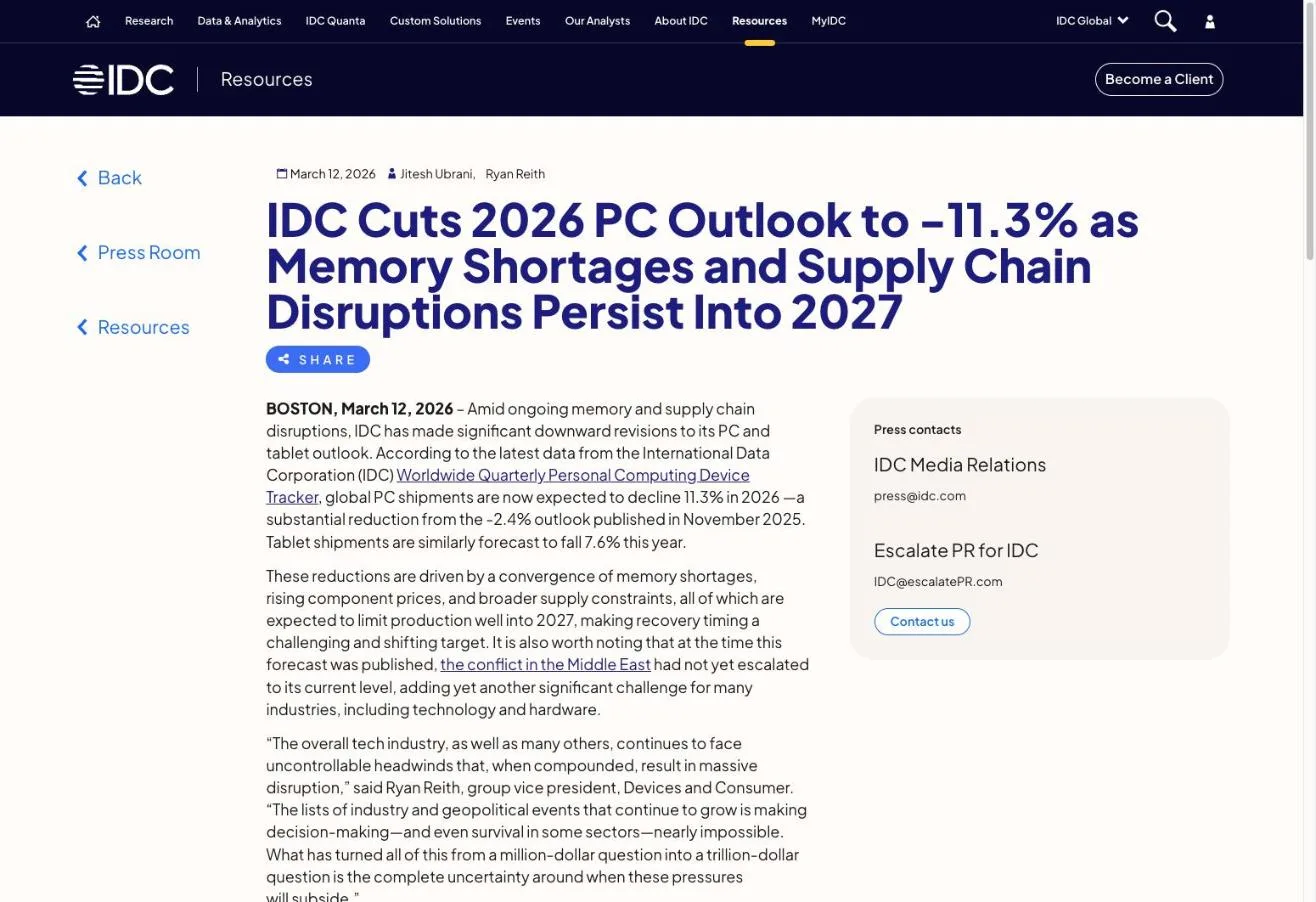
"Only modestly and briefly. Channels are concerned about high inventory and low demand, so promotions are possible. However, prices are expected to remain elevated and well above where they were at the same time last year."/"A weaker economy could soften demand further, and with prices still high and supply constrained, the outlook for the remainder of 2026 and going into 2027 could deteriorate."(Frequently Asked Questions)— from the IDC press releaseView official source →
"global PC shipments are now expected to decline 11.3% in 2026"/"Memory shortages will persist well into 2027. While we anticipate some easing of prices beginning in 2028, the market is unlikely to return to the pricing levels seen in 2025."(body)— from the IDC press releaseView official source →
Omdia expects a 24% drop in Q4
Omdia forecasts PC shipments will fall 24% year over year in Q4 2026 and another 7% in 2027.※1 Omdia research director Ishan Dutt said component cost increases have now fully reached the prices buyers pay, and both consumers and IT buyers are pulling back.※1
"Omdia forecasts the PC market to decline 24% year-over-year in 4Q26 with a further 7% decline expected for full-year 2027."/"The impact of upstream component cost increases has now fully worked its way through to end-market pricing, with consumers and IT decision-makers responding accordingly."(body)— from the Omdia press releaseView official source →
Q3 PC shipments fell sharply while prices stayed high
Worldwide PC shipments fell 20.1% to 62.7 million units in Q3 2026. A first-half inventory pull-in emptied out the quarter, while supply constraints and higher prices tied to the AI data center build-out kept buyers cautious. IDC expects prices to stay well above last year's levels.
FAQ
- Why did PC shipments drop in Q3 2026?
- Vendors and channels bought PCs early in the year to beat expected price hikes, so much of the demand that would normally land in Q3 had already been shipped. Ongoing supply constraints made the slump worse.
- Will laptops and desktops get cheaper soon?
- Not by much. IDC expects some promotions as channels try to clear stock, but says prices will stay well above where they were a year ago.
- How bad will the PC market get in Q4 2026?
- Omdia forecasts shipments will fall 24% year over year in Q4 2026, followed by another 7% decline across 2027.
Related articles
 Flash prices up 5x on AI, eroding Apple's leverageAI demand made flash 5x pricier in a year, the WSJ reports. Cloud giants now buy twice as much as Apple, and doubling iPhone 17 Pro storage costs Apple $66.
 Nvidia Price Increase: AI Servers Up More Than 15%Bloomberg reports the Nvidia price increase: AI servers up more than 15% in many cases from early 2027 on memory costs. Q3 gross margin guide: 74.0%.
 Apple CXMT plan: Lutnick says no to Chinese memoryThe Apple CXMT plan would put CXMT and YMTC memory in products sold outside the US. Micron and senators oppose it, as does the administration, per Lutnick.
 Malaysia seizes 30 AI chip servers at KLIA airportMalaysian customs seized 30 AI chip servers worth RM49.5 million at KLIA, declared as electronic components, in the year's fifth case tied to one syndicate.