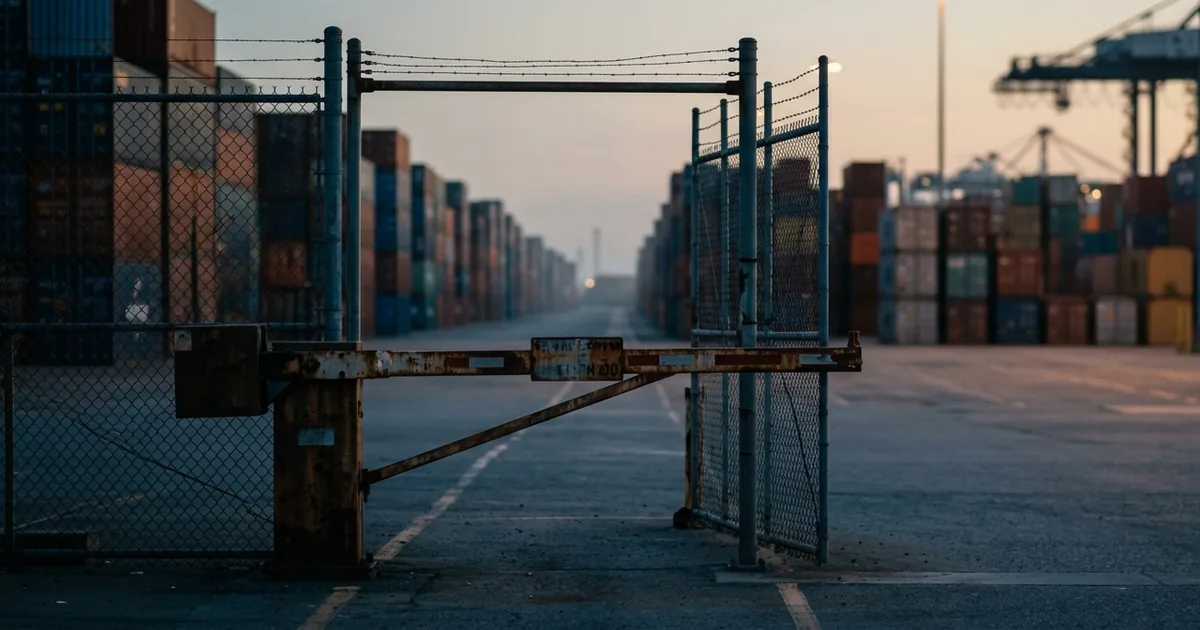
What was reported (a reconsideration of restrictions)
Overview of what was reported (all based on reporting)
What has been reported and what is still undecided are two separate things. In short, the administration is reconsidering restrictions on Chinese open-source AI, but nothing has been decided yet.
An executive order and export controls "on the table"
According to reporting, the administration is considering an executive order targeting open-source AI, aimed at limiting how freely US-developed AI tools and frameworks flow to Chinese developers. None of this is decided policy; it is all still under consideration. The reporting itself says it does not identify a final policy.
"An executive order related to open-source AI is on the table, which could restrict how freely US-developed AI tools and frameworks flow to Chinese developers." — From the articleView official source →
The trigger was the rise of Chinese open source models
The trigger was Kimi K3 from Moonshot AI topping a major coding benchmark. At 2.8 trillion parameters it is among the world's largest open-source models, and it drew growing interest from US companies, according to reporting. It is priced at about half of leading US models, and the backdrop is concern that powerful open-weight models are spreading at low cost. The model's full specs and pricing are in Kimi K3 benchmarks, pricing and open weights.
"The Trump administration has reportedly considered restrictions on Chinese AI models after Moonshot AI's 2.8-trillion-parameter Kimi K3 topped a major coding leaderboard and drew growing interest from US companies." — From the articleView official source →
How the US could restrict Chinese open-source AI
Measures reportedly under discussion
Four measures are under discussion: Entity List additions, federal procurement rules, chip export controls and an executive order. All four come from press reports, not from an announced policy.
Entity List additions, federal procurement, export controls
Reporting names several measures. The one mentioned most often is adding Chinese AI companies to the Commerce Department's "Entity List" (the export-control list of companies).
Being listed cuts off access to US technology without government licenses. Reports also mention using federal procurement rules and continuing export controls on AI chips.
"People involved in the debate have previously discussed adding Chinese AI laboratories to the Commerce Department's Entity List, Axios reported." — From the articleView official source →
Many were considered last year and revived
Many of these measures are not new. Entity List additions, for example, were already considered last year and paused over concerns they could slow domestic AI development.
The rise of Kimi K3 brought them back onto the table. These are old proposals revived, not newly decided policy, and reading them that way avoids both overstating and understating the news.
"Such a designation could restrict the companies' access to US technology unless they receive government licenses, although earlier proposals were paused over concerns that they could slow domestic AI development." — From the articleView official source →
The split in the administration and the difficulty of open weights
Positions within the administration (from reporting)
The administration does not speak with one voice on this. Officials broadly see Chinese open weights as a threat, but they disagree on whether domestic restrictions are the answer.
David Sacks opposes tighter restrictions
David Sacks, the administration's AI advisor, shows the split. He calls Kimi K3's top ranking "concerning" and does see the rise of Chinese AI as a problem.
But he opposes tighter US restrictions as the fix, warning that regulation could backfire and entangle the country in "unnecessary complications" that hurt US competitiveness. Worrying about China's rise is not the same as backing domestic regulation, and Sacks is not the one pushing for restrictions.
"David Sacks, the administration’s AI advisor, has warned that US regulations could backfire. Regulations could “entangle the country in unnecessary complications” that ultimately hurt US competitiveness" — From the articleView official source →
Open weights cannot be recalled once released
There are also doubts about enforceability. Open weights (models whose weights are public) can, once released, be downloaded and run by anyone locally, so their circulation is hard to stop after the fact.
Even if export controls or list additions narrow technology supply to companies, curbing use of models already in the wild is not easy. This structural difficulty is one reason the administration has not reached a conclusion.
Summary: Read it as "under consideration"
As reported, the Trump administration is reconsidering restrictions on Chinese open-source AI following the rise of Kimi K3. Measures such as an executive order and Entity List additions are on the table, but none are decided policy, and many are revivals of last year's proposals.
The administration is divided, and AI advisor Sacks opposes tighter restrictions. Add the fact that open weights cannot be recalled once released, and it is unclear where this goes next. For more on the model that set this off, see Kimi K3 benchmarks, pricing and open weights.
FAQ
- Has the Trump administration decided to restrict Chinese AI?
- No, nothing is official. Reporting says measures such as an executive order and export controls are on the table, but no formal ban has been announced, and the reporting itself does not identify a final policy. All that can be said is that several measures are reportedly under consideration.
- Why did Kimi K3 trigger the reconsideration?
- Moonshot AI's Kimi K3 topped a major coding benchmark and drew growing interest from US companies, according to reporting. At 2.8 trillion parameters it is among the world's largest open-source models, yet it is priced at about half of leading US models. The backdrop is concern about how fast Chinese open-weight models are spreading.
- Does AI advisor David Sacks support the restrictions?
- He opposes tighter restrictions. Sacks calls the rise of Chinese AI itself concerning, but warns that US regulations could backfire and entangle the country in unnecessary complications that hurt competitiveness. The administration is divided, and it is inaccurate to treat Sacks as the driving force behind the restrictions.
Related articles
 Kimi K3 benchmarks, pricing and open weightsKimi K3 is Moonshot AI's 2.8T-parameter open-weight model. Here is what its benchmark scores mean, what the API costs, the license terms and hardware needs.
 Kimi K3.1 Pro benchmarks, pricing and open weightsKimi K3.1 Pro is Moonshot AI's post-trained Kimi K3. It nearly matches Claude Opus 5.5 on coding, costs a third less than K3 and now has open weights.
 Kimi K3 Distillation: What the White House ClaimsThe Kimi K3 distillation claim: the White House says Moonshot AI distilled Anthropic's Fable. What Kratsios posted, what Moonshot denies, what is unproven.
 Cloudflare Clef vs Jev: decision model benchmarksCloudflare Clef is an open-weight decision model that speaks Jev's API and reads images, at about 6x Jev's price. Its benchmark lead is still self-reported.