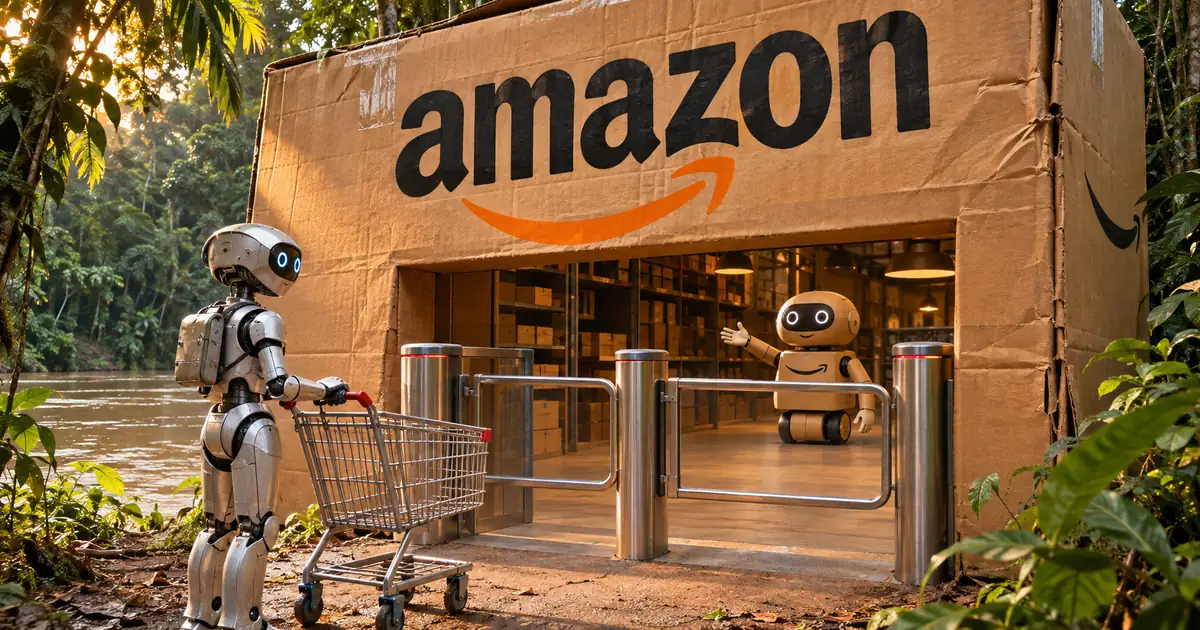
Jassy says outside agents are not hurting Amazon Ads
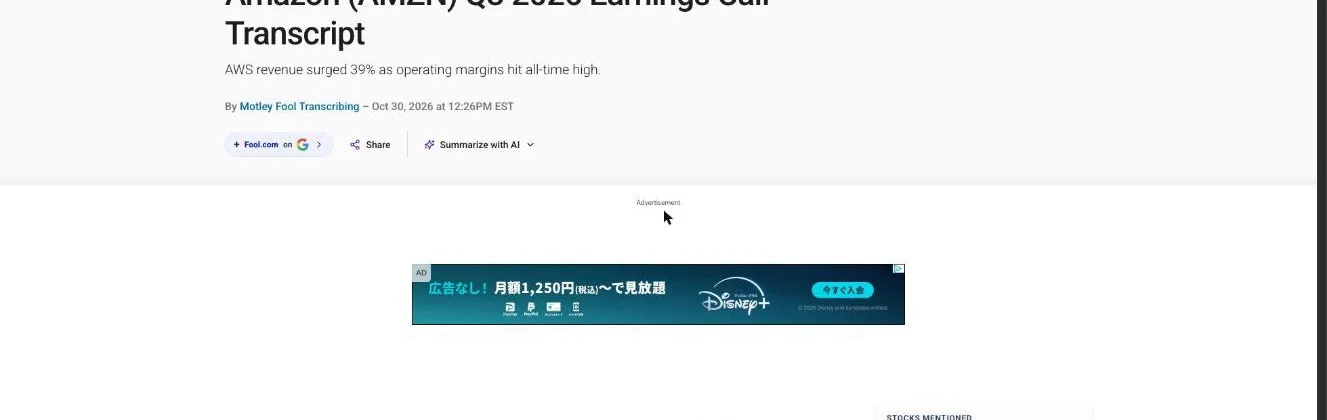
Jassy told investors that so few customers buy through outside AI agents that Amazon's advertising business has not felt a meaningful impact. He made the point on Amazon's third-quarter 2026 earnings call on October 29, where the company reported revenue of $201.9 billion, up 12% from a year earlier.
Few customers shop through horizontal agents yet
Jassy said buying through an outside agent is still less convenient than researching on a retailer's own site and placing a one-click order there. He brought up the subject himself, asking whether shopping by "external horizontal agents" was eating into Amazon Ads. His answer was no.
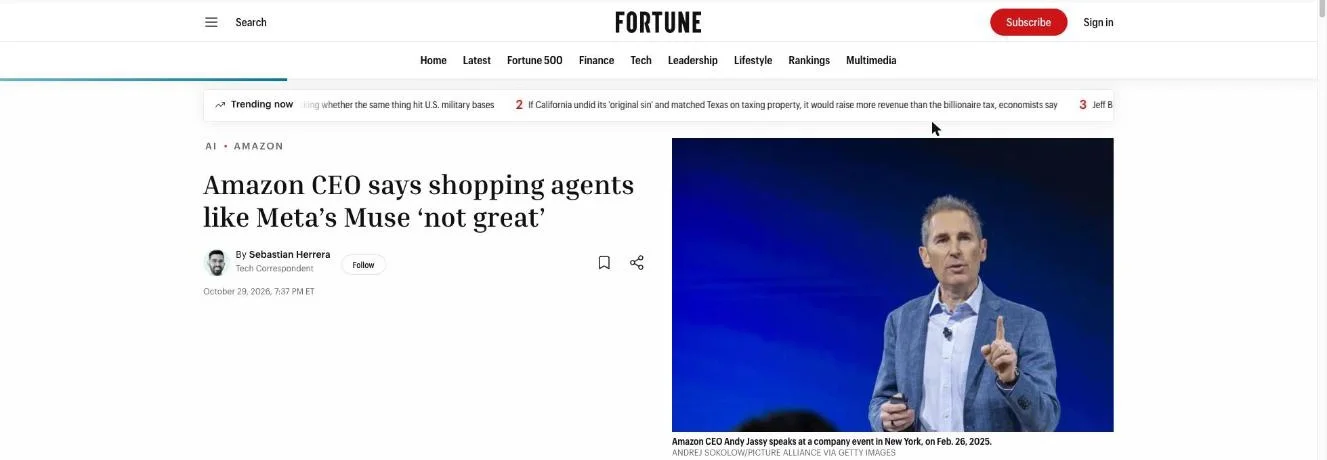
A horizontal agent is an AI assistant that is not tied to one store and can act on many sites for its user. Jassy's reasoning was that few customers do much shopping that way, because the experience is "still not great." He did not mention Meta's Muse by name, Fortune noted, even though Amazon had cut that agent off a month earlier.
Prime Day timing, not agents, slowed ad growth
Ad revenue rose 12% to $19.6 billion in Q3, and Jassy blamed the slowdown on moving Prime Day into Q2 and two other factors rather than on outside agents. Fortune described the quarter's advertising result as weaker than expected.
The three factors Jassy listed were calendar and comparison effects. Prime Day moved into the second quarter in most countries, the first season of NBA games on Prime fell in Q2, and Q3 2025, the quarter it was measured against, already included a change to Amazon's search engine marketing programs. He expects year-over-year ad growth to climb back to the high teens in Q4.
"We're reporting $201.9 billion in revenue, up 12% year-over-year."/"Moving to Amazon Ads, we generated $19.6 billion of revenue in Q3, up 12% year-over-year."/"First, we shifted Prime Day into Q2 for most countries"/"Second, Q2 2026 included the first season of NBA on Prime"/"Third, in Q3 2025, we changed our search engine marketing programs to drive more traffic to search pages on Amazon."/"We expect year-over-year growth will return to the high teens in Q4. The natural question is whether agentic shopping from external horizontal agents is meaningfully impacting Amazon Ads. The answer is no."/"Few customers are doing much shopping this way yet, as the experience is still not great nor more convenient than coming to a retailer directly to research or one-click order there."— Amazon Q3 2026 earnings call transcript (The Motley Fool)View official source →
"While not naming Muse, Jassy said few customers are buying with outside shopping agents because the experience is “still not great, nor more convenient than coming to a retailer directly.”"/"Jassy noted Thursday that outside agents were not the cause of the company’s weaker-than-expected advertising performance during its third quarter."— FortuneView official source →
Amazon blocked Meta's Muse in September
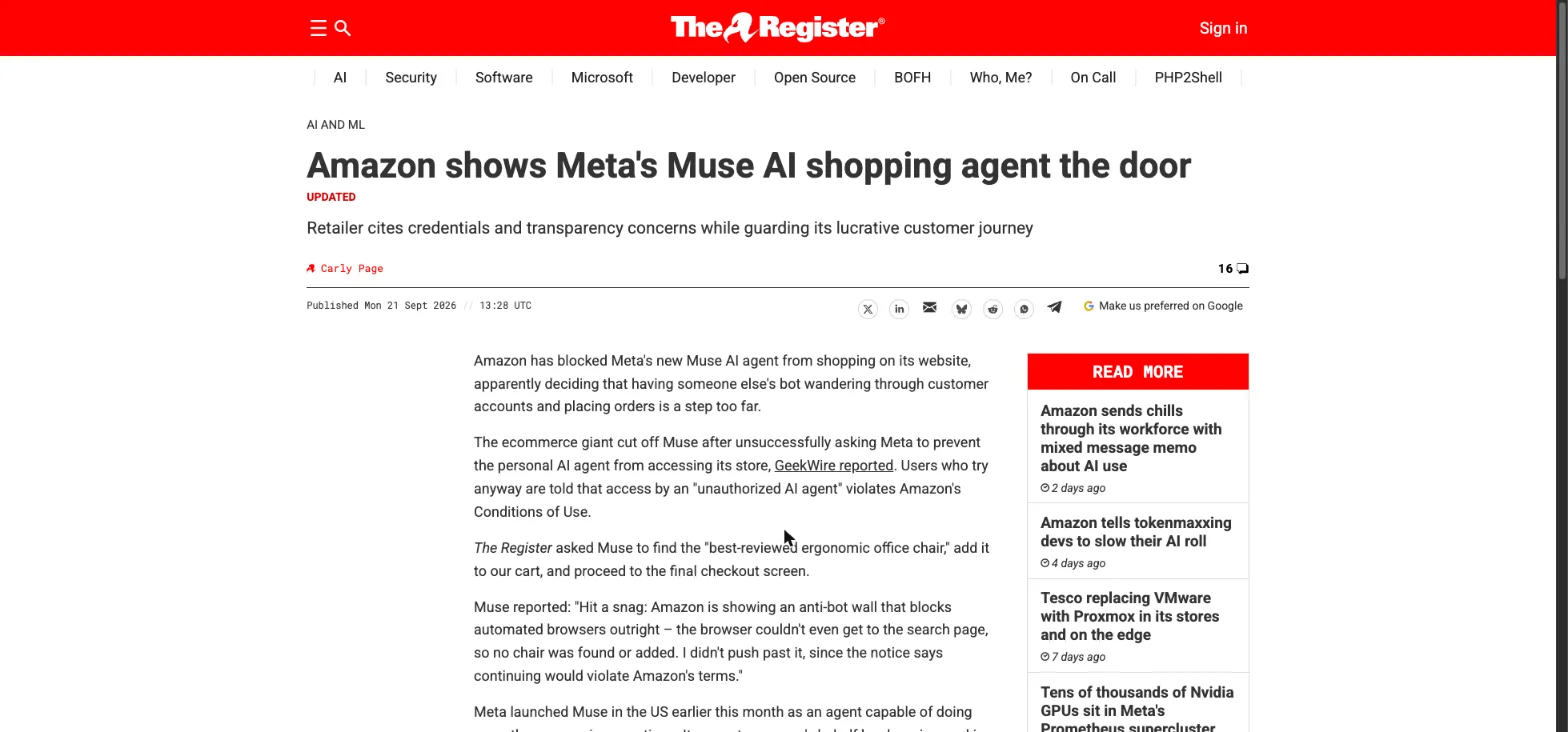
Amazon says Muse came into its store without notice or permission and never said it was an agent, which breaks the Conditions of Use that customers agree to. Amazon first asked Meta to keep Muse off its store, and only cut the agent off when that request went nowhere.
How Muse shops on a user's behalf
Muse can drive a web browser the way a person would on sites that have no public API, and shopping is what people use it for most. Meta launched Muse, its personal AI agent, in the US in early September. It can shop, make payments, read email and manage a calendar for its user.
A public API is the official way a service lets other software connect to it; where none exists, Muse simply clicks through the site. To see how Muse keeps track of the people in your life, read Meta Muse Keeps Hourly Profiles of People You Know.
Uptake was fast. Muse overtook ChatGPT as the top free app on Apple's App Store, and in late October Meta CEO Mark Zuckerberg said more than 10 million people in the US and Canada had set it up. He added that over a quarter of them use it to shop and that the average purchase is above $200.
Amazon's objections and Meta's response
Amazon says Muse appears to capture and store customers' login details, while Meta says the model never sees passwords or payment methods. Anyone who points Muse at Amazon now gets a notice that access by an "unauthorized AI agent" violates Amazon's Conditions of Use. When The Register asked Muse to find an office chair, the agent was stopped by Amazon's bot detection before it even reached search results.
Amazon's case rests on three points: Meta gave no notice, it never got permission, and Muse does not identify itself while browsing. Amazon adds that Muse can open a customer's order history when told to.
An Amazon spokesperson told The Register that apps buying from other businesses for customers "should operate openly and respect service provider decisions about whether or not to participate." Meta counters that credentials sit in secure storage and are used to sign in without ever being shown to the model.
Muse is not the first outside agent Amazon has fought. It took Perplexity to court over the Comet browser and has moved to block shopping agents from Google and OpenAI. The Register links the stance to money: Amazon earned more than $68 billion from advertising in 2025, and agents that search, compare and buy for people could mean fewer shoppers ever see those ads.
"The ecommerce giant cut off Muse after unsuccessfully asking Meta to prevent the personal AI agent from accessing its store"/"When a service does not provide a public API, Meta says Muse can operate it through a browser much as a human would."/"Users who try anyway are told that access by an "unauthorized AI agent" violates Amazon's Conditions of Use."/"The retailer told GeekWire that Meta had neither informed it that Muse would access the store nor obtained authorization. It also claimed that the agent fails to identify itself while browsing and appears to capture and store customer credentials. Amazon said Muse could also access account information, including a customer's order history, when instructed to do so."/"Meta says the Muse model cannot see users' passwords or payment methods. Credentials are instead held in secure storage and made available for authentication without being exposed to the model."/"third-party applications that offer to make purchases on behalf of customers from other businesses should operate openly and respect service provider decisions about whether or not to participate."/"It took Perplexity to court over the Comet browser and has also moved to block shopping agents from Google and OpenAI."/"Amazon generated more than $68 billion in advertising revenue last year"— The RegisterView official source →
"The AI agent quickly unseated ChatGPT as the top free app on Apple’s App Store, and Meta Chief Executive Mark Zuckerberg said last week that more than 10 million people in the U.S. and Canada had already set up the Muse assistant since it was released in early September."/"Zuckerberg said the most common use case for Muse has been shopping, with more than a quarter of the people using the agent engaging in shopping and the average purchase size topping $200."— FortuneView official source →
Alexa for Shopping is the agent Amazon wants you to use
Jassy expects customers to shop Amazon mainly through Alexa for Shopping because it already holds their purchase history, shipping address and payment details. He said Amazon still expects to work with horizontal agents, but argued that its own assistant has an advantage: shoppers can ask it to buy something based on what they ordered before. For the latest Echo hardware that runs Alexa+, see Amazon's 5 new Echo devices: prices and Alexa+.
400 million customers and 50% larger orders
Customers in the US who use Alexa for Shopping spend 50% more per order than customers who don't. Over the last 12 months, more than 400 million customers used the assistant, and interactions with it grew 570% year over year. The assistant researches products, compares options, checks a full year of price history, suggests gifts and watches for price drops, all on the customer's behalf.
Buy for Me identifies itself to other stores
When Amazon's own agent buys from another retailer's site, it says who it is and lets that retailer opt out, the two things Amazon says Muse does not do. The feature, called Buy for Me, completes purchases on other brands' websites for an Amazon customer. Read next to the Muse dispute, it shows the rule Amazon applies: an agent may shop at a store if it announces itself and the store can refuse.
"Over 400 million customers have used Alexa for Shopping, our agentic shopping assistant, in the last 12 months, with customer interactions up 570% year-over-year."/"U.S. customers using Alexa for Shopping are spending 50% more per order than those who don't. It researches products, compares options, checks a full year of price history, gets personalized gift recommendations, and tracks deals and price drops on customers' behalf. Though we anticipate working with horizontal agents, we believe Alexa for Shopping is going to be the primary shopping agent customers use to shop Amazon."/"that you can simply ask to buy something based on your prior purchases that already have your history, your shipping address, and payment info, is uniquely helpful and convenient for customers."— Amazon Q3 2026 earnings call transcript (The Motley Fool)View official source →
"Alexa for Shopping researches products and makes recommendations, while Buy for Me purchases goods from other retailers' websites on a customer's behalf. Amazon says the latter identifies itself to those retailers and allows them to opt out."— The RegisterView official source →
Shopify, Walmart and Best Buy partner with Muse
Big names in online shopping have welcomed Muse, and Zuckerberg says Meta will work out terms that suit each partner, but Amazon has stayed out. Fortune lists Shopify, Walmart and Best Buy among the companies Meta has signed up. Amazon is not on that list.
Fortune also explains why the split matters to Amazon in particular: an agent like Muse skips the step where a person opens the site or app and scrolls past ads, and those ads are one of Amazon's biggest profit drivers. Zuckerberg, for his part, sounded relaxed about holdouts: "Obviously, not everyone wants to be an early adopter. That's fine."
"While Meta has been able to sign up partners that welcome its Muse agent, such as Shopify, Walmart , and Best Buy , Amazon has not joined the group. Muse is a threat to Amazon because it bypasses the usual process of humans visiting its website or app and seeing the advertisements that serve as a key profit driver for the company."/"“Obviously, not everyone wants to be an early adopter. That’s fine,” Zuckerberg said. “We’ll work with folks on the terms that makes sense for them.”"— FortuneView official source →
Whether an agent can shop for you depends on the store
The same Muse request can end in a purchase at Walmart or a Shopify store and in a Conditions of Use warning on Amazon. Amazon steers its own customers to Alexa for Shopping, and when its Buy for Me agent shops on other sites, it announces itself and lets those stores opt out. Outside agents that browse Amazon without saying what they are get shut out.
So the limit on what an AI agent can buy for you is set as much by each store's rules as by what the agent can do. Before relying on one for a purchase, check whether the store you want to use has agreed to let that agent in.
FAQ
- Can I use Meta's Muse to shop on Amazon?
- No. Since September, Muse users who try to shop on Amazon see a notice that access by an unauthorized AI agent violates Amazon's Conditions of Use. Amazon wants shoppers to use its own Alexa for Shopping instead.
- What is Alexa for Shopping?
- It is Amazon's shopping assistant. It researches products, compares options, checks a year of price history and tracks price drops. On the October 2026 earnings call, Jassy said more than 400 million customers had used it in the last 12 months.
- Why did Amazon block Muse?
- Amazon says Meta never told it Muse would access the store or asked permission, that Muse does not identify itself while browsing, and that it appears to capture and store customer credentials. Meta says the model never sees passwords or payment methods.
Related articles
 Meta Muse Wonder: benchmarks, pricing, Wonder FullMeta's Muse Wonder API costs $4/$20 per million tokens, the same as Claude Opus 5.5. Wonder Full ties Opus on Meta's table but is only in Muse Code.
 AI cost overrun: Amazon’s 860% and AI token costsAI cost overrun at Amazon reportedly hit 860% over budget. How AI token costs make every failed retry expensive, and where AI cost control starts.
 Meta's Style Sketch builds outfits from InstagramMeta's free Style Sketch app builds a closet from your Instagram photos and suggests outfits. It is out only in Indonesia, Singapore and Thailand, not the US.
 Amazon's 5 new Echo devices: prices and Alexa+Amazon unveiled five Alexa devices. Four are on sale now and Echo Show 16 ships later this year. Here are the prices and which features need Alexa+.