
Hackers broke into Onamae.com Desktop Cloud, a VPS for FX trading
Onamae.com Desktop Cloud is a VPS that GMO Internet offers for automated FX trading. A VPS is a virtual server rented over the internet that keeps running all day, and customers used it to run MetaTrader 4 and 5 (MT4/MT5), the trading programs that place orders on their own.
From discovery to the leak (from GMO's notices)
| Date | What happened |
|---|---|
| October 19 | A customer inquiry prompts GMO to look into the service |
| October 20 | Malicious programs found on some customer servers; new sign-ups and the control panel stopped |
| October 21 | All plans shut down in turn from 4 a.m.; first public notice |
| October 22 | GMO goes to the police |
| October 24 | GMO confirms customer data was taken and announces payments |
| October 27 | GMO confirms the attacker published data |
GMO found malicious programs on October 20 and shut down all plans
A third party had placed malicious programs on some customer servers, GMO found on October 20. It stopped new sign-ups and the control panel that day, then began shutting down servers on every plan at 4 a.m. Japan time on October 21.
GMO puts the number of servers that may have been affected at 26,739. That figure counts servers in scope, not servers where an intrusion was confirmed.
GMO has no date for bringing the service back. It decided not to restart the current system at all.
Trading account logins saved on the servers were taken
In its 4th report on October 24, GMO confirmed that customer data had been carried off the servers. The data includes trading account login details that customers had saved in their trading tools, and some customers have reported trades on their accounts that they did not make.
As of the 16th report on October 29, GMO still had not said which data items were taken, how many records, or how the attacker got in. Credit card and other payment data are not on these servers, GMO says, but anything customers saved on their own server is in scope.
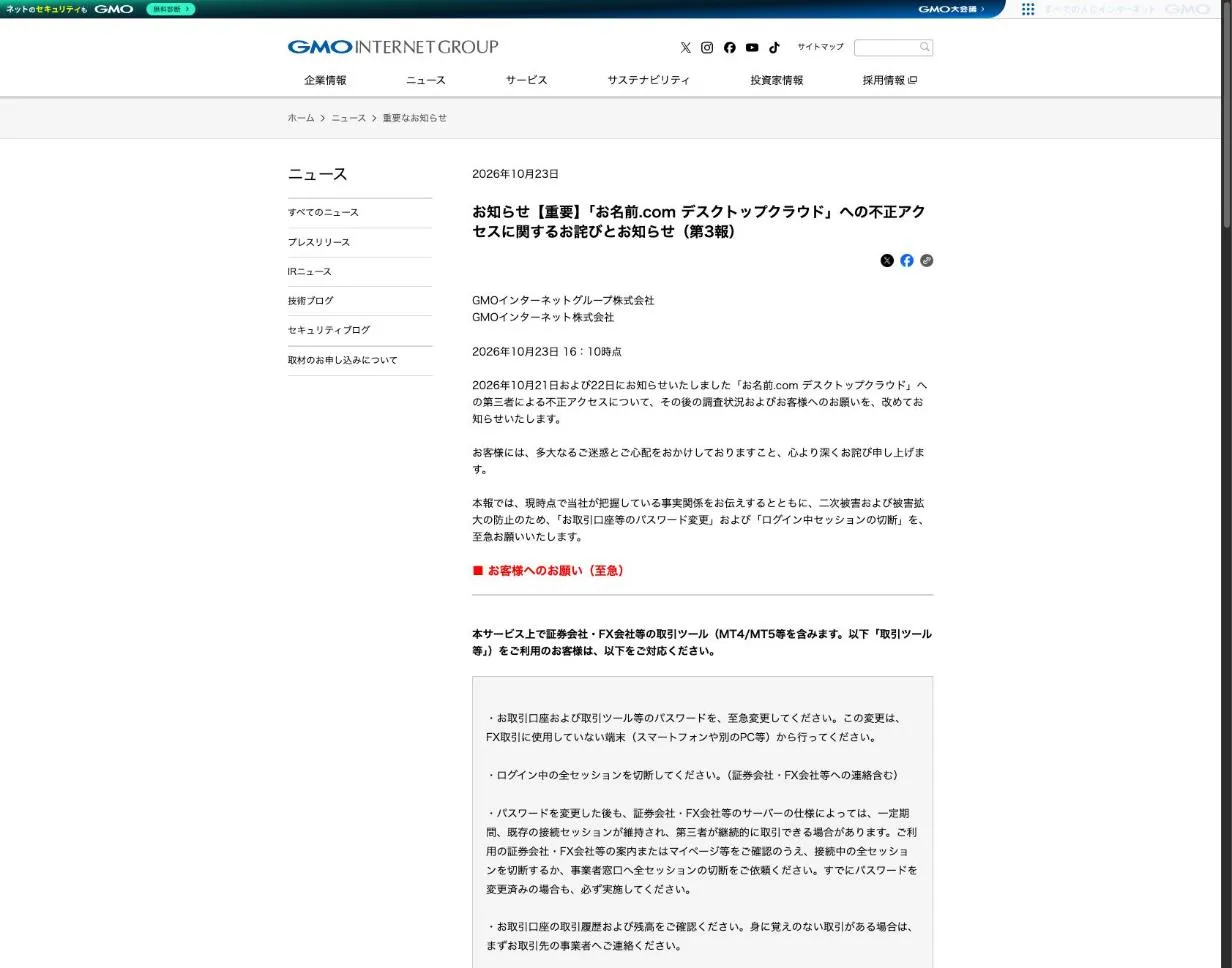
"影響の可能性がある情報:サーバー内に保存されていた情報(取引ツール等に保存されたお取引口座のログイン情報等を含みます)" — from the 3rd report on unauthorized access to Onamae.com Desktop CloudView official source →
The attacker leaked data after GMO refused to pay
GMO received a threatening email on October 21 demanding about 8 billion yen, and it refused. Paying would not guarantee that the stolen data gets deleted or stays out of criminal hands, GMO said in its 8th report.
The attacker then warned that it would publish customer data and launch a ransomware attack at noon on October 27. That morning GMO asked customers to cut their PCs off the network, shut them down and pull the power cords. On the afternoon of October 27, GMO confirmed that data had been published.
Do not open or share the leaked files
GMO is asking everyone not to view, repost or share what the attacker published. The leak site collected information from the people who visited it, GMO found, and it advises anyone who already opened it to run a full virus scan.
On October 28 GMO also posted guidance on getting the attacker's site taken down. It says it is preparing legal action against people who spread the data maliciously.
A bounty of up to $1 million for tips on the attacker
GMO Internet Group is offering up to US$1 million for information that helps identify the attacker or explain the attack. The tip site opened at noon on October 28 and had received 321 tips by 6 p.m. on October 29. On the 29th, GMO's own security team handed the police information that may point to the culprit.
The bounty is for tips only. Do not hack into anything or contact the attacker on your own.
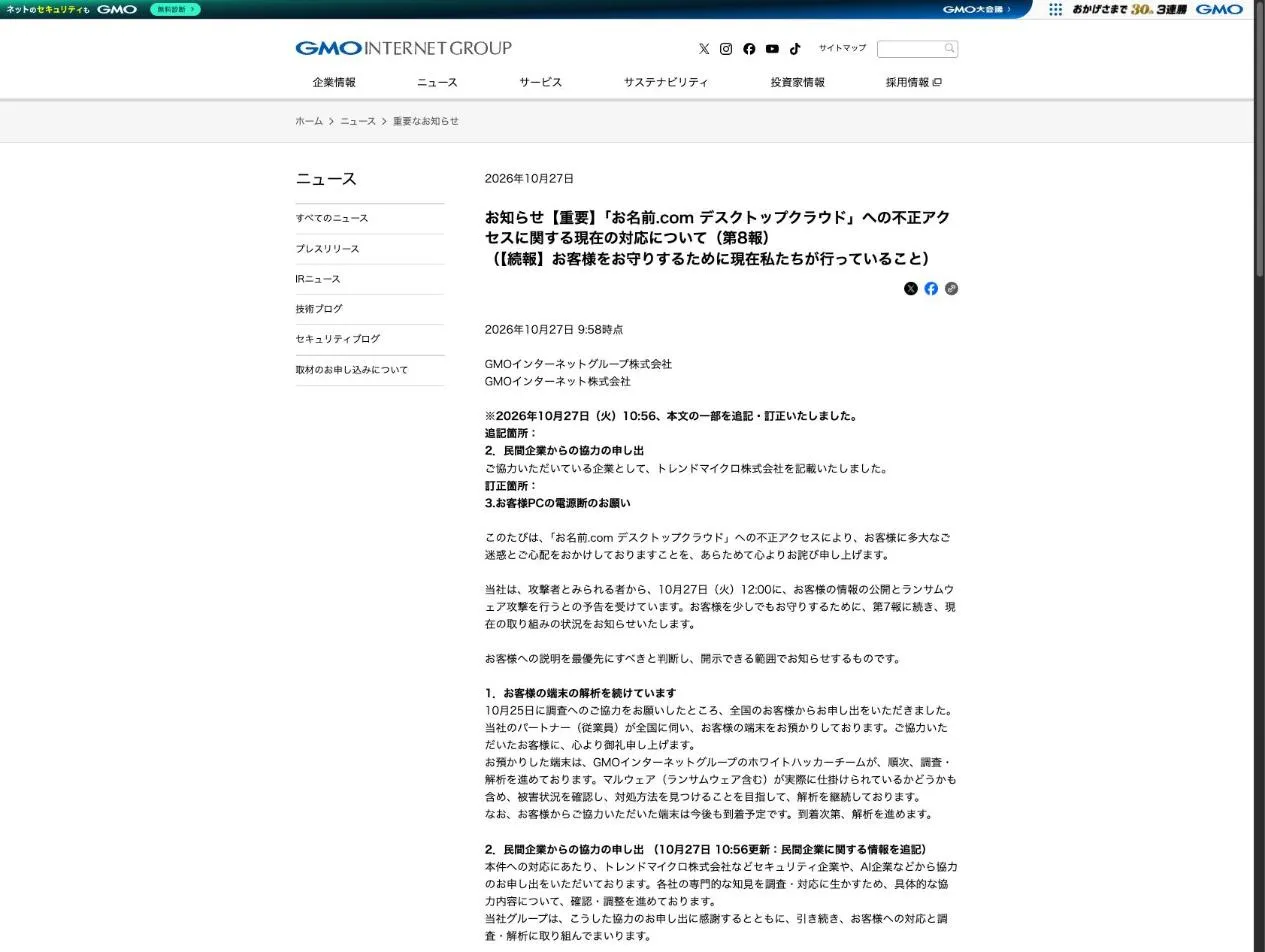
"当社は、攻撃者からの要求には応じません。要求に応じても、取得された情報の削除や不正利用の防止が保証されるものではないためです。" — from the 8th report on Onamae.com Desktop CloudView official source →
GMO will pay every customer and cover trading losses
Every current Desktop Cloud customer gets a flat 5,000 yen from GMO, whether or not they lost money. By 11:59 p.m. Japan time on Friday, October 30, GMO will email each customer's registered address with how and when the payment will be made.
Losses from unauthorized trades will be compensated
GMO will cover realized losses on trades it accepts were caused by the unauthorized access. Price differences and fees count; losses from normal market moves and indirect damage do not, and any refund a broker already paid is subtracted.
GMO plans to announce how to apply and which documents to send by Friday, November 6, on its website and by email. Which trades qualify is GMO's call, based on whether the unauthorized access caused them. (Update, November 13, 2026: at its earnings briefing, GMO Internet said compensation claims for unauthorized trades had reached about 2.998 billion yen. This is the amount claimed and will be finalized after review. Applications for the 5,000-yen goodwill payment stood at about 54 million yen as of November 12, and GMO expects an earnings impact of about 3.05 billion yen. Source: Nikkei xTech.)
Extra payments for customers whose data was published
Customers whose data the attacker published get an extra payment on top of the 5,000 yen and any loss compensation. The amount depends on what kind of data went public.
Extra payments by type of published data (from GMO's 12th report)
| Type of data published | Payment |
|---|---|
| Basic details such as name and contact information | 10,000 yen |
| Financial and login details such as trading account IDs and passwords | 15,000 yen |
| Highly private information | 25,000 yen |
If several types were published, the amounts are added together, up to 3 million yen per publication. GMO is also moving customers to a replacement service on separate cloud infrastructure, free for six months after the move, and will not move anyone without their consent.
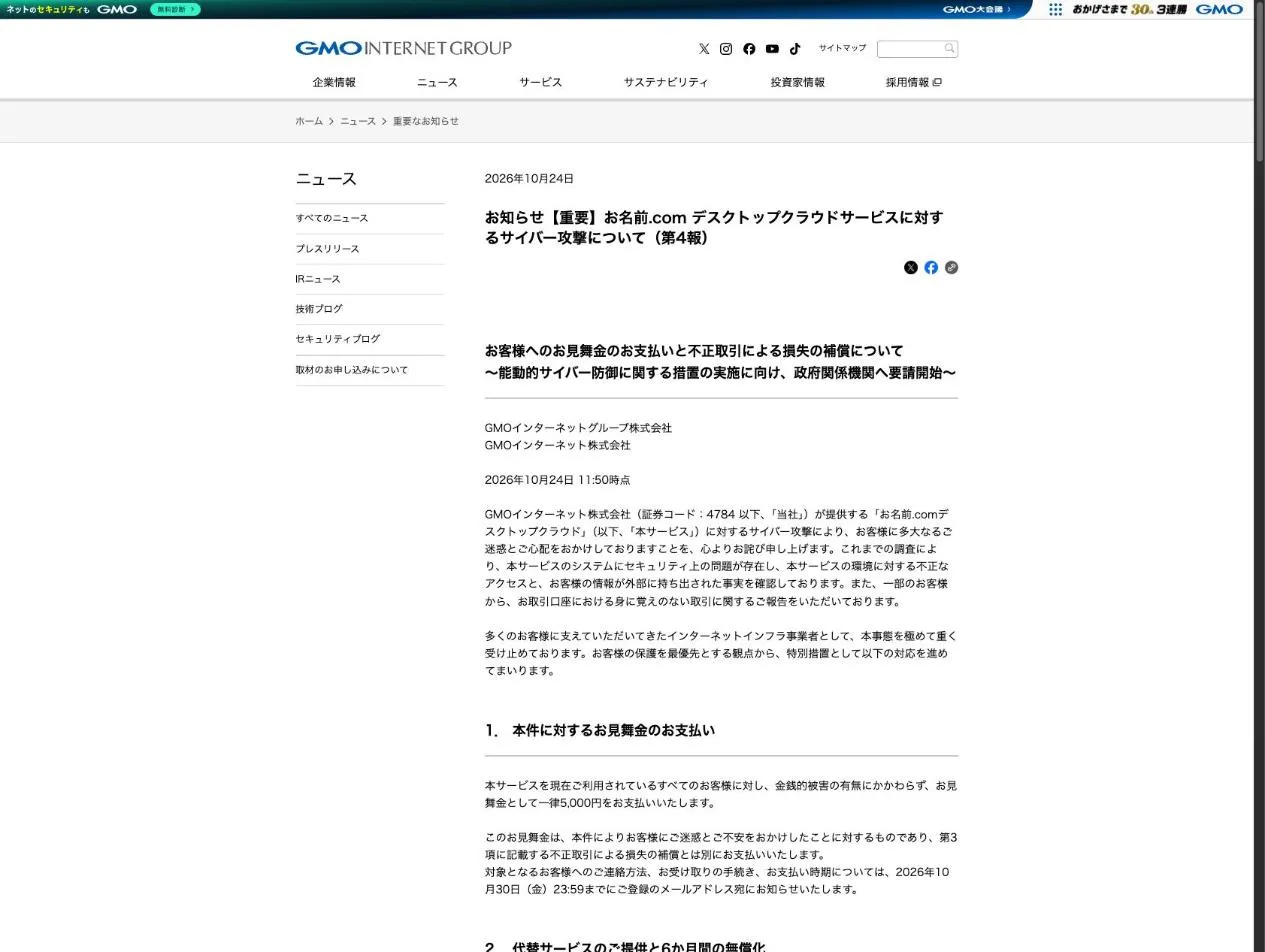
"本サービスを現在ご利用されているすべてのお客様に対し、金銭的被害の有無にかかわらず、お見舞金として一律5,000円をお支払いいたします。" — from the 4th report on the cyberattack against Onamae.com Desktop CloudView official source →
What Desktop Cloud users should do now
If you used Desktop Cloud, change your trading passwords and scan your own computers first. Both steps come straight from GMO's requests to customers.
Change trading passwords from a device you don't trade on
Change the passwords for your trading accounts and trading tools from a phone or PC you have not used for FX trading. Then log out every active session, check your trade history and balance, and report anything you don't recognize to your broker.
If your broker offers two-factor authentication, turn it on now. Also change:
- IDs and passwords you saved on the Desktop Cloud server
- Any other service where you used the same password
- Passwords saved in your browser
Scan your own PCs and ignore fake GMO messages
Run a full virus scan on every PC and phone you used to connect to the server. Back up your data and keep those backups somewhere safe.
GMO never asks for passwords or verification codes by email or phone, and it warns against anyone offering to recover lost money for a fee. Its help desk is open 24 hours a day by phone at 03-5456-2560 (from Japan) and through a web form.
"・お取引口座および取引ツール等のパスワードを、至急変更してください。この変更は、FX取引に使用していない端末(スマートフォンや別のPC等)から行ってください。" — from the 3rd report on Onamae.com Desktop CloudView official source →
What Onamae.com domain owners should check
If you register domains at Onamae.com, now is a good time to lock down your Onamae.com Navi login. Desktop Cloud and the domain service carry the same Onamae.com brand but are separate services.
GMO has not said whether domains are affected
None of GMO's 16 reports mention Onamae.com domains, rental servers or Onamae ID. They neither confirm nor rule out any effect. From the 1st report on, GMO has warned about phishing emails, texts and calls that use the incident as cover.
Onamae.com had already warned in August 2026 about phishing emails posing as the company to steal logins. Some carried subjects like 自動更新失敗 / Auto-Renewal Failed to pressure recipients into renewing, and some spoofed Onamae.com's own sender address. Skip the link in the email and sign in to Navi from your own bookmark to check a domain's status.
Turn on two-step verification and Domain Protection
Two settings protect a domain at Onamae.com: two-step verification in Navi and the Domain Protection option. Two-step verification asks for a one-time code sent by email or SMS when you sign in or make an important change. It is set up under ログインセキュリティ (login security) on your account page.
Domain Protection is a paid option at 1,078 yen per domain per year, tax included. With it, Whois changes, name server changes and transfers cannot go through without the registrant's approval. Taking over a domain by rewriting its registration data is called domain name hijacking, and JPRS, which runs the .jp registry, recommends two-step verification and regular checks of registration data.
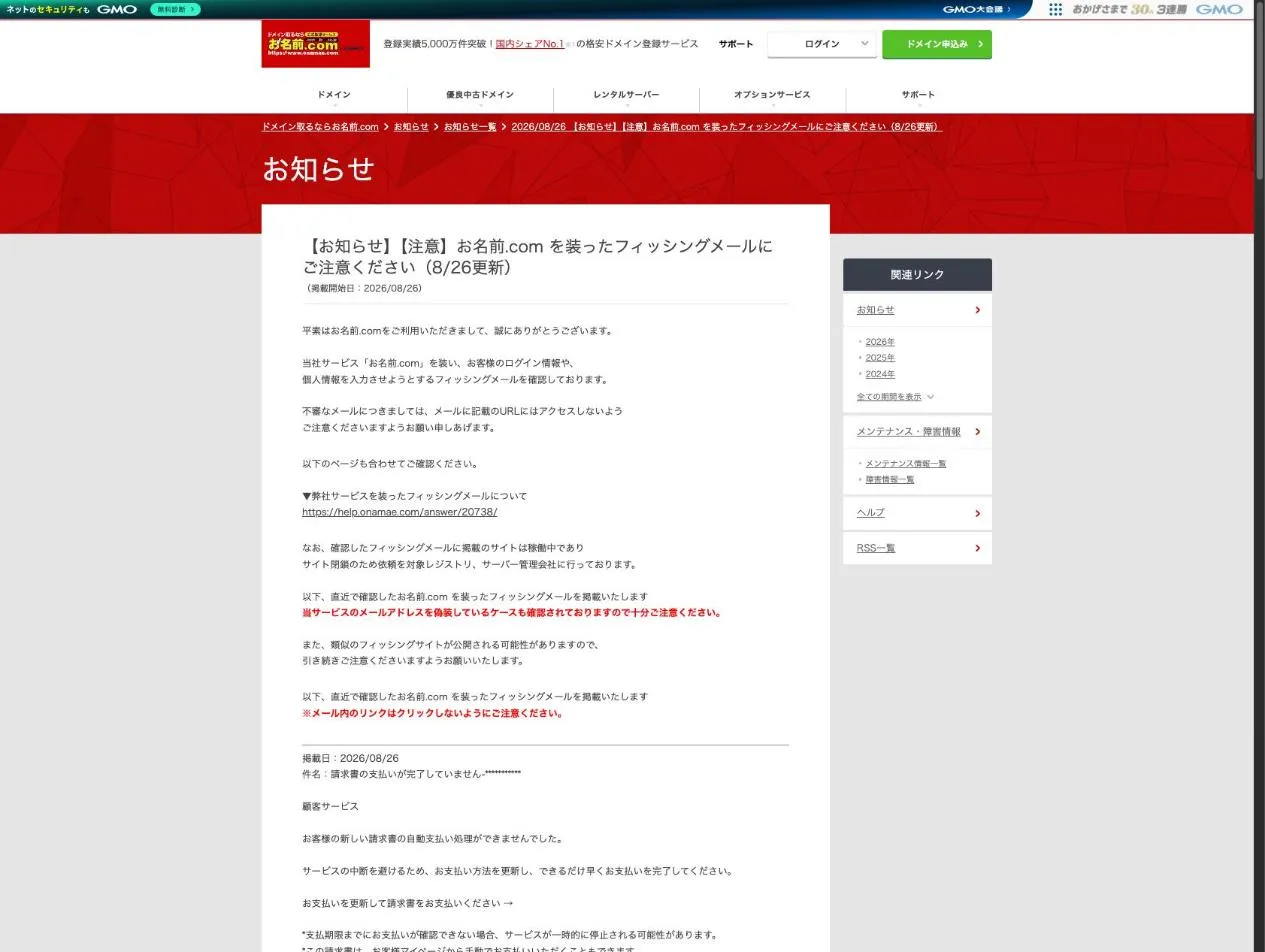
"当社サービス「お名前.com」を装い、お客様のログイン情報や、個人情報を入力させようとするフィッシングメールを確認しております。" — from Onamae.com's notice on phishing emails posing as the companyView official source →
Workplaces should check credentials kept on outside servers
Keeping IDs and passwords on outside servers and cloud services is common at work too. After a string of breaches, Japan's Information-technology Promotion Agency (IPA) urged organizations on October 9 to check their defenses. Another GMO group company reported its own case in October: infoQ data breach exposes up to 948,498 records.
Companies should list every cloud service and account they use
The first job for a company is to list every outside service it uses. IPA asks organizations to cover cloud services, VPNs and anything individual departments signed up for.
Then look for accounts nobody remembers creating and accounts that were turned off but are active again, and turn on multi-factor authentication. Keep only the data you need.
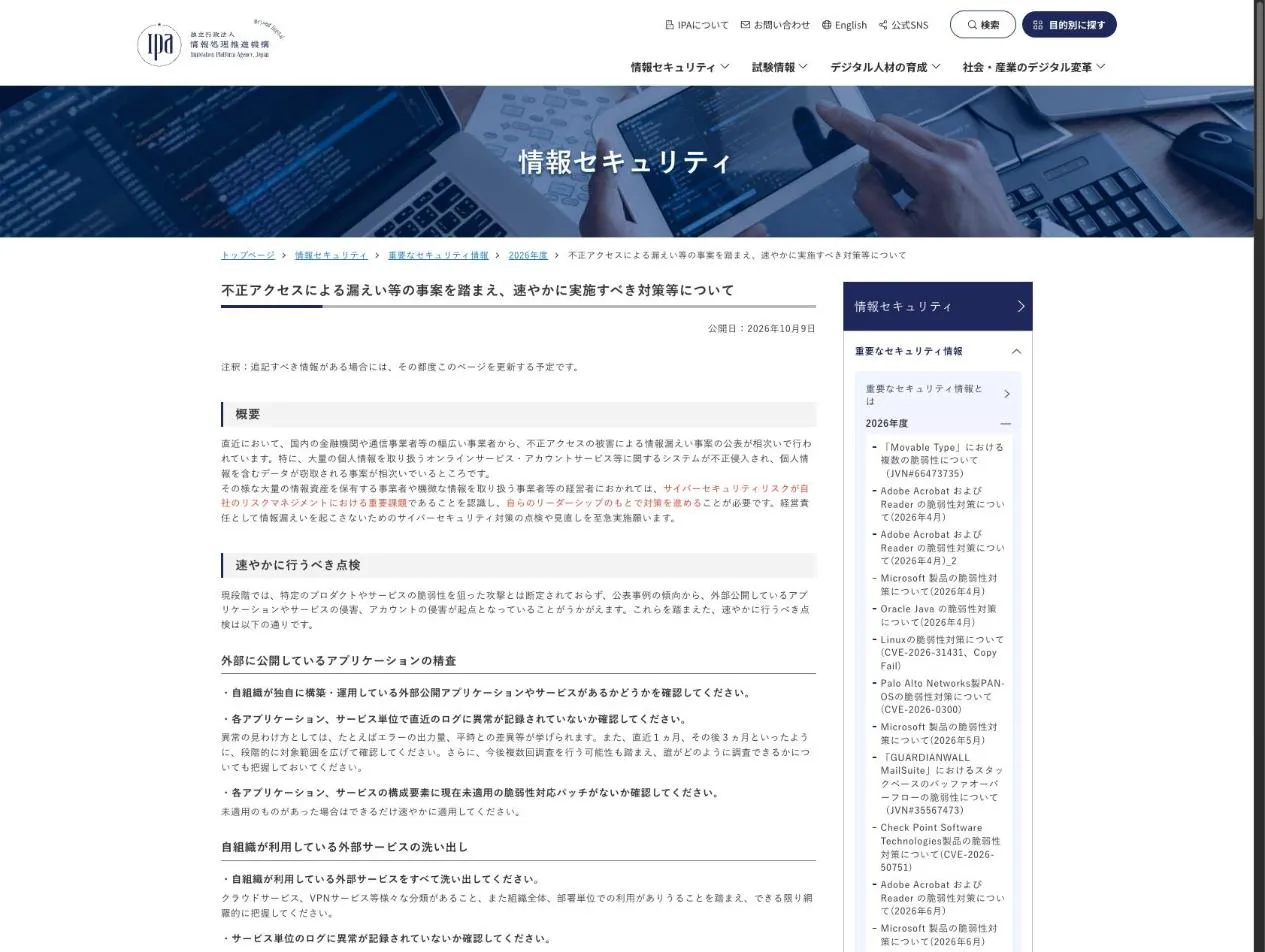
"自組織が利用している外部サービスをすべて洗い出してください。" — from the section on listing external servicesView official source →
Staff should not reuse passwords and should turn on MFA
What each employee can do is avoid reusing passwords and turn on multi-factor authentication (MFA). With both in place, one leaked password does not open the next account. IPA's October 26 guide for individuals says the same, and also points to passkeys where a service supports them.
The same rule holds for work accounts: don't type a login into a page you reached from an email link. If coming up with a strong new password is a chore, the SOKUFU Password Generator makes a random one from the length and character types you pick.
In this case, logins that customers stored on their servers went to the attacker the moment the servers were breached. Storing logins in fewer places, and pairing the ones you must store with MFA, keeps one break-in from reaching your trading or bank accounts.
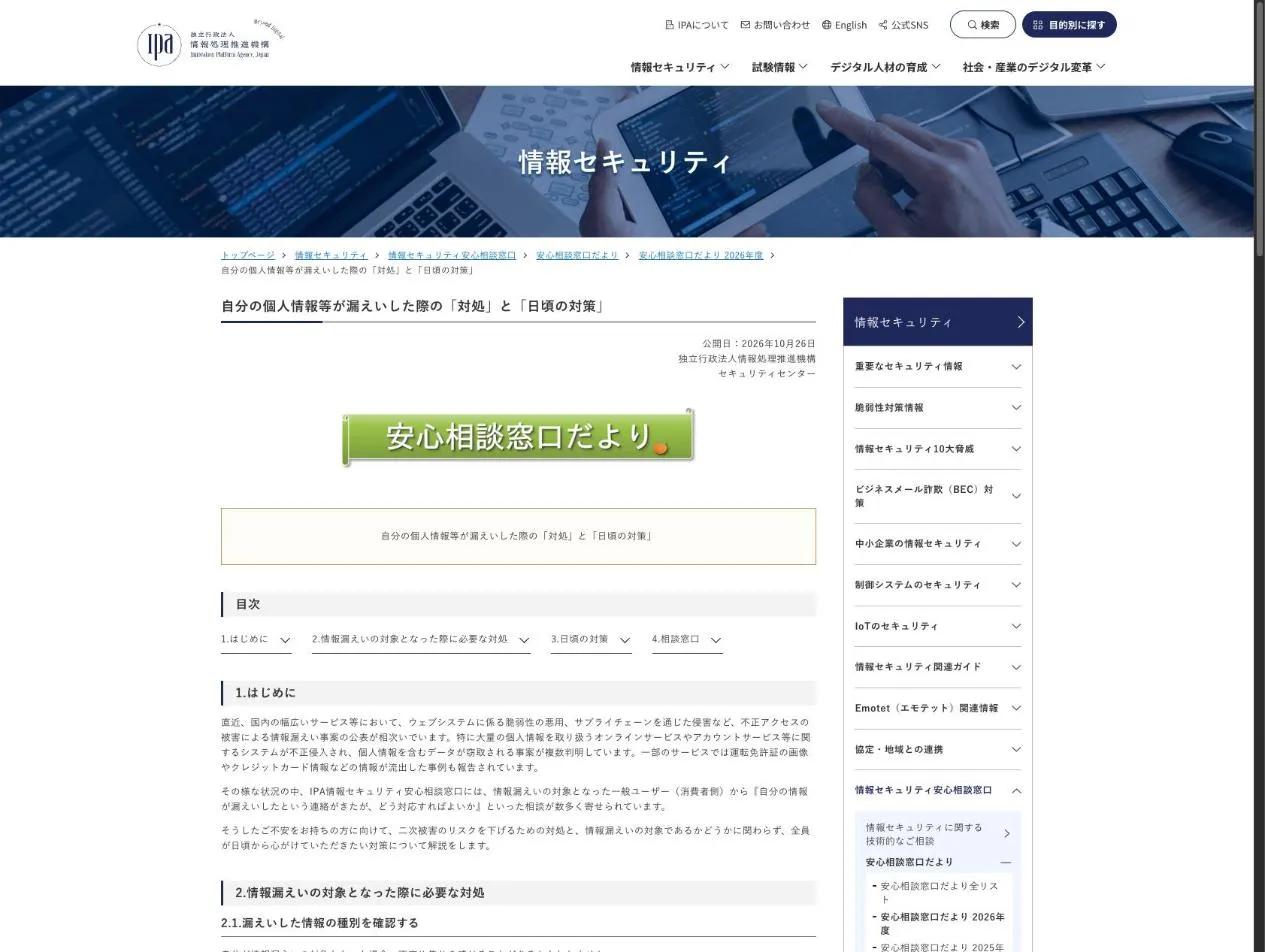
"各種インターネットサービスにおける不正ログイン対策として、多要素認証(SMS認証、認証アプリ、ハードウェアトークン等)やパスキーの設定が可能なサービスは積極的に利用することを推奨します。" — from section 3 on everyday precautionsView official source →
FAQ
- How much will GMO pay Onamae.com Desktop Cloud customers?
- Every current customer gets a flat 5,000 yen, whether or not they lost money. Losses from unauthorized trades are covered on top of that, and people whose data was published get an extra payment of up to 3 million yen.
- Are domains registered at Onamae.com affected by the breach?
- GMO has not said. Its reports so far do not mention domains, rental servers or Onamae ID at all. Watch for phishing that uses the incident as bait, and turn on two-step verification in Onamae.com Navi.
- Did GMO pay the ransom?
- No. GMO says paying would not guarantee that the stolen data is deleted or kept from misuse. It is working with the police and offers up to US$1 million for tips that help identify the attacker.
Related articles
 Japan foreign ministry leak may hit 3,600 recordsJapan's foreign ministry says names and email addresses in about 3,600 records may have leaked, including 900 outsiders. No classified or passport data.
 Japan's data leaks hit 260 million since AprilJapan's privacy regulator says unauthorized access affected data on a cumulative 260 million people from April to mid-October, with 830 reports in October.
 Japan data breach list: cases by date and causeThis Japan data breach list sorts disclosed cases newest first. Skyticket (14.64M records) and KDDI (12.23M users) lead. See what leaked, why, and what to do.
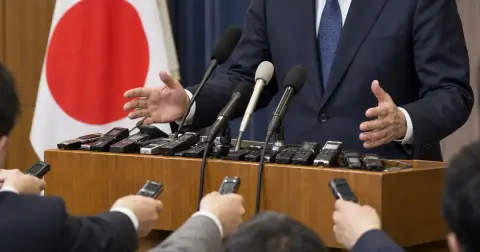 Japan's METI warns firms after a spate of breachesAfter a spate of data breaches, Japan's trade ministry (METI) told companies on October 9 to put top executives in charge of security and move to zero trust.