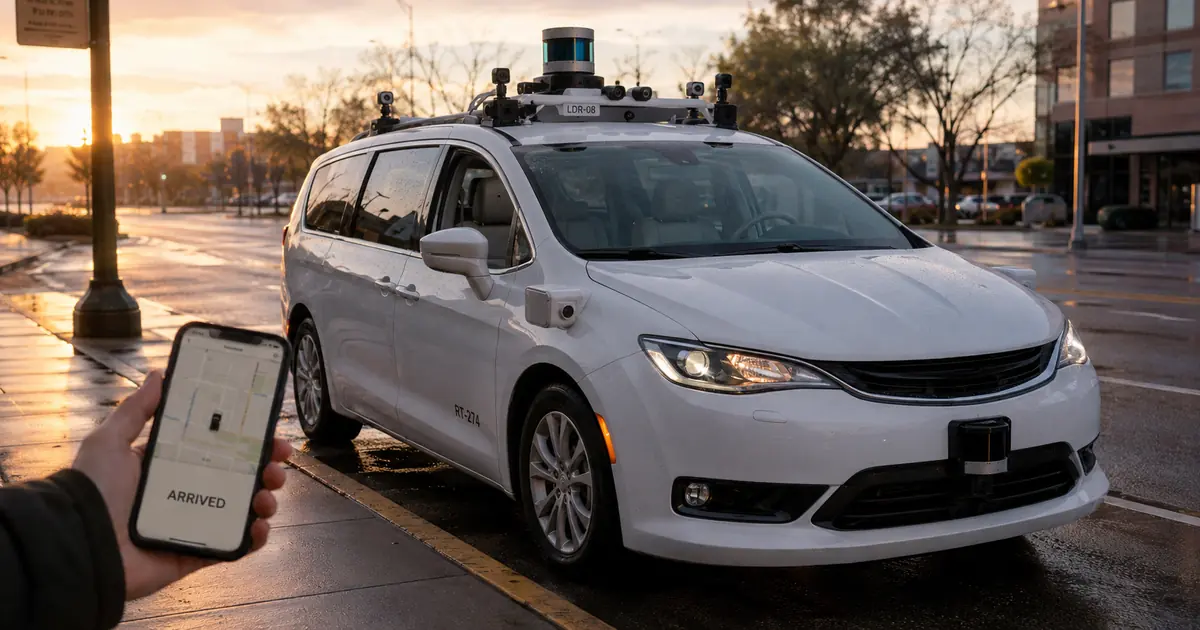
The Waymo Uber Partnership Loses Exclusivity in Early 2028
CNBC's July 24, 2026 report says Uber and Alphabet's Waymo had partnered for three years to bring driverless rides to two U.S. markets. A robotaxi is a car that drives itself with no driver.
In Atlanta and Austin the only way to hail a Waymo has been to request a ride in the Uber app. That is what exclusivity meant in practice. It ends in early 2028, while Uber says Waymo rides stay on its app through at least May 2028.
What changes and what does not
What January 2028 Means for Waymo Austin and Waymo Atlanta
In CNBC's report, the January 2028 date comes from Uber, not from Waymo. An Uber spokesperson told CNBC that Waymo had notified the company of its plan to start a Waymo app in both cities. The CNBC article does not quote Waymo giving that date itself, so treat it as Uber's account of what Waymo said.
The spokesperson's word "alongside" matters. The app is meant to sit next to the existing Uber deployment, not replace it. Until early 2028, riders in Austin and Atlanta still reach Waymo through Uber.
The change also affects Uber. Once exclusivity ends, Uber can put autonomous vehicles from other companies onto its platform in both cities.
"We have been notified by Waymo that they intend to launch the Waymo app in Austin and Atlanta in January 2028, alongside their existing deployment with Uber." — CNBCView official source →
Waymo Robotaxi Rides Stay on Uber Until at Least May 2028
Uber told CNBC that hundreds of Waymo robotaxis remain on its app in Atlanta and Austin through at least May 2028, which is how long the existing contract lasts. The words "at least" set a floor, not an end date: CNBC gives no end date beyond May 2028.
If the January 2028 plan holds, the months from January to at least May 2028 could be a stretch when a Waymo can be hailed from either app. The CNBC report does not describe how the overlap would work.
| Uber app | Waymo app | |
|---|---|---|
| Cities | Atlanta and Austin | Atlanta and Austin |
| Timing | Available as of October 1, 2026; Uber says through at least May 2028 | Planned for January 2028, per Uber |
| Exclusivity | The only way to hail a Waymo until early 2028 | Not launched yet, so no exclusivity applies |
| Fleet | Hundreds of Waymo robotaxis | No figures in the CNBC report |
"In Atlanta and Austin, hundreds of Waymo robotaxis will remain available on Uber through at least May 2028, the duration of their existing contract, Uber said." — CNBCView official source →
How to Ride a Waymo Through Uber Before the Waymo App Arrives
Until the Waymo app exists, you reach a Waymo by requesting certain Uber ride types and getting matched with one. Waymo's own Waymo on Uber page, as it read on October 1, 2026, describes the setup.
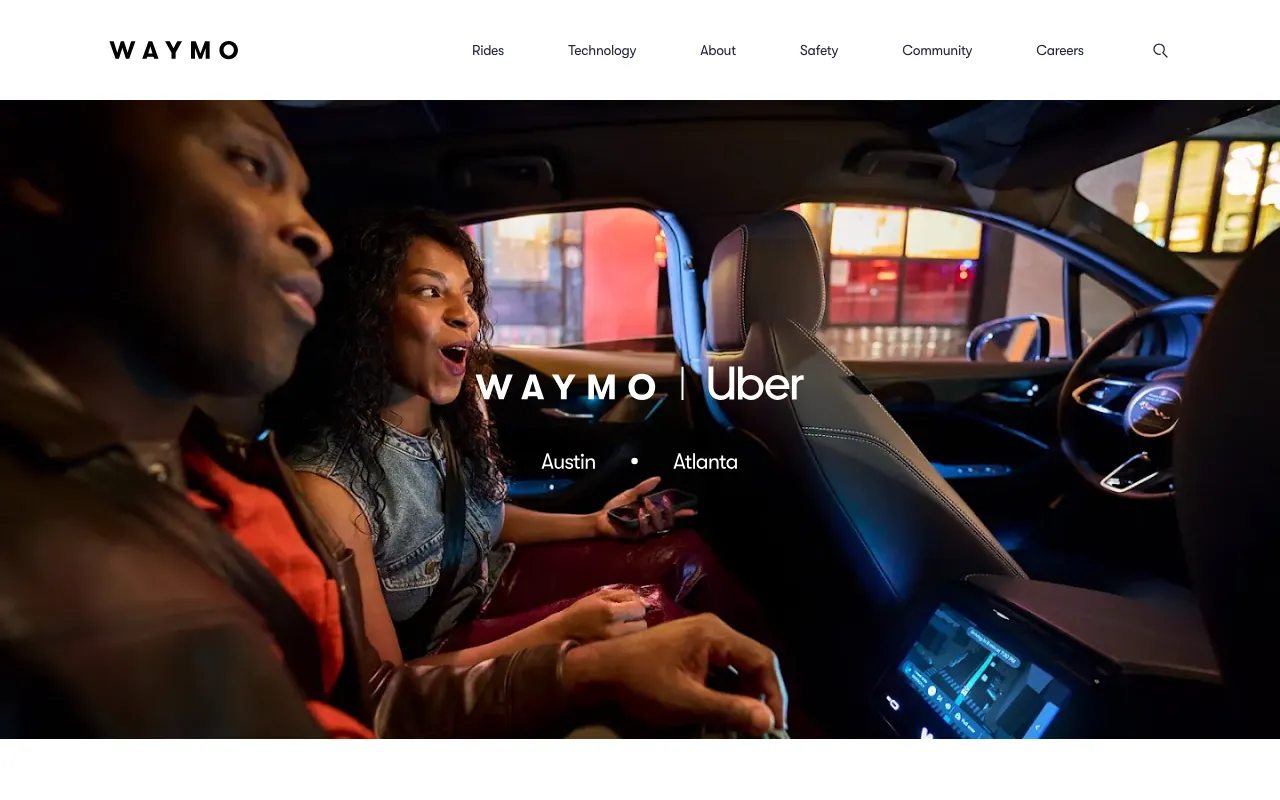
- In the latest version of the Uber app, tap Account, then Settings, then Autonomous vehicles, and switch on the Waymo preference.
- Request an UberX, Uber Electric (Austin only), Uber Comfort or Uber Comfort Electric. Those are the ride types that can be matched with a Waymo car.
- When the app prompts you, accept the Waymo ride.
- When the car arrives, unlock it from the Uber app.
You are not guaranteed a Waymo. Waymo says its fleet serves only a limited territory and gives priority to ride requests near an available vehicle. In Atlanta, Waymo describes its service area as running from South Atlanta to Downtown and Buckhead.
"The Waymo fleet will only serve a limited territory in Austin and Atlanta, and prioritizes ride requests that are close by to an available Waymo vehicle. That said, we aren’t able to guarantee Waymo rides on the Uber app every time." — WaymoView official source →
Why Waymo Wants Riders to Choose, and Where the Waymo Lyft Deal Fits
Waymo's public explanation is short. A spokesperson told CNBC by email that users need "choice in how they experience this technology," and tied it to a wider aim: making the Waymo app and the safety of its technology available to riders everywhere. Waymo's stated reason is rider choice; the statement CNBC quotes does not mention a dispute with Uber.
CNBC adds its own reading, which is worth keeping separate from Waymo's words: the change reflects how Waymo has drawn riders in other U.S. cities without exclusive Uber deals. CNBC says Waymo's website lists its robotaxis as live in nine other markets. That is CNBC's interpretation; the Waymo spokesperson did not say it.
Waymo's Lyft deal is also non-exclusive. CNBC says Waymo agreed with Lyft last year to offer robotaxi rides in Nashville, Tennessee, on a non-exclusive basis. So in Nashville, Waymo works with a ride-hailing partner without exclusivity.
For scale, Waymo's Waymo on Uber page, as it read on October 1, 2026, says the Waymo Driver, its self-driving system, has more than 100 million miles of real-world driving without a human at the wheel and that Waymo serves more than 250,000 trips a week. Those are the company's own figures from that page, not independently verified numbers.
"This is essential to the industry's future and to our vision of making the Waymo app and the safety of our technology available to riders everywhere," the spokesperson wrote./"The development reflects how Waymo has been able to attract riders in a number U.S. cities without exclusive Uber deals, as its robotaxis are now live in nine other markets, according to the company's website." — CNBCView official source →
What's Confirmed, and What's Only an FT Report on a Waymo Uber Split
Two stories ran on Friday, July 24, 2026, and they do not carry the same weight. The end of exclusivity is in CNBC's own reporting.
The January 2028 app plan and the May 2028 contract date both come from Uber. The idea that Waymo considered a full break is a Financial Times report that CNBC passes along.
Stated in CNBC's report versus reported by the FT
CNBC sums up the FT article in a single sentence. The split discussions are only a report; the end of exclusivity is the part CNBC reports directly. CNBC also noted that Uber shares dropped more than 4% on the news.
"The Financial Times reported on Friday that Waymo held internal discussions about whether it should split from Uber due to tensions between the two companies, including around conflicting policy proposals the companies are pursuing in different U.S. markets." — Financial Times reporting, relayed by CNBC. "Uber shares dropped more than 4% on the news." — CNBCView official source →
Uber Robotaxi Deals Beyond Waymo, and the Rivals With Their Own Apps
CNBC reports that Uber has been investing in autonomous-vehicle (AV) technology independent of Waymo. It has committed to buy vehicles from some of its partners, including the startups Waabi, Wayve and Nuro and the electric vehicle maker Rivian, after their self-driving cars are validated as safe to operate without a human supervisor or driver on board. The end of exclusivity lets Uber add non-Waymo vehicles in Atlanta and Austin, but CNBC does not say whether any of these partners' vehicles will go there, or when.
The other route to riders is a direct-to-rider app. Tesla, Amazon's Zoox and other AV developers are also offering standalone apps for hailing robotaxis. For riders in Atlanta and Austin, a Waymo app would be one more way to hail a robotaxi, if it launches as planned.
"Independent of Waymo, Uber has been investing in AV technology, and has committed to buying vehicles from some of its partners, including startups Waabi, Wayve and Nuro, as well as electric vehicle maker Rivian, after their self-driving cars are validated as safe to operate without a human supervisor or driver on board."/"Tesla, Amazon's Zoox and other AV developers are also offering standalone apps that allow riders to hail robotaxis." — CNBCView official source →
Summary
Waymo Uber exclusivity in Atlanta and Austin ends in early 2028. Uber says Waymo intends to launch its app in January 2028, and hundreds of Waymo robotaxis stay on Uber through at least May 2028.
The Financial Times account of split talks is only a report; CNBC relays it without confirmation from either company. How the two apps will overlap is still open, because CNBC does not describe it. If you read the CNBC article alongside this one, a tool that turns a web page into plain text can make it easier to copy passages into your notes.
FAQ
- Is the Waymo–Uber partnership ending?
- CNBC reports the end of exclusivity in Atlanta and Austin in early 2028, not the end of the partnership. Uber says Waymo plans to launch its own app there in January 2028 alongside the existing Uber deployment, and hundreds of Waymo robotaxis stay on Uber through at least May 2028.
- Why is Waymo ending exclusivity?
- A Waymo spokesperson said riders need a choice in how they experience the technology and tied it to getting the Waymo app to riders everywhere. CNBC separately reads the change as a reflection of Waymo attracting riders in other U.S. cities without exclusive Uber deals, and notes that Waymo's website lists nine other live markets. That second part is CNBC's reading, not a reason Waymo gave.
- Are reports of a deteriorating relationship accurate?
- The Financial Times reported that Waymo held internal discussions about splitting from Uber, citing tensions that include conflicting policy proposals in different US markets. CNBC relays that report. The CNBC article does not quote either company confirming those discussions, so treat them as unconfirmed.
Related articles
 Waymo Custom Chip: 5nm ASIC for Lidar and CamerasThe Waymo custom chip is a 5nm ASIC that fuses lidar, radar and camera data ahead of the driving stack. What its 1,000 TOPS covers, and what it does not.
 Waymo will test Toyota bZ4X robotaxis in JapanToyota will build bZ4X robotaxis for Waymo at its Takaoka plant, with testing in Japan from 2027 and the UK to follow. No city, fleet size or fare is set yet.
 Tesla Robotaxi Las Vegas: What the Permit AllowsTesla robotaxi Las Vegas plans won approval for up to 5,000 vehicles, but nobody can ride yet: the conditions, the 120-day window and the airport catch.
 Zoox Robotaxi Cleared With No Steering WheelNHTSA exempted the Zoox robotaxi from parts of eight federal safety standards through July 2028, for up to 2,500 vehicles per 12 months, with conditions.