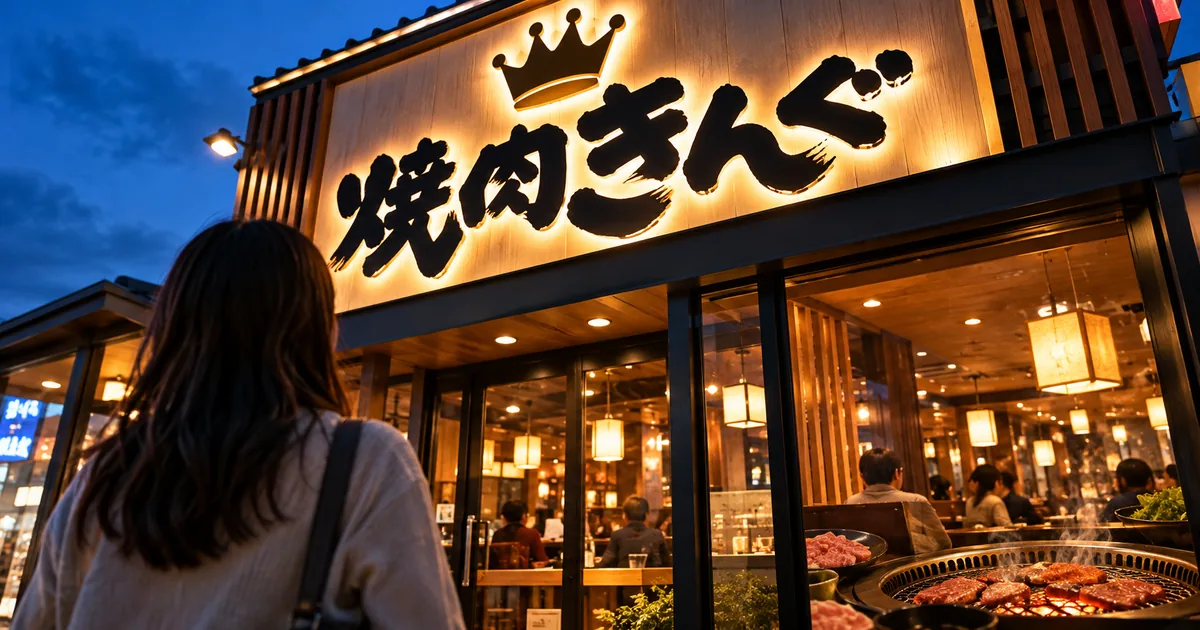
Yakiniku King data breach found on October 2
The Yakiniku King data breach came from a third party breaking into the member management system behind the chain's official app. Yakiniku King is a Japanese barbecue chain run by Monogatari Corporation. The company posted an apology and a timeline on its Japanese website on October 5.

From detection to disclosure (per Monogatari Corporation)
| Date | What happened |
|---|---|
| Fri, Oct 2 | Unauthorized access to the member system found; connection cut and defenses put in place |
| Sat, Oct 3 | Leak of member information confirmed |
| Mon, Oct 5 | Apology and details published |
As of the announcement, the company had no evidence that the data had been posted publicly or misused. On the same day, GMO Research & AI disclosed a separate break-in at its survey site; that case is covered in infoQ data breach exposes up to 948,498 records.
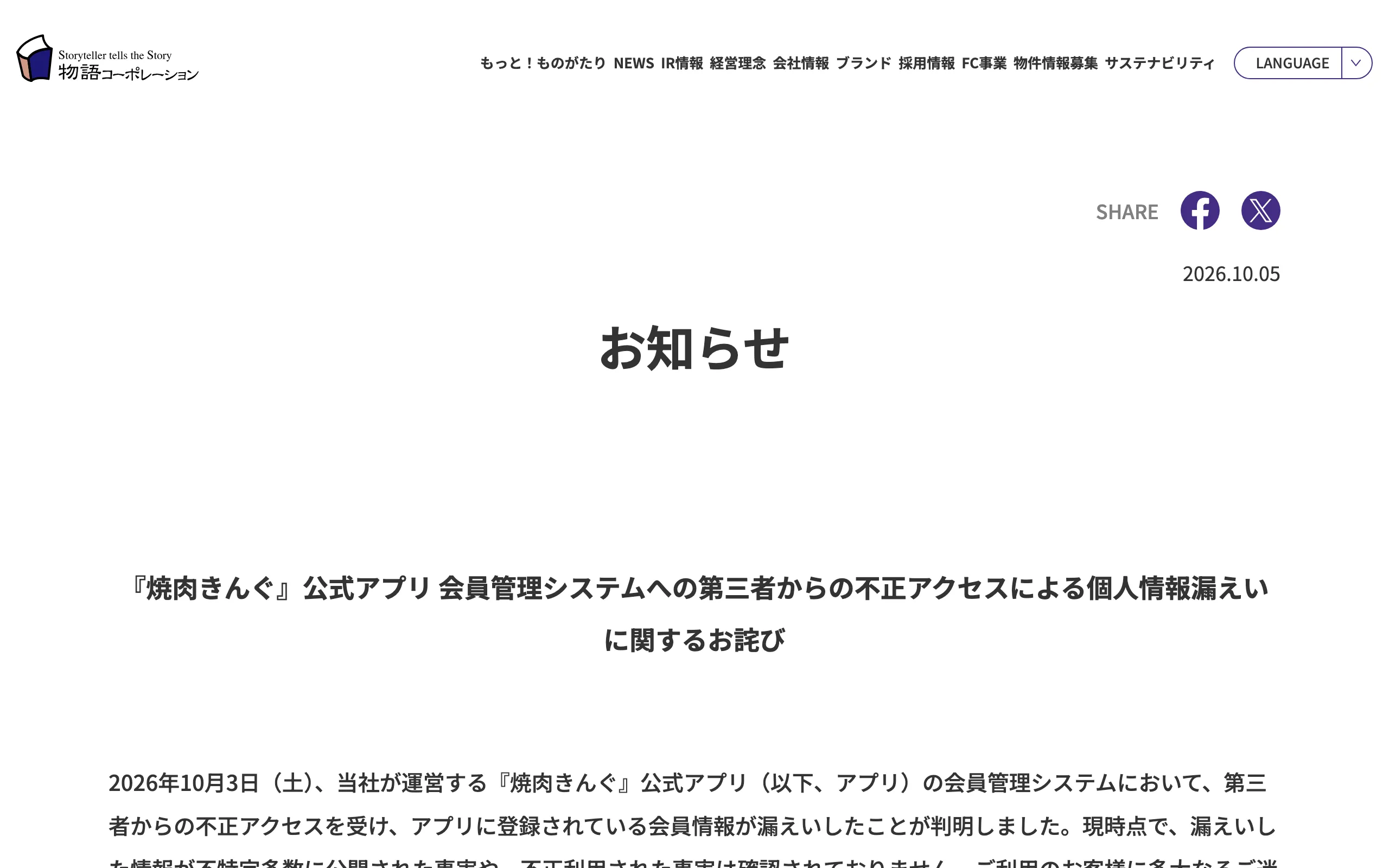
"2026年10月2日(金)、『焼肉きんぐ』公式アプリの会員管理システムにおいて、第三者からの不正アクセスが確認されました。確認後、通信遮断および防御措置を実施いたしましたが、会員情報が漏えいしたことを10月3日(土)に確認しております。" — Section 1, timelineView official source →
Personal data exposed in the Yakiniku King data leak
Out of 10,808,784 registrations, 10,788,963 leaked, roughly 99.8%. In practice, anyone with a Yakiniku King app account should assume their details are in the leaked set.
Four pieces of personal data were taken: the member number, the name, the email address and the phone number. The name is whatever the user typed into the app, so it may be a nickname rather than a legal name. Still, a name paired with a working email address and phone number is enough to write a message that looks personal.
No passwords or credit card information in the data leak
The rest of the account data stayed put, according to the company. This table splits what leaked from what did not:
| Status | Data |
|---|---|
| Leaked | Name (as entered in the app), email address, phone number, member number |
| Not leaked | Login password, gender, date of birth, postal code, store visit history including point balance |
| Never held | Credit card and other payment details |
Monogatari Corporation does not store card numbers at all, so payment details were never part of this breach. Login passwords sat outside the leaked set as well.
"漏えいした情報には、会員番号、氏名(アプリ登録名)、メールアドレス、電話番号が含まれます。" — Section 2, leaked informationView official source →
Yakiniku King security breach cause is under investigation
The company has not said how the attacker got in. Its notice confirms only that the leak came from unauthorized access by a third party and that a detailed investigation is under way. No method, weak point or system name has been made public.
The app is still running, with defenses added after the break-in. Monogatari Corporation says it is tightening security and monitoring with help from its app developer and affiliated companies.
The company is reporting the case to the Personal Information Protection Commission, Japan's privacy regulator, and filing a damage report with the police. It applied the same defenses to the apps for its other restaurant brands and says no data leaked from those apps.
"現在、原因および不正アクセスが可能となった経緯について詳細な調査を進めております。現時点では、第三者による不正アクセスによるものと確認しております。" — Section 3, causeView official source →
Watch for phishing email and smishing after the data leak
The main risk for members now is fake messages that use their real name and contact details. Monogatari Corporation warns that the leaked data could be used for impersonation email and phishing, where a scammer poses as a real company to steal logins or card numbers. The same trick sent by text message is called smishing.
The company asks members to be wary of suspicious email, text messages and phone calls, and not to open links or attachments they don't recognize. An apology coupon or an "account check" is an easy hook, so open the app or the official website yourself rather than tapping a link in a message.
Monogatari Corporation also says it will never ask for a password or credit card details. Any message that does is not from the company.
Members with questions can call the app's call center at 0120-795-775, a toll-free number inside Japan, from 10:00 to 18:00, weekends and holidays included. For now, the practical response to the Yakiniku King data breach is simple: treat every message that claims to be from the chain with suspicion.
"今回漏えいした個人情報が、なりすましメールやフィッシング詐欺等に悪用される恐れがございます。/また、当社からパスワードやクレジットカード情報等をお伺いすることはございません。" — Section 5, request to customersView official source →
FAQ
- Was my Yakiniku King app account part of the breach?
- Assume it was. Monogatari Corporation says 10,788,963 of the app's 10,808,784 registrations leaked, which is about 99.8% of them. The company has not said which accounts were left out.
- Do I need to change my Yakiniku King app password?
- Monogatari Corporation says login passwords were not leaked. The exposed items were member numbers, names, email addresses and phone numbers. The bigger risk is fake messages sent to those addresses and numbers.
- Was credit card information exposed?
- No. Monogatari Corporation says it does not hold credit card or other payment details at all. It also says it will never ask customers for passwords or card numbers, so any message that does is not from the company.
Related articles
 Japan foreign ministry leak may hit 3,600 recordsJapan's foreign ministry says names and email addresses in about 3,600 records may have leaked, including 900 outsiders. No classified or passport data.
 Japan's data leaks hit 260 million since AprilJapan's privacy regulator says unauthorized access affected data on a cumulative 260 million people from April to mid-October, with 830 reports in October.
 GMO's Onamae.com Desktop Cloud hacked, data leakedAttackers broke into Onamae.com Desktop Cloud, GMO Internet's VPS for FX trading, stole trading logins and leaked data after GMO refused a ransom.
 Japan data breach list: cases by date and causeThis Japan data breach list sorts disclosed cases newest first. Skyticket (14.64M records) and KDDI (12.23M users) lead. See what leaked, why, and what to do.