
Up to 3.88M Baitoru member email addresses may have leaked
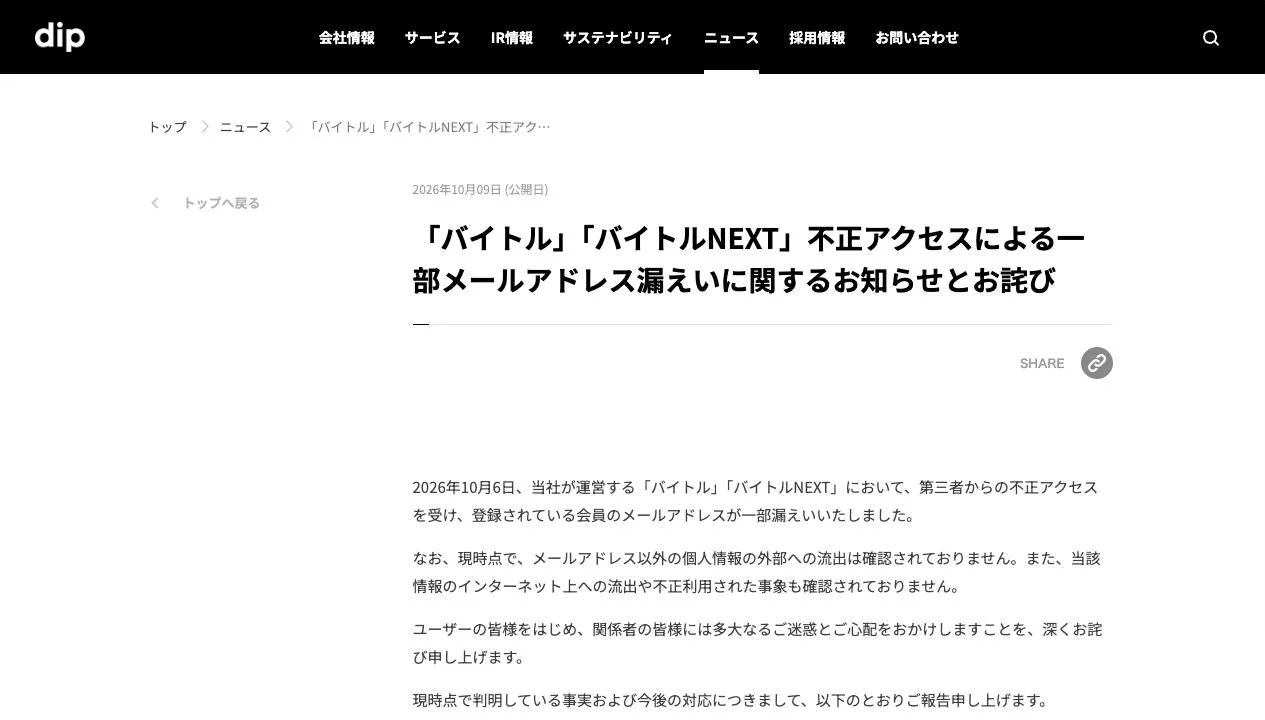
An outside party got into some functions of the Baitoru and Baitoru NEXT websites, and some member email addresses leaked. dip, which runs both job sites, confirmed the unauthorized access on Oct 6 and published a notice on its own news page on Oct 9. The notice puts the number of addresses that may have leaked at up to 3,885,771.
Here are the main points of the notice. Both sites are job boards that dip runs.
The Baitoru leak at a glance (from dip's notice)
| Item | Detail |
|---|---|
| Unauthorized access confirmed | Oct 6, 2026 |
| Notice published | Oct 9, 2026 |
| Sites affected | Baitoru and Baitoru NEXT |
| Addresses that may have leaked | Up to 3,885,771 |
| Data involved | Email addresses only |
Bookoff Group Holdings disclosed a member data leak on the same day. That case is covered in Bookoff hack may have leaked 6.43M member records.
Some addresses leaked, and 3.88M is the upper limit
dip says it has confirmed that "some" member email addresses leaked, and 3,885,771 is the most that may be involved. The notice does not say how many addresses actually left its systems.
In other words, dip has not said that all 3,885,771 addresses leaked. If you have a Baitoru or Baitoru NEXT account, you cannot yet tell from the notice whether your address is one of them.
"2026年10月6日、当社が運営する「バイトル」「バイトルNEXT」において、第三者からの不正アクセスを受け、登録されている会員のメールアドレスが一部漏えいいたしました。" / "「バイトル」「バイトルNEXT」会員登録者のうち、漏えいした可能性のある件数は最大 3,885,771件です。" — from the opening and "漏えいした情報"View official source →
Only email addresses leaked, not passwords or card data
The leaked data is email addresses only. The notice lists four kinds of data that were not involved:
- Names
- Phone numbers
- Passwords
- Credit card data
dip has not asked members to change their passwords. It also says it has not found any other personal data leaving its systems, and that as of the notice there was no sign of the addresses being posted online or misused.
"漏えいした情報はメールアドレスのみであり、氏名、電話番号、パスワード、クレジットカード情報等は含まれておりません。" / "当該情報のインターネット上への流出や不正利用された事象も確認されておりません。" — from "漏えいした情報" and the openingView official source →
A site vulnerability let overseas attackers in
dip says the attackers came from overseas and exploited a vulnerability in some system functions. A vulnerability is a weakness in a system that attackers can use to get in. The notice does not say which feature was affected or what the vulnerability was.
Right after confirming the access, dip blocked all access from overseas. It also fixed the affected code so the same method no longer works, and it says it has further strengthened its security measures and monitoring.
dip notified affected members on the Baitoru and Baitoru NEXT sites on Oct 6 and is emailing each of them individually. It is reporting the case to the Personal Information Protection Commission and the Kanto Bureau of Telecommunications, and it is consulting the police. Both sites are still running as usual.
"システムの一部機能における仕様の不備を突いた、海外からの不正アクセスによるものと確認しております。" / "確認後、直ちに海外からのアクセス全遮断およびプログラムの改修を実施し、技術的な防御措置を完了しております。" — from "原因" and "概要"View official source →
Watch for spam and spoofed emails after the leak
If the leaked addresses are misused, members may receive spam or spoofed emails. A spoofed email is one made to look as if it came from a real company or person. dip asks members to be careful with suspicious mail and not to open links or attachments they do not recognize.
dip says it never asks for passwords or credit card data by email or any other channel. So an email that claims to be from dip and asks for either one is fake.
"万が一、対象となったメールアドレスが悪用された場合、スパムメールやなりすましメール等が送られてくる恐れがございます。" / "なお、当社からメール等でパスワードやクレジットカード情報等をお伺いすることは一切ございません。" — from the request to usersView official source →
dip takes questions through a dedicated web form
Users can send questions about the leak through dip's inquiry form. The form is in Japanese. Press inquiries go to dip's PR department instead.
How companies and staff can guard against spoofed email
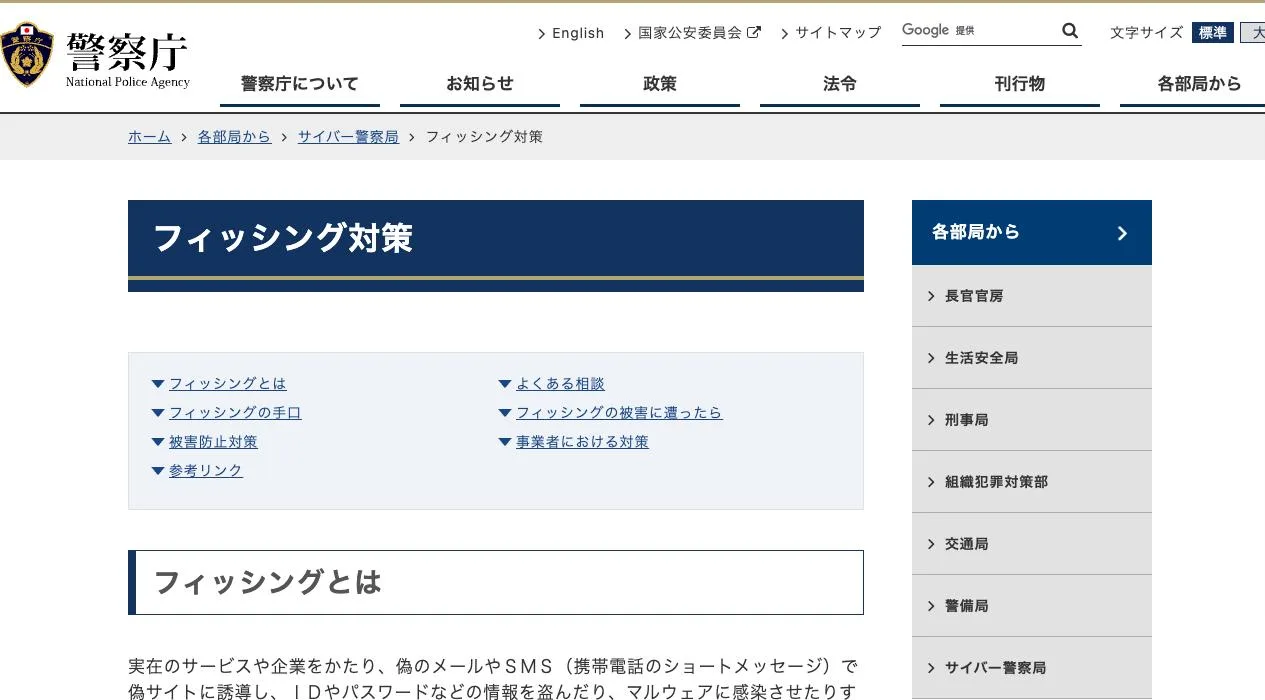
A leaked address list makes phishing more likely: fake emails that pose as real companies or services. Phishing lures people to fake sites to steal login IDs and passwords. Japan's National Police Agency says these emails often use urgent wording, such as a "personal data leak" or "unauthorized access detected", to push people into logging in.
The agency also warns that the sender name and address shown in an email are easy to change, so you cannot judge an email by them alone. The measures below are split into what a company can do and what each employee can do.
Companies can adopt sender domain authentication
A company can adopt sender domain authentication, which lets mail servers tell whether an email really came from the domain it claims. The National Police Agency asks businesses to consider it to keep their own domains from being abused. The main methods are:
- SPF: checks whether the IP address of the sending server is allowed for the domain
- DKIM: checks the digital signature attached to the email
- DMARC: combines SPF and DKIM
With DMARC, the sender decides what happens to email that fails these checks. A sender can set a policy such as "do not accept spoofed email", and receiving servers then apply it.
"事業者にあっては、自社のドメインの悪用を防止する観点で『送信ドメイン認証技術』の導入をご検討ください。" / "特に、DMARCは、認証に失敗したメールの取扱いを送信側で指定でき、「なりすまされているメールは受け取らない」といった強いポリシーを受信側に実施させることができるようになります。" — from "事業者における対策"View official source →
Staff should open sites from bookmarks, not email links
Each employee can skip links in emails and open services from a bookmark or the official app instead. The National Police Agency recommends bookmarking official sites in advance or using official apps to reach the right site. It also recommends these steps:
- Use a different login ID and password for each site, and do not reuse them
- Keep the OS and apps updated so PCs and smartphones stay safe
- If you entered a login ID or password on a fake site, change that password right away on every service that uses it
"電子メールやSMS内のリンクを安易にクリックせず、あらかじめ公式サイトを「お気に入り」や「ブックマーク」に登録しておいたり、公式アプリを活用するなどして正しいサイトに接続するようにしてください。" — from "被害防止対策"View official source →
FAQ
- Were Baitoru passwords leaked?
- No. dip says the leaked data is email addresses only. Names, phone numbers, passwords and credit card data are not part of it.
- Can I still use Baitoru and Baitoru NEXT?
- Yes. dip says its services, including Baitoru and Baitoru NEXT, remain available.
- How do I contact dip about the Baitoru leak?
- dip takes questions from users through a dedicated web form. Press inquiries go to its PR department instead.
Related articles
 Japan foreign ministry leak may hit 3,600 recordsJapan's foreign ministry says names and email addresses in about 3,600 records may have leaked, including 900 outsiders. No classified or passport data.
 Japan's data leaks hit 260 million since AprilJapan's privacy regulator says unauthorized access affected data on a cumulative 260 million people from April to mid-October, with 830 reports in October.
 GMO's Onamae.com Desktop Cloud hacked, data leakedAttackers broke into Onamae.com Desktop Cloud, GMO Internet's VPS for FX trading, stole trading logins and leaked data after GMO refused a ransom.
 Japan data breach list: cases by date and causeThis Japan data breach list sorts disclosed cases newest first. Skyticket (14.64M records) and KDDI (12.23M users) lead. See what leaked, why, and what to do.