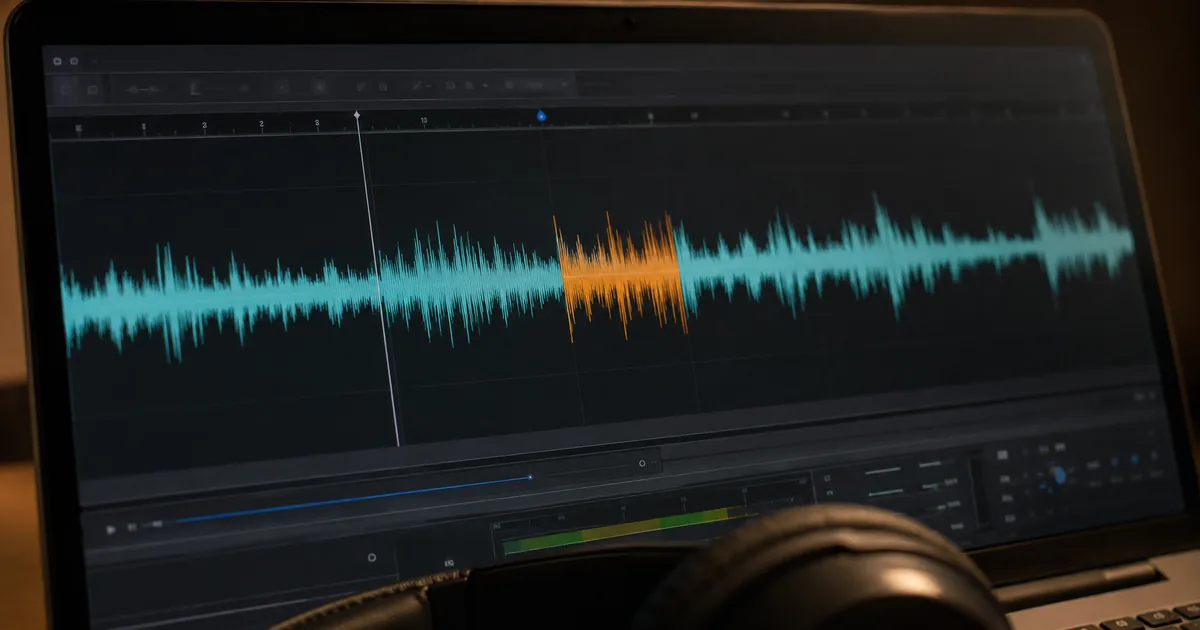
OpenAI SynthID audio watermark: what changed on July 31
On July 31, 2026, OpenAI added an update to its content provenance announcement: supported audio made with its tools now carries a SynthID watermark. A watermark here is an invisible signal embedded in the content itself, and provenance means information about where a piece of content came from. SynthID is Google DeepMind's watermarking technology.
What the July 31, 2026 update changed, per OpenAI
Watermarking is not new at OpenAI, which has used visible watermarks in Sora and an audio watermark in Voice Engine. OpenAI says it has continued to test and research accuracy and reliability over time.
Update July 31, 2026: We’re expanding this work beyond images. Supported audio generated with OpenAI tools, including through ChatGPT and the OpenAI API, now includes SynthID watermarking. / We have used visible watermarks in Sora and an audio watermark in Voice Engine, and have continued to test and research accuracy and reliability over time. — From the expansion to audio and the earlier watermarking workView official source →
SynthID checker and API: verifying supported audio
OpenAI's public verification tool, which checks for SynthID among other signals, now takes supported audio files in addition to images. It is the check OpenAI offers for a file that may have come from ChatGPT or the API.
OpenAI describes the tool's job in a sentence about images. It helps people verify whether an uploaded image was generated on ChatGPT, the OpenAI API, or Codex, by checking for provenance signals, including Content Credentials and SynthID. The audio extension comes in a separate sentence of the update, and the image sentence says nothing about how audio is checked.
The same update adds API access for verification. Developers and organizations can then build provenance checks into their own workflows.
Our public verification tool will now allow for verification of supported audio files in addition to images. We’re also introducing API access for verification, so developers and organizations can incorporate provenance checks into their own workflows. / We are now previewing a public verification tool that will help people verify whether an uploaded image was generated on ChatGPT, the OpenAI API, or Codex, by checking if it contains provenance signals, including Content Credentials and SynthID. — From the audio extension, the API access, and what the public verification tool checksView official source →
C2PA and Content Credentials alongside the SynthID watermark
OpenAI says C2PA metadata helps content carry information about where it came from, how it was created or edited, and who signed that information. Content Credentials appears in the announcement alongside SynthID, as one of the provenance signals its verification tool checks for.
OpenAI also names the weakness of metadata. It can be stripped, lost when a file is uploaded or downloaded, or broken by a format change, resizing, or a screenshot. SynthID is the second layer: an invisible watermark that complements the metadata and helps keep a signal when the metadata is gone.
The two layers, in OpenAI's description
| Layer | What OpenAI says it does | Limit OpenAI names |
|---|---|---|
| C2PA metadata | Carries detail on origin, creation or editing, and who signed | Can be stripped or lost through uploads, downloads, and transformations |
| SynthID watermark | Invisible layer that complements metadata and helps keep a signal | Metadata can carry more information than a watermark alone |
OpenAI describes this pairing in its section on images, so it covers images, not audio files. OpenAI says the two systems reinforce each other. A watermark can be more durable through transformations like screenshots, while metadata can give more information than a watermark alone.
It helps content carry information about where it came from, how it was created or edited, and who signed that information. But metadata is not foolproof. It can be stripped, lost through uploads and downloads, or broken by transformations like file format changes, resizing, or screenshots. / SynthID embeds an invisible watermarking layer that complements C2PA metadata-based approaches. / These two systems reinforce each other. C2PA helps content carry detailed context; SynthID helps preserve a signal when metadata does not survive. Watermarking can be more durable through transformations like screenshots, while metadata can provide more information than a watermark alone. — From the role of C2PA metadata, what SynthID adds, and how the two layers reinforce each otherView official source →
ChatGPT watermark: how to read a SynthID detector miss
When the verification tool finds nothing, OpenAI says it draws no definitive conclusion. OpenAI opens this point by saying no detection method is foolproof, so it takes a cautious approach when detection fails.
The example it gives is an image with no metadata and no watermark found. The tool then draws no definitive conclusion about whether OpenAI tools generated that image, because provenance signals can in some cases be stripped. OpenAI wrote this about images.
A miss therefore leaves the question open, because the signal may never have been there or may have been removed. What the tool looks for is a provenance signal, Content Credentials or SynthID, and a hit means it found one. For a hands-on check of Google's own tool, see SynthID Detector: How to Check for AI Watermarks.
How OpenAI describes a failed detection
No detection method is foolproof, so we take a cautious approach in cases when detection fails. If no metadata or watermark is detected, for example, the tool will not make a definitive conclusion about whether the image was generated with OpenAI tools since provenance signals can in some cases be stripped. — From how failed detection is treatedView official source →
OpenAI Verify and watermark checks cover only OpenAI content
At launch, the verification tool is limited to content generated by OpenAI. Audio or images from another company's AI fall outside the OpenAI watermark check.
OpenAI adds that over the upcoming months it aims to support cross-industry efforts to make verification possible across platforms. For labeling rules, see EU AI Act Enforcement Begins: Article 50 Labels and California AI Transparency Act: SB 942 and AB 853.
At launch, the tool is limited to content generated by OpenAI. In the upcoming months, we aim to support cross-industry efforts to make verification possible across platforms. — From the launch scope and the cross-industry aimView official source →
Takeaway: what a SynthID hit and a miss each tell you
The July 31, 2026 update gave supported audio from ChatGPT and the OpenAI API a SynthID watermark. It also let the public verification tool take supported audio files, and it added API access for verification.
A hit means the tool found a provenance signal, Content Credentials or SynthID. A miss means the tool will not draw a definitive conclusion, since those signals can in some cases be stripped.
FAQ
- Which audio gets the SynthID watermark?
- Supported audio generated with OpenAI tools, including through ChatGPT and the OpenAI API. "Supported audio" is OpenAI's own wording.
- Does the OpenAI verification tool accept audio files?
- Yes, for supported audio. OpenAI says its public verification tool now verifies supported audio files in addition to images.
- If the verification tool detects nothing, what does that mean?
- OpenAI says the tool will not make a definitive conclusion, because provenance signals can in some cases be stripped. Its sentence is written about an image.
- Can the tool check content from another company's AI?
- Not at launch. The tool is limited to content generated by OpenAI. OpenAI says it aims to support cross-industry efforts over the upcoming months.
Related articles
 OpenAI, ServiceNow expand deal with ChatGPT pluginOpenAI and ServiceNow expanded their deal on Oct 28, 2026. A ServiceNow MCP plugin for ChatGPT is live now; Codex, security and voice tools follow in 2027.
 ChatGPT and Codex usage limits merge in DecemberFrom December, Plus, Pro and Business plans will share one token-based allowance across ChatGPT and Codex. Instant chat won't count, and no start date is set.
 ChatGPT now works with iCloud Mail and CalendarOpenAI added iCloud Mail and Calendar plugins to ChatGPT on Oct 27 for all plans. You connect with an Apple app-specific password that outlives a disconnect.
 ChatGPT limits weapons information for teensOpenAI said on Oct 30, 2026 that ChatGPT will limit weapons information for teens, end chats fixated on violence, and report on safety every six months.