What a wine drinking window is, and why it is a curve
A wine drinking window is the period when a bottle's aroma and flavor are at or near their best. Opened too early, a wine that needs time can taste tight and harsh. Opened too late, it has lost its fruit and tastes flat.
The window does not open and shut on one day. Enoteca, a Japanese wine retailer, draws it as a curve of aromatic complexity: it rises, reaches a peak, levels off for a while, and then declines. So the useful question is not "which year" but "is this bottle still climbing, at its high point, or already sliding down."
Two kinds of wine on the shelf
Most wines sold in shops belong to the first group and are meant to be enjoyed within a short time of release. Long aging is the exception.
香りの複雑性が右肩上がりで増していく中で、一番高いところを「飲み頃のピーク」。やがて横ばいになり、下り坂のカーブを描いていくフェーズを「ピークを過ぎた」と表現します。 — from the explanation of the drinking-window peakView official source →
What happens as wine ages in color, aroma and flavor
Wine aging is the slow change of the compounds inside the bottle. Color shifts, new aromas appear, and the edges of taste wear down.
Red wine aging and white wine aging side by side
Red and white wines both change color as they age, but along different paths. Mottox, a Japanese wine importer, describes four stages for each:
Color change through aging
| Wine type | Young → aged |
|---|---|
| White | Greenish tint → gold → topaz → amber |
| Red | Ruby → garnet → brick → mahogany |
A white that has turned deep gold, or a red with a brick-orange rim, is showing its age in the glass. Taste moves too: the acidity and astringency that stand out in a young wine soften, and the wine feels rounder.
Aroma changes as well. According to Enoteca, bottle-aged whites pick up notes of honey, toast and nuts, while reds develop leather, tobacco and forest floor. These notes come with time in the bottle, so they are a good sign that a bottle has moved past its fruit-first stage.
白ワインであれば「緑がかった色味→黄金色→トパーズ→アンバー」と変化していき、赤ワインであれば「ルビー→ガーネット→レンガ→マホガニー」の順で変化していきます。/酸味や渋味が和らぎ、全体的に円熟味を帯びる傾向があります。 — from the explanations of color change and changes in flavor through agingView official source →
一般的に白ワインであれば瓶内熟成によって、ハチミツ、トースト、ナッツ、赤であればレザー、タバコ、腐葉土のような香りが現われるでしょう。 — from the explanation of aromas produced by agingView official source →
Four factors that decide how long wine can age
How long a wine can age depends on what it is made of. Mottox lists organic acids, polyphenols (the color and bitter compounds from grape skins and seeds), tannin, alcohol and residual sugar. The more of these a wine holds, the longer it can age.
What lets a wine age longer
This is also why red wine usually ages longer than white. Grapes for red wine are fermented with their skins, so the wine carries more polyphenols and tannin. A white needs high acidity or sugar to go the same distance.
ワインの熟成に必要な要素は、ワインに含まれている有機酸、ポリフェノール、タンニン、アルコールや残糖分などで、含まれる量が多ければ多いほど、長い時間をかけた熟成が可能です。/赤と白を比べた場合、一般的に熟成に向いているのは「赤」ワインです。赤ワインの方がワインの熟成に必要な要素であるポリフェノールやタンニンが多いからです。 — from the explanations of what aging requires and why red wine ages wellView official source →
Drinking windows by wine style, from young to age-worthy
The four factors above give a rough drinking window for each style of wine. Light reds and crisp whites are low in tannin and are made for their fresh fruit, so they are best within a short time of release. Tannic reds, concentrated whites and sweet wines have the structure to reward time in the cellar.
What to expect by wine style
| Style | Why | What to do |
|---|---|---|
| Light reds (e.g. Gamay, Beaujolais) | Thin skins, little tannin | Drink young while the fruit is bright |
| Crisp whites and most everyday wines | Built around freshness | Drink young |
| Tannic reds (e.g. Cabernet Sauvignon) | Thick skins, high polyphenols | Age-worthy wine: can wait and peaks late |
| Concentrated whites | High acidity and extract | Often improve with time |
| Sweet wines | High residual sugar | Among the longest-lived wines |
Grape variety is a large part of the answer. Enoteca points out that Cabernet Sauvignon, with its small, thick-skinned berries, is rich in polyphenols and is said to reach its peak late. Gamay, the grape behind Beaujolais, has thin skins and fewer polyphenols, which is why it is said to peak early.
Exact year ranges vary with the producer, the vintage and the storage, so the table gives a direction rather than a date. The producer's own advice on the back label or website is the most specific guide for a single bottle.
果皮が厚く小粒の品種カベルネ・ソーヴィニヨンはポリフェノールの含有量が多く熟成に向き、飲み頃のピークを迎えるのが遅いと言われます。逆に果皮が薄くポリフェノール含有量も少ないガメイを原料に用いるボジョレーの飲み頃ピークが早いと言われるのはそれ故です。 — from the explanation of grape varieties and the timing of the peakView official source →
How to tell when a wine is ready to drink
Start with the style and structure of the bottle in hand. If it is a light, fruity wine, it is ready now. If it is a tannic red or a powerful white, check for the signs of age described above: a deeper color and softer acidity and tannin.
Still, the bottle has the final say. Enoteca notes that even experienced tasters cannot know how a wine has aged until it is opened. When Suntory rested several wines for a few months and compared them, resting did not always make the wine better.
If you own several bottles of the same wine, open one and taste it. If it still feels tight, wait before opening the next; if it already tastes soft and complex, drink the rest over the coming months rather than holding them longer.
熟成はミステリー。定点観測でもしていない限り、どのような上昇下降を描くかは百戦錬磨のテイスターであっても結局は開けてみないと分からないものです。 — from the explanation of why aging is hard to predictView official source →
今回はあまり長い期間ではなく、数ヶ月程の短いスパン寝かせてみる実験をしてみます!/必ずしも「寝かせればおいしくなる」というものではなさそうでした。 — from the setup and the conclusion of an experiment that rested and compared winesView official source →
Reading a wine vintage chart, and its limits
A wine vintage chart is a table that rates each harvest by region and year. Enoteca's chart, for example, scores every vintage from 1 (difficult) to 5 (outstanding). A high score suggests a wine with the structure to age, so the chart helps you decide which bottles to hold.
The rating, however, describes the vintage at the time the wine was made. Enoteca adds that many wines from low-rated years turned out well with age. Use the chart as one clue next to the style and the producer's advice, and let the glass settle the question.
※ヴィンテージチャートはあくまでもワインが造られた当時の評価です。また、各ワインにはヴィンテージごとのスタイルの差があり、評価が良くない年でも実際に熟成してみたら美味しくなったと言うワインも多々あるため、ヴィンテージチャートはあくまでもひとつの指標としてお考えください。 — from the note on how to read vintage ratingsView official source →
Wine storage and tracking that protect the drinking window
Heat, light or a forgotten bottle can still cost a wine its drinking window. Two habits protect it: steady storage and a record of what you own. Where to keep bottles and how to handle opened ones are covered in "How to Store Wine at Home, Unopened and Opened."
Wine storage temperature, humidity, light and position
A cool, dark and steady place keeps a wine on its curve until the peak. The figure below combines Mottox's ideal conditions with Suntory's advice on bottle position.
Ideal wine storage conditions
Bottles with a cork lie down so the wine keeps the cork moist. Suntory's customer center explains that a dry cork shrinks and lets air in, which can oxidize the wine, while screw-cap bottles can stand.
A home without a wine cellar can still meet these conditions. Mottox names a cool, dark place such as a basement or the space under the floor, as well as a wine cabinet. For bottles you plan to keep for years, a cabinet that holds temperature and humidity steady is the safer choice.
ワインの理想的な保管条件は、 ①温度12~15℃ ②湿度70~75% ③温度変化や振動がない ④紫外線が当たらない ことです。/地下室や床下のような冷暗所、もしくはワインセラーでの保管が理想です。 — from the ideal storage conditions and where to keep wineView official source →
コルクは乾燥すると収縮して空気が中に入り込み、ワインの酸化をまねく恐れがありますので、横に寝かせて保存をお願いします。 / 栓がスクリューキャップの場合:横に寝かして保存する必要はありません。 — from the answer on storing cork-sealed and screw-cap bottlesView official source →
A wine inventory app or list so no bottle is forgotten
Good storage does not help a bottle that nobody remembers. Once a collection grows past a few dozen, it is easy to lose track of a wine until it has slipped past its peak. Keeping a list with each wine's name, vintage, expected drinking window and location prevents that.
A smartphone app makes the list easier to keep. For example, Shelvin (App Store) records the storage unit, shelf and position of every bottle, so you can find one without moving the bottles in front of it. Other apps are compared in "Wine Inventory Apps: 5 Cellar Trackers Compared."
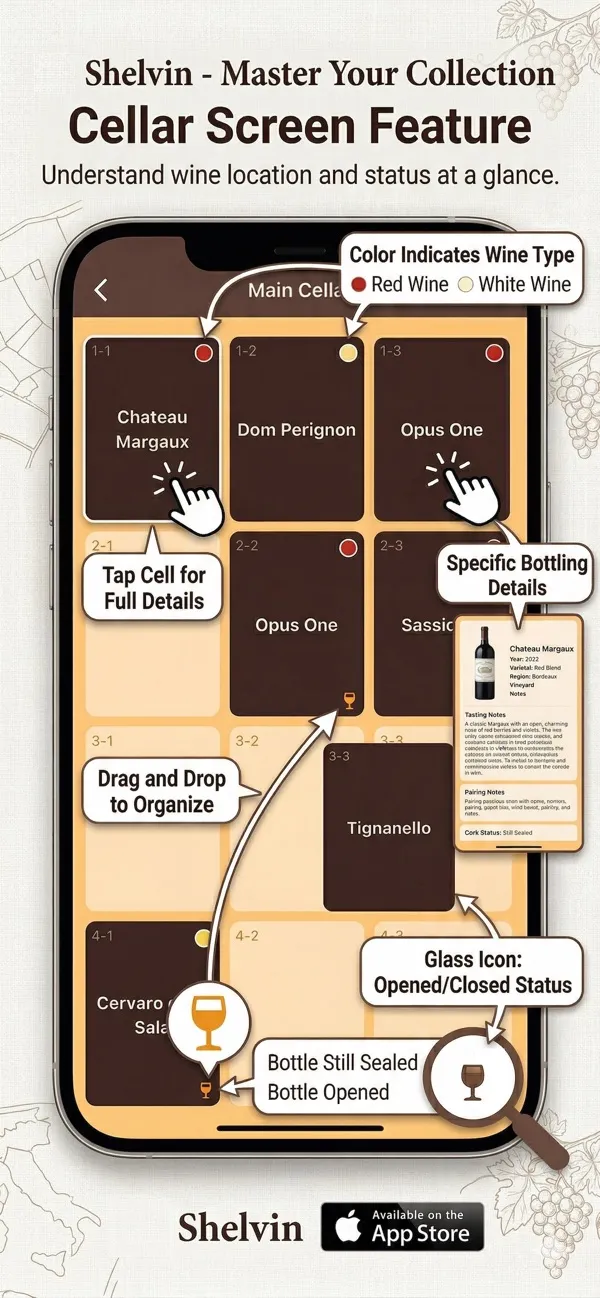
Arranging bottles by zone and recording shelf positions is explained in "Wine Cellar Organization: Zones and Coordinates." If you would rather keep the list in a spreadsheet, see "Wine Inventory Excel: Columns and Where It Breaks."
Summary: open each bottle near the peak of its window
When to drink wine depends on where the bottle sits on its drinking window, a curve that rises, peaks, holds and declines. Light reds and crisp whites are best young, while tannic reds, concentrated whites and sweet wines can wait, because acidity, tannin, sugar and alcohol set how long a wine can age. A vintage chart and the wine's color and texture narrow the timing, and opening one bottle confirms it.
To keep that peak within reach, store bottles at 12–15°C and 70–75% humidity, in the dark, away from vibration and with corks lying down. Then keep a list of each bottle and its expected window, so the right one is opened at the right time.
FAQ
- Does every wine get better if you cellar it?
- No. Only wines with plenty of tannin, acidity or sugar are built for long aging. Bold reds, concentrated whites and sweet wines tend to gain from time in the bottle, while light reds and crisp whites are usually best young. Suntory rested several wines for a few months and found that resting did not always improve them.
- What temperature is best for storing wine?
- Mottox gives 12–15°C as the ideal, with as little day-to-day change as possible. Humidity of 70–75%, no ultraviolet light and no vibration complete the list. A steady, cool and dark spot matters more than hitting one exact number.
- Should wine be stored lying on its side?
- Cork-sealed bottles should lie down. A cork that dries out shrinks and lets air in, which can oxidize the wine. Bottles with a screw cap can stand upright.
- Can you store wine without a wine cellar?
- Yes. Mottox names a cool, dark place such as a basement or the space under the floor as ideal, alongside a wine cabinet. Once you plan to keep bottles for years or the collection grows, a cabinet that holds temperature and humidity steady is the safer choice.
- How soon should you finish an opened bottle?
- You do not have to finish it the same day. Enoteca suggests drinking an opened red within about five days.
Related articles
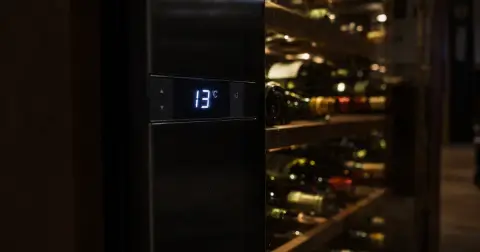 Wine Cellar Temperature: One Number, Held SteadySet your wine cellar temperature to 12°C (54°F) for every wine and hold it. Full-bodied reds at 18°C and dry whites at 8°C are for serving, not storage.
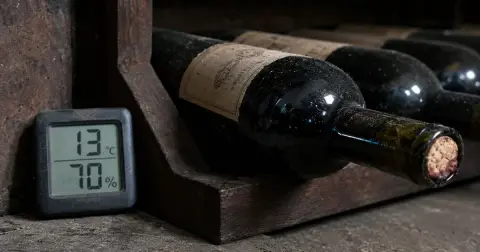 How to Store Wine at Home, Unopened and OpenedHow to store wine: keep it at a steady 10–14°C (50–57°F) with humidity near 70%, lay corked bottles flat, and finish opened wine in 2 days to a week.
 Wine Cellar Organization: Zones and CoordinatesWine cellar organization starts with how many bottles fit. Then sort wines by temperature zone, keep them out of light and number each slot to log a bottle.
 Wine Inventory Apps: 5 Cellar Trackers ComparedFive wine inventory apps compared on shelf-level location, label scanning, free tiers and US prices: Shelvin, InVintory, CellarTracker, Oeni and Vivino.